

Withdrawable Switchgear Cabinet Exporter Selection for Safe Power Management
2026-10-25
Selecting the right withdrawable switchgear cabinet exporter isn’t just about specs on a datasheet—it’s about ensuring every switch, every interlock, and every arc-resistant panel holds up when your power management system needs it most. With safety margins shrinking and downtime costs rising, the decisions made at procurement stage echo through years of operation. That’s where MOLDVOLT enters the conversation: a partner whose designs prioritize both operational reliability and real-world maintainability. In this guide, we’ll unpack the critical factors that separate a dependable exporter from a risky one, and why your next project’s switchgear choice deserves more than a quick quote comparison.
Why Arc Containment History Tells You More Than a Spec Sheet
A spec sheet can list withstand ratings and pass/fail test results, but it won't show how a line of switchgear behaves after a decade of dust, humidity, and hurried maintenance. Arc containment history fills that gap. When you look at incident reports and teardown findings from units that actually experienced an internal arc, you see where gaskets held, where hinges deformed, and which pressure relief paths stayed clear under real fault conditions. Those details rarely make it into marketing cut sheets.
Field history also reveals consistency. A single certified test proves a prototype can contain one carefully staged event. Repeated field events across different installations show whether the design tolerates manufacturing variation, installer shortcuts, and less-than-ideal torque on door bolts. That track record, gathered over years, is a better predictor of what happens in your facility than any laboratory number. It tells you not just that the equipment passed once, but that it has kept people safe through the messy, unplanned failures that actually occur.
Checking Modular Busbar Design Before You Commit to a Vendor
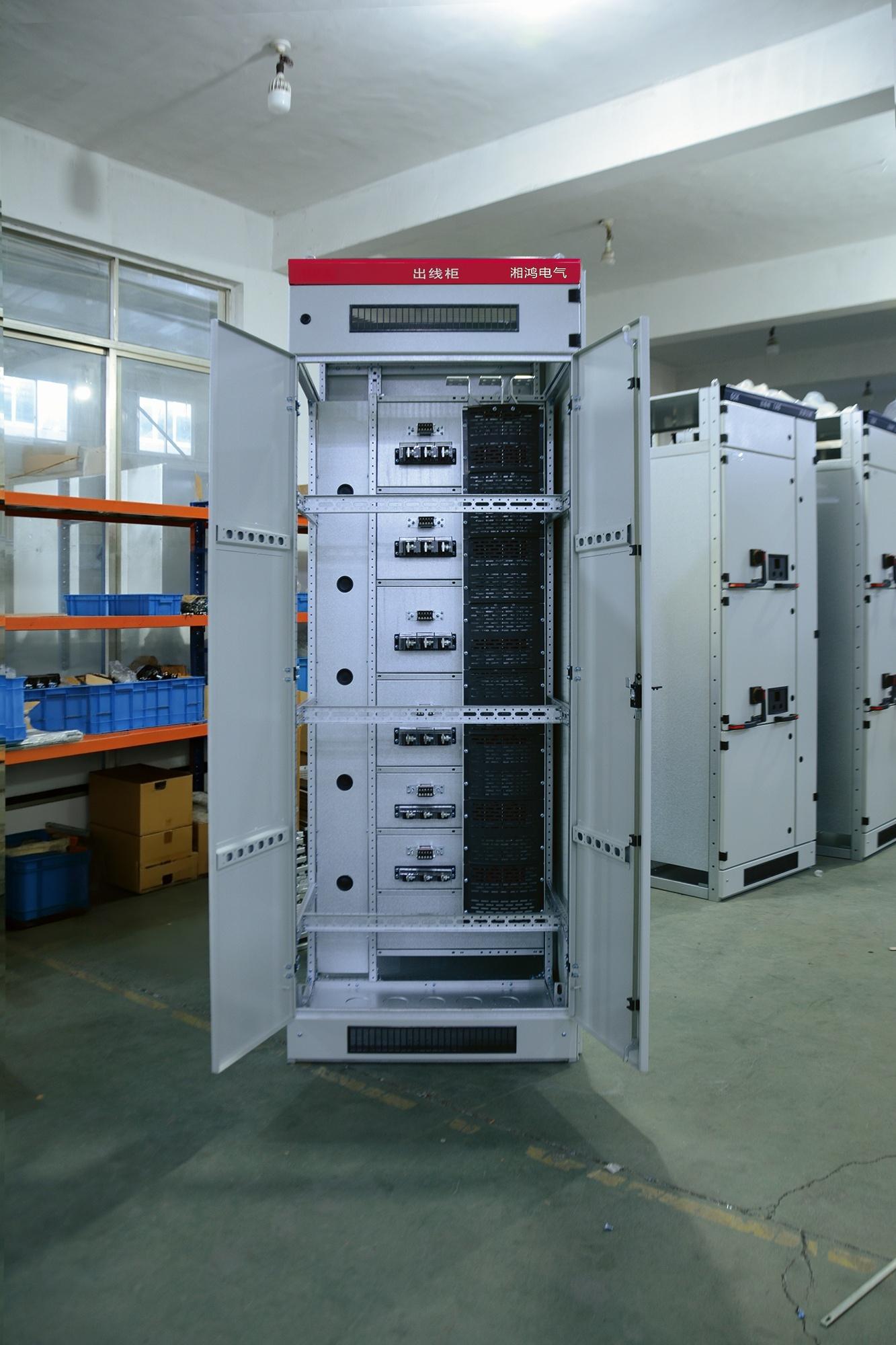
Before you sign off on a modular busbar supplier, pull apart the actual connection interface. Look for tolerance stacking between copper segments, bolt torque retention after thermal cycling, and whether the plating will survive repetitive mating. A design that looks clean on a datasheet often hides slop in the joints that only shows up after a few dozen thermal swings.
Ask how the vendor handles expansion and contraction across long runs. Rigid busbar modules without proper flex points or slotted connections can transfer stress into bus supports, break insulators, or loosen fasteners over time. If the answer is just "bell washers and hope," keep looking.
Finally, check serviceability. Modular designs promise fast replacement, but if you need to remove three adjacent sections to reach one failed link, that promise evaporates. Insist on detailed assembly drawings and, if possible, handle a sample module yourself—there is no substitute for feeling how the pieces seat.
Matching Short-Circuit Ratings to Your Actual Grid Conditions
Utility fault levels are rarely a single fixed number. Even within the same service area, available short-circuit current changes with transformer size, feeder length, conductor impedance, and whether local generation or large motors are present. Relying on a generic short-circuit rating without checking the actual grid conditions at the point of connection can leave equipment under-rated or needlessly over-specified.
A more reliable approach starts with obtaining the latest available fault current from the utility, then adjusting for the specific impedance between the service point and the equipment. Transformer percent impedance, cable run length, and motor contribution all influence the real short-circuit current a device will see. Calculations based on IEEE or IEC methods give a clearer picture than a default table value.
It is also worth leaving room for future grid changes. Utilities upgrade substations, replace transformers, or reconfigure feeders, and any of these actions can raise the available fault current. Matching the short-circuit rating to today’s measured or calculated conditions is important, but adding a reasonable margin prevents an expensive retrofit when the grid changes a few years later.
Factory Tests That Reveal Insulation Health Before Shipping
Every motor winding leaves our floor only after a battery of factory tests that dig beneath the surface. We push insulation far beyond its nominal ratings with surge comparison testing, watching for the telltale wave pattern shifts that hint at weak turn-to-turn enamel. Then comes the megger test, where a high-voltage DC charge forces any moisture or contamination to show itself as a sluggish leakage current. These aren't pass-or-fail formalities—they're conversations with the copper, listening for the faintest crackle of a future failure.
Partial discharge measurement adds another layer of honesty. By applying stepped AC voltage while sensors trace the high-frequency pulses of tiny internal sparks, we map exactly where the varnish is thinning or where the slot liner has a microscopic void. A healthy winding stays quiet; a marginal one whispers. That whisper gets logged, compared against baseline signatures, and either triggers a re-varnish or grounds the unit for teardown. No shipping label goes on until that discharge map is clean.
The real proof comes when we combine these into a pre-shipment stress profile: thermal cycling while monitoring insulation resistance, followed by a hipot test at 2x rated voltage plus 1000 volts. We don't just check if it survives—we watch how the leakage current behaves during the hold. A stable reading means the insulation is dense and uniform. Any drift, even a fraction of a microamp, tells us heat and pressure have already started opening pathways that would only widen in the field. That's the kind of early warning no visual inspection can ever give.
Structuring Delivery Terms to Protect Cabinet Integrity
Delivery terms should do more than set a date; they need to lock in the physical condition of the cabinets at the point of handover. Specify that all units must be transported upright with corner protectors and foam edge guards in place, and that any stacked configuration requires load-spreaders to prevent frame distortion. Tie acceptance to a visual inspection of plumb, square, and surface finish before the carrier leaves the site.
Risk transfer clauses matter just as much as packaging instructions. Make the supplier responsible for concealed transit damage by requiring a 48-hour window for unpacking and reporting, rather than relying on a signed delivery note alone. This keeps accountability where it belongs and discourages rushed unloading that can twist doors or chip laminate edges.
For larger shipments, consider phased acceptance tied to specific zones or floors, so that one faulty unit does not hold up the entire install. Include a requirement for photographic documentation of each cabinet's corners, hinges, and adjustable feet at the time of delivery. These records become the baseline for any later claims and protect the integrity of the whole run.
Building a Support Scorecard for Spare Parts and Field Training
A practical support scorecard for spare parts and field training moves beyond simple fill rates and course completion counts. It links parts availability to training outcomes so that a missing component or a poorly timed class becomes visible before it affects customer uptime. Start by tracking two or three metrics that matter to field technicians: the percentage of critical spare parts delivered within the promised window, the number of training hours spent on high-failure components, and the repeat-visit rate tied to parts or knowledge gaps. These indicators, reviewed monthly, give service leaders a clearer picture of where support is actually breaking down.
For spare parts, the scorecard should separate planned maintenance demand from emergency breakdown demand. Planned demand can be planned against inventory targets, while emergency demand exposes weaknesses in distribution or forecasting. On the training side, score field readiness through scenario-based assessments rather than attendance alone. For example, measure how quickly a technician can diagnose a fault using the current parts catalog or how often a repair requires a second visit due to missing hardware. Combining these two views often reveals that a shortage of a specific seal or connector is amplified by the team's lack of hands-on practice with that exact part.
To keep the scorecard useful, review it in the same meeting where parts and training managers are present. If a part's lead time drifts beyond the target, pair that alert with a short refresher module for the affected region. If a training assessment shows low confidence on a new pump model, check whether the corresponding spare parts kit is pre-positioned nearby. This back-and-forth prevents the scorecard from becoming a static report and turns it into a working tool for reducing downtime and avoiding unnecessary truck rolls.
FAQ
Look for mechanical interlocks that prevent the breaker from being racked in or out while closed, along with shutter systems that automatically cover live busbar contacts when the module is withdrawn. These two features alone stop most arc-flash incidents during routine maintenance.
Request a factory visit or live video tour of the production line. Ask to see the sheet metal stamping, busbar bending, and copper plating stations. A genuine manufacturer will show these without hesitation; a trading company usually stalls or sends only final assembly photos.
Withdrawable modules let you isolate a single feeder for service without shutting down the entire switchboard. In critical facilities this means maintenance can happen during normal operation, which reduces the temptation to skip safety checks because of downtime pressure.
Ask for type-test certificates from an independent lab such as KEMA, ASTA, or UL, not just an in-house declaration. The certificate should list the exact model, short-circuit rating, and temperature rise test values. Cross-check the certificate number with the issuing lab when possible.
Very low price per panel compared to competitors is the biggest warning, but also check the busbar material: some exporters use aluminum with thin copper cladding and call it copper. Request an actual cross-section photo or material certificate for the busbar alloy.
Test their response during the negotiation phase: ask for a recommended spare parts list for five years, along with remote troubleshooting availability. A serious exporter will give a specific list with lead times and offer training for your local technicians before shipment.
A knowledgeable exporter will ask about your grounding system (TN-S, TN-C-S, or IT), ambient temperature, and altitude before quoting. They should adjust busbar spacing and insulation levels accordingly, not just offer a one-size-fits-all panel.
Conclusion
A spec sheet rarely tells you how a withdrawable switchgear cabinet will behave when an arc fault occurs inside the enclosure. The manufacturer's arc containment history, what happened in previous installations, how the cabinet vented pressure, and whether operators stayed safe, gives a clearer picture. Before you commit to any exporter, look closely at the modular busbar design. Joints should be accessible for inspection, insulation should not be compressed by bending, and the withdrawal mechanism should not scrape or loosen conductors. Then match the short-circuit rating to your actual grid conditions, including fault current decay, grounding method, and future expansion. A rating that works in one region may be misleading in another if the upstream impedance differs.
Factory tests before shipping matter more than most buyers assume. Insulation health can be checked with partial discharge measurements and thermal scans of busbar connections, not just a one-minute withstand voltage test. Mechanical endurance testing on withdrawable carriages helps catch alignment problems early. Once the cabinets are ready, delivery terms need to protect their integrity: specify sealed crating, tilt indicators, and joint inspection at the destination port. Finally, make a support scorecard that weighs spare parts availability, response time for critical components, and hands-on field training. Exporters who maintain local depots or run training sessions for your maintenance crew reduce the risk of long downtime. Safe power management comes from these layered checks, not from a polished brochure.
Contact Us
Contact Person: Hellen
Email: [email protected]
Tel/WhatsApp: 86-13634205622
Website: https://www.voltcabinet.com