

Tri-isobutyl Phosphate Manufacturer Guide for Industrial Buyers
2026-10-06
If you've ever had a tri-isobutyl phosphate shipment arrive with moisture levels that quietly sabotage your downstream reaction, you already know that not all manufacturers are equal. This guide is built for industrial buyers who need more than a certificate of analysis—they need a supplier that understands how TiBP behaves in real production environments, from solvent extraction to flame retardant intermediates. We'll walk through critical specs, hidden batch-to-batch variability, and the questions to ask before signing a supply agreement. And when it comes to consistent quality, Fortune has built its reputation on exactly that: TiBP that performs as promised, shipment after shipment.
What Plant Managers Get Wrong About Tri-isobutyl Phosphate Purity
Most plant managers treat the purity number on the certificate of analysis as a binary gate—either the TIBP passes or it fails. That mindset hides a real problem. Two lots can share the same 99.2% tri-isobutyl phosphate assay and still perform differently in the same solvent extraction circuit. The difference usually sits in the mono- and di-ester fraction, which isn't listed on a standard COA. A slightly higher di-isobutyl phosphate level slows phase disengagement and can force operators to raise mixer settler temperatures or cut feed rates, even though the “purity” never changed.
Moisture is another blind spot. A drum or isotainer may leave the supplier within spec, but a small leak in a nitrogen blanket or a humid bulk transfer can add enough water to shift metal extraction profiles. With TIBP, even 600–800 ppm of moisture can alter selectivity in zirconium-hafnium or rare-earth separations. Managers who don't run a quick Karl Fischer check after unloading end up chasing process drift that isn't caused by operators, pH, or feed composition.
Then there's the isomer conversation. Tri-isobutyl phosphate is rarely a single isomer; it's a mix of branched butyl groups with a little n-butyl substitution depending on the alcohol source. That ratio changes low-temperature viscosity and pour point. Plants that qualify a supplier with one batch, then switch to a lower-cost source in winter, sometimes see solidification or poor pumping at 5–10°C. The assay still reads 98.7%, but the plant is down. A better gate is to pair the assay with a small extraction test and a cold-flow check before accepting the lot.
When TiBP Supply Chains Say In Stock But Can't Ship
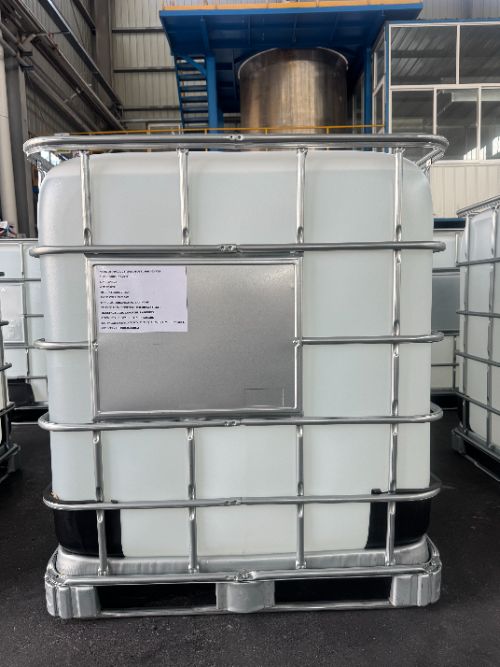
Inventory systems often show stock as available because the data is tied to a master record that hasn't caught up with physical movements. A pallet might be sitting in a quarantine area, or a serial number is flagged for rework, yet the ERP still counts it as sellable. The "in stock" flag becomes a snapshot rather than a live promise.
Shipping holds add another layer. A customer order passes credit check and warehouse pick confirms quantity, but then a compliance review freezes the shipment. The item is physically present, but it cannot leave the dock. The gap between what the system reports and what operations will actually release is where customer frustration grows.
To fix this, teams need to distinguish between "available to promise" and "available to ship." That means real-time location status, hold codes visible at order entry, and a clear owner for releasing stuck inventory. Otherwise, the supply chain keeps saying yes while the loading bay says no.
Hidden Costs in TiBP Procurement You Won't See in Quotes
Most buyers compare TiBP quotes line by line, but the real cost picture starts long before the invoice. A low unit price often hides the expense of qualifying a new supplier—travel for on-site audits, third-party lab tests for batch consistency, and the back-and-forth of document translation all eat into margins. Compliance costs like REACH declarations or conflict mineral reporting rarely appear on the quote, yet they can add weeks of administrative work and thousands in consulting fees.
Then there's the logistics and inventory side. TiBP materials may require climate-controlled transport, custom crating, or special insurance that standard freight quotes don't cover. Minimum order quantities force you to hold more stock than you need, tying up working capital and increasing warehouse costs. When a batch arrives slightly off-spec, the cost of sorting, rework, or return shipping is yours to absorb—not the supplier's problem after the bill of lading is signed.
Don't overlook the ongoing management burden. Your team will spend hours reconciling technical data sheets, chasing overdue deliveries, and resolving quality disputes. If the new supplier's systems don't integrate with your ERP, you'll pay for data migration, manual entry, or middleware. Internal training and the learning curve of a different ordering portal also add real costs that never show up in a quote comparison spreadsheet.
How to Spot a TiBP Batch That Will Underperform in Your Reactor
TiBP quality issues often hide in plain sight before they ever reach the reactor. The first clue is usually a slight color shift — a good batch should be nearly water-white, but an underperforming one will start to take on a pale yellow or even amber tint. That hue points to early oxidation or the presence of trace metal ions that can wreak havoc once the batch heats up. If your incoming material doesn't match the usual clarity and freshness you're used to, don't shrug it off. It's the cheapest warning you'll ever get.
Next, pay attention to how the TiBP behaves during initial mixing. A batch that's going to underperform often shows a thicker, more viscous character than normal, even at ambient temperature. This can indicate partial hydrolysis or the formation of oligomeric species that will slow down mass transfer inside your reactor. When you see a slower draw from the storage drum or unusual residue on the dip tube, it's worth sampling early. Waiting until the batch is already charged means you'll spend the rest of the run fighting conversion losses instead of preventing them.
Finally, trust the simple bench test over the certificate of analysis alone. Spiking a small amount of your TiBP into a model reaction — even a quick exotherm check or a mini batch under inert atmosphere — will reveal instability that a paper spec can't. If the exotherm profile flattens or the initial rate drops by more than a few percent compared to your last good lot, you've spotted an underperformer before it costs you a full production cycle. That early flag is worth more than any post-run investigation.
Storage and Handling Details Your TiBP Supplier Won't Volunteer
Most TiBP data sheets quietly assume you'll store the drum indoors at a steady 20°C and use it within a few weeks. What they don't emphasize is how fast the material picks up moisture once the seal is cracked. Even a loose bung can let in enough humidity to trigger slow hydrolysis, leaving a cloudy layer at the bottom that won't redissolve. If you're not set up to blanket the headspace with dry nitrogen after each transfer, order smaller containers than you think you need.
Another detail worth testing yourself: the gasket. TiBP tends to swell standard nitrile and neoprene seals over time, which leads to slow weeping around the cap and a sticky rim that makes the drum look like it's leaking. Swap in PTFE-lined closures or at least check the factory gasket material before you commit to long-term storage. Also, keep it away from strong oxidizers and mineral acids—not because the SDS will scare you, but because accidental contact generates heat and can push the liquid into a runaway ester cleavage.
If the product arrives with a faint yellow tint, that's usually not a failure. TiBP can develop color from trace metal pickup or light exposure without losing much potency for most industrial uses. But if you're feeding a sensitive downstream reaction, filter it through a dry 0.45 micron membrane and sparge with nitrogen before use. Don't store it in direct sunlight or next to steam lines, and don't assume a 12-month shelf life means 12 months of identical performance—plan to retest moisture and acidity after about six months.
Negotiating TiBP Contracts Without Leaving Performance on the Table
Negotiating TiBP contracts often gets treated like a zero-sum tug of war: push too hard on price and you risk service degradation, concede too much and you erode the business case. The real leverage comes from separating commercial terms from delivery mechanics. Instead of demanding blanket discounts, tie rate cards to measurable service levels such as response times, throughput, and release cadence, so the vendor keeps skin in the game when margins tighten. This shifts the conversation from how cheap can we get this to what trade-offs we are actually willing to accept.
A common mistake is locking in aggressive unit prices while leaving performance obligations vague. That is how you end up with a contract that looks great on paper but delivers last-minute escalations and endless change requests. Experienced negotiators map out the workload profile before the term sheet, then build pricing corridors that flex with volume and complexity. If a service window or data quality requirement matters to the business, name it explicitly in the SLA and attach a rebate or credit, not just a penalty clause, which vendors often price defensively.
Finally, treat the negotiation as a rehearsal for the partnership, not a one-time event. Walk through two or three realistic failure scenarios during the redline phase: a sudden 40 percent spike in demand, a key API integration breaking, or staff turnover on the vendor side. If the contract does not make the path to resolution clear, performance will suffer regardless of the headline rate. The goal is not to strip every last dollar; it is to avoid paying twice for the same outcome.
FAQ
Batch-to-batch consistency often matters more than a single purity number. Ask for data on metallic impurities, acid value, moisture, and color stability across multiple production lots. A manufacturer that relies on recovered solvents or byproduct feedstocks may offer lower prices but introduce variability that disrupts downstream catalysis or solvent extraction.
Request distribution ratios and stripping efficiency data under the buyer's actual extraction conditions, not just a certificate of analysis. Have the supplier run a small-scale trial with your real feed solution and observe phase separation time and interfacial crud. If they cannot provide this level of application support, they may be a trader rather than a true manufacturer.
Residual isobutanol or n-butanol can lower flash point and create odor issues. Mono- or di-phosphate esters raise the acid value, which harms thermal stability and increases metal corrosion. Trace iron or other metal ions may catalyze decomposition or cause discoloration. Always request gas chromatography and ICP-MS reports rather than relying on a total ester content number.
Geographic origin alone does not determine reliability. Chinese suppliers often have cost advantages and flexible capacity expansion, but you need to verify environmental permits, export licenses, and plant uptime history. Western producers may offer more structured change management and faster audit responses. The real differentiator is whether the manufacturer maintains backup production lines, safety stock, and alternative logistics routes.
Lock in quarterly or annual framework volumes with a price adjustment formula tied to raw material costs for isobutanol and phosphorus oxychloride. Require the supplier to give at least 60 days notice before any scheduled maintenance and to hold a minimum 30-day safety stock in a third-party warehouse that you can access. Avoid single sourcing by qualifying two manufacturers with similar specifications.
Ask for evidence of an in-house applications laboratory that can adjust ester content, moisture, or acidity to match your specific process. A capable manufacturer will sign a mutual NDA and provide modified samples within 48 to 72 hours. If they only sell standard grades and offer no technical consultation, they are unlikely to help when your formulation or extraction circuit changes.
A quote significantly below the raw material cost floor is a warning sign. Other red flags include refusing to share batch production records, providing only a self-generated COA without third-party verification, reusing drums without documented cleaning procedures, or being vague about mono-ester and di-ester content. Also ask whether production is continuous or batch, as poorly controlled batch esterification often leads to wider impurity swings.
Yes, a responsible manufacturer should supply a current safety data sheet, REACH registration or TSCA status, proper transport classification, and end-of-life disposal guidance. If the material will be used in food-contact or pharmaceutical-related processes, ask for specific compliance statements. The manufacturer should also assist with export control classification and customs documentation to prevent clearance delays.
Conclusion
For industrial buyers sourcing tri-isobutyl phosphate, the gap between a clean specification sheet and actual reactor performance is often wider than expected. Plant managers frequently equate high assay numbers with purity, but trace levels of residual alcohol, acidic esters, or unreacted phosphorus compounds can quietly poison catalysts or shift reaction kinetics. Worse still, a supplier's promise of "in stock" rarely means the product is sitting on a loading dock ready to ship. It may be held in bulk storage that cannot be dispensed into your required packaging, or it may be blocked by missing export documents. Smart buyers treat lead time as a range, not a point, and ask for proof of actual drumming or IBC filling before committing production schedules.
Beyond the quoted price, TiBP procurement carries hidden costs that surface later. Demurrage on late containers, repackaging fees when a supplier's standard drum lining is incompatible with your quality requirements, and disposal charges for off-spec material all erode margins. Even a batch that passes incoming QC can underperform due to moisture pickup during transit or insufficient inhibitor levels, especially if drums were stored in direct sunlight or opened and resealed improperly. TiBP is hygroscopic and prone to hydrolysis, so it needs cool, dry storage under nitrogen, with strict first-in-first-out rotation. Most suppliers won't volunteer that long-term storage above 25°C accelerates acid formation, or that partial drum use can contaminate the rest. When negotiating, tie payment to performance in your specific reaction, not just a certificate of analysis. Include penalties for late delivery, purity drift, or failure to meet inhibitor specs, and reserve the right to return any batch that underperforms. Qualify backup manufacturers and audit their repackaging and storage lines regularly—because the real guide to TiBP buying is not the quote, but how the product behaves after it arrives.
Contact Us
Contact Person: WANG SIHAI
Email: [email protected]
Tel/WhatsApp: +86-13815295628
Website: https://www.fortunechemtech.com/index_en.html