

Top Laser Safety House Solutions for Ultimate Workplace Protection
2026-07-06
Imagine a workplace where laser beams serve as precision tools, yet their hidden dangers are meticulously neutralized. The right safety house isn't just an accessory—it's your frontline defense against accidental exposure. At LASERPAIR, we've engineered solutions that blend rigorous protection with seamless integration, ensuring your team stays focused without compromise. Discover how to transform your facility into a model of laser safety excellence.
Designing Safety Enclosures That Truly Protect
Too often, safety enclosures fail not because of a single dramatic flaw, but because of subtle oversights in how they interact with the real world. A guard that looks solid on a CAD screen might vibrate loose under daily operation, or a barrier designed for one hazard could create a new pinch point when workers naturally lean around it. True protection emerges when we stop treating enclosures as standalone objects and start viewing them as part of a dynamic system, where human behavior, machine function, and environmental stress all play equal roles.
Material selection is where many designs stumble, chasing maximum strength while ignoring other critical factors. Welded steel might seem like the obvious choice, but it can transfer harmful vibrations to sensitive components or become a dangerous projectile during an unexpected failure. Advanced polymers, layered composites, or even strategically placed transparent panels can absorb energy, reveal hidden hazards, and withstand conditions that degrade traditional metals. The goal isn’t just to block an impact once—it’s to maintain integrity across thousands of cycles, chemical spills, and hurried maintenance shifts.
Perhaps the most overlooked aspect is how enclosures invite or discourage safe interaction. A cage that requires contortion to reach adjustment points guarantees that operators will find ways around it, while a well-placed access door with intuitive interlocks becomes a seamless part of the workflow. Thoughtful design incorporates feedback from the people who work beside these machines daily, turning a passive barrier into an active partner in safety. Small details—rounded edges, clear sightlines, color-coded status indicators—change how space is navigated and how quickly someone can react when milliseconds count.
Interlock Systems That Prevent Unauthorized Access
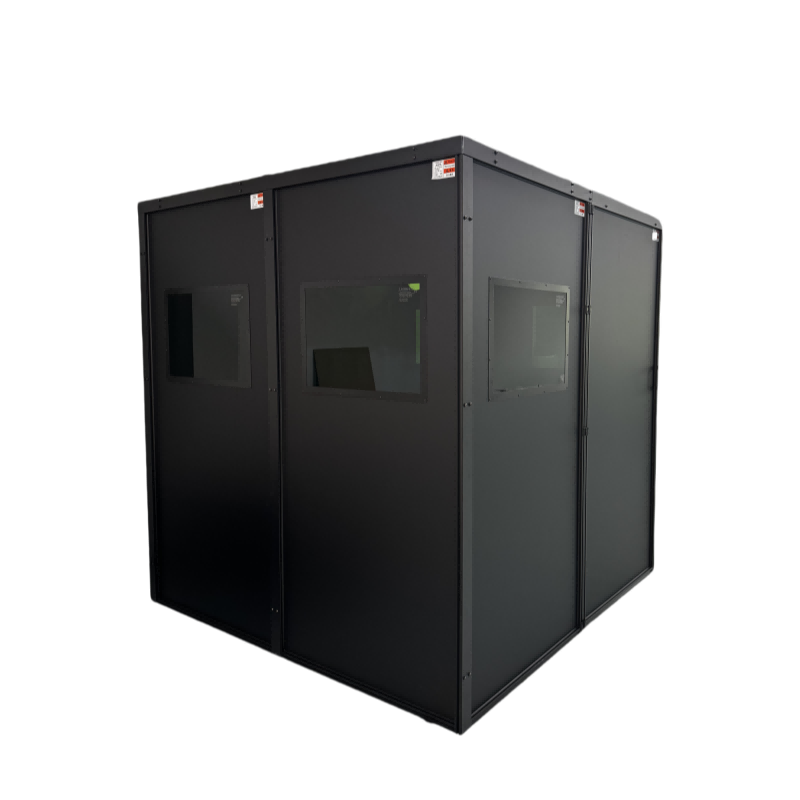
Think of an interlock system as a physical gatekeeper that simply won’t budge unless every safety rule is satisfied. These mechanisms aren’t just digital pop-ups asking for a password — they’re hardwired arrangements of sensors, switches, and sometimes mechanical barriers that physically prevent entry or operation until the right sequence occurs. In high-security environments, you might encounter a two-door mantrap where the outer door must close and lock before the inner door can even think about opening. It’s a deliberate, unhurried process that leaves no room for tailgating or rushed mistakes.
What makes interlocks truly reliable is their stubborn independence from operators. A chemical mixing room, for instance, might use key-exchange interlocks: you can’t retrieve the key to start a hazardous process unless you’ve already removed the key from the ventilation system, proving it’s running. There’s no “I’m in a hurry” override, no supervisor password to bypass the logic. This enforced step-by-step ritual removes human error from the equation, making it physically impossible to skip a safety check — because the lock simply won’t turn until you do.
Modern interlocks often blend physical barriers with smart monitoring without becoming dependent on software alone. Electromagnetic locks tied to door position sensors and machine power status can create invisible safety zones: a laser lab door won’t unlock until the beam is shuttered, and the CNC machine won’t spin up unless the guarding door is securely latched. Even then, the circuit design ensures that a power failure or a cut wire defaults to a safe, locked state. It’s this fusion of mechanical certainty and intelligent feedback that keeps unauthorized access from ever being a matter of luck or fleeting attention.
Material Selection for Effective Laser Blocking
Choosing the right material to stop a laser isn't just about picking the thickest or darkest option. The wavelength of the laser plays a huge role – what works for a CO2 laser might be useless against a fiber laser. Metals like aluminum and copper can reflect a lot of energy, but they also risk scattering dangerous beams. Dense ceramics or specialized composites often handle heat better, but they come with weight and cost penalties.
For visible and near-infrared lasers, polycarbonate sheets loaded with specific dyes can provide decent protection without adding too much bulk. However, these materials degrade over time, especially under UV exposure, so they need regular inspection. In high-power scenarios, ablative coatings that char and dissipate energy offer a sacrificial barrier, but they're single-use and require replacement after each hit.
Don't overlook the mechanical properties. A material that shatters on impact could create flying debris. Laminated glass with interlayers, or transparent ceramics like aluminum oxynitride, balance optical clarity with impact resistance. Ultimately, the best choice often involves layering different materials to address multiple threats while keeping the system practical for its intended environment.
Meeting Safety Standards: More Than Just Compliance
Safety standards are often seen as a checklist—a set of boxes to tick to avoid penalties or legal trouble. But truly safe operations recognize that these standards are just the starting line, not the finish. When safety becomes woven into daily habits, it transforms from a passive requirement into an active culture that protects people, processes, and reputation in ways a compliance mindset never can.
Going beyond compliance means anticipating risks that rules haven’t yet addressed. It involves empowering every team member to speak up about potential hazards, investing in proactive training, and treating near-misses as learning opportunities rather than lucky escapes. This deeper commitment not only prevents incidents but also builds trust—employees feel valued, and customers recognize a company that prioritizes their well-being over shortcuts.
Ultimately, exceeding safety standards is a strategic advantage. It drives innovation in equipment design, operational procedures, and emergency response, often leading to greater efficiency and lower long-term costs. By aiming higher than what regulations demand, organizations don’t just avoid fines—they create workplaces where people genuinely want to belong, knowing that their safety is more than just a policy; it’s a promise.
Integrated Ventilation for Smoke and Fume Control
Modern industrial and commercial environments demand ventilation systems that go beyond simple air exchange. Integrated ventilation for smoke and fume control combines high-efficiency capture, filtration, and exhaust components into a unified framework. This approach not only removes visible smoke and hazardous fumes at their source but also coordinates with building automation to maintain optimal air pressure and circulation. By linking sensors, motorized dampers, and variable-speed fans, the system adapts in real time to changing contaminant levels, ensuring cleaner air without wasting energy.
A key advantage of this integrated strategy is its ability to handle diverse pollutants from welding smoke to chemical fumes using tailored extraction arms, hoods, or downdraft tables. The collected contaminants pass through multi-stage filtration—often combining pre-filters, HEPA cartridges, and activated carbon—to trap particulates and neutralise odors before recirculating or expelling air. Occupant safety is further enhanced through fire dampers that automatically engage in high-heat scenarios, preventing flame and smoke from spreading through ductwork. Such designs comply with strict health and safety standards while reducing facility maintenance downtime.
Beyond immediate air quality improvements, integrated systems contribute to long-term operational savings. By reclaiming conditioned air and precisely controlling exhaust volumes, they minimise the load on heating and cooling equipment. Intelligent monitoring tracks filter life and system performance, alerting operators before failures occur. This proactive stance not only extends equipment lifespan but also fosters a healthier workspace, where employees feel the difference in air freshness. Ultimately, the combination of responsive control, robust filtration, and energy-smart design makes integrated smoke and fume ventilation an indispensable asset for forward-thinking industries.
Routine Maintenance: Ensuring Long-Term Protection
When we think about protection, it’s easy to focus on the initial setup—installing the right systems, putting policies in place, and walking away with a sense of accomplishment. But the reality is that even the most robust safeguards degrade over time if left unattended. Hardware ages, software patches go unapplied, and small misconfigurations can turn into gaping vulnerabilities. Routine maintenance isn’t just about ticking a box; it’s about actively preserving the security posture you worked so hard to build. By scheduling regular check-ups, you catch issues before they become incidents, much like changing the oil in a car to avoid engine failure down the road.
Consistency is what separates a secure operation from a constant firefight. A maintenance cadence—whether weekly log reviews, monthly vulnerability scans, or quarterly access audits—creates a rhythm that keeps protection at the forefront. It’s not about overwhelming your team with busywork, but about weaving these tasks into the fabric of daily operations. When everyone knows that the first Tuesday of the month means patching, or that unused accounts are purged every 90 days, the process becomes second nature. Over time, this predictability builds resilience, making it far less likely for threats to slip through the cracks simply because someone forgot to double-check something.
Perhaps the most underrated aspect of routine maintenance is how it strengthens your intuition about the environment. The more you inspect and tune your defenses, the better you understand what “normal” looks like. This baseline knowledge is invaluable when something deviates—you’ll notice a strange spike in bandwidth, an unexpected process running, or a configuration shift that shouldn’t have happened. Instead of relying solely on automated alerts, which can be noisy or miss subtle anomalies, you’re developing a human-centric early warning system. In the long run, that familiarity is a powerful shield, turning routine tasks into a strategic advantage that keeps your protection evolving alongside emerging challenges.
FAQ
A laser safety house is a specialized enclosure designed to contain laser beams and stray reflections, preventing accidental exposure. It’s vital for protecting employees from eye and skin injuries while allowing safe operation of powerful lasers in manufacturing, research, and medical settings.
Unlike basic barriers that merely block the beam path, laser safety houses provide a fully enclosed workspace with integrated safety interlocks, fume extraction, and optical density-matched viewing windows. This holistic approach controls all hazard vectors—optical, respiratory, and fire—simultaneously.
They also mitigate risks from laser-generated airborne contaminants, high-voltage components, and thermal burns. By containing the process, they reduce the need for personal protective equipment and minimize the chance of human error, creating a fail-safe environment.
Precision manufacturing, medical device fabrication, aerospace component processing, and advanced R&D labs see the greatest impact. Any setting using Class 3B or Class 4 lasers for cutting, welding, or marking will find them indispensable for meeting safety regulations.
Start by assessing your laser’s wavelength, power, and beam dimensions. Then consider workflow needs—does the enclosure require ergonomic access ports, robotic integration, or particulate filtering? Aim for a supplier that offers modular designs so you can adapt as your processes evolve.
Look for active monitoring systems that verify filter integrity and airflow in real time, non-reflective interior coatings that reduce stray radiation, and compliant door interlocks that shut down the laser instantly upon breach. Don’t settle for anything less than third-party certification.
Hands-on training is key—operators need to experience realistic scenarios, including emergency shutdowns and contamination events. Pair this with easily accessible video refreshers and clear labeling directly on the enclosure, so critical steps are never forgotten during high-pressure tasks.
Conclusion
Creating a laser safety house that genuinely protects workers requires a multi-layered strategy. The foundation lies in designing robust safety enclosures that contain the laser beam entirely, using materials like acrylic sheets loaded with absorbing dyes or specialized metal alloys that reflect and dissipate energy. These enclosures are only effective when paired with interlock systems that immediately halt operation if a door is opened, ensuring no one can accidentally enter the hazard zone. Selecting the right material isn't just about blocking the beam's wavelength; it's also about withstanding prolonged exposure without degradation. A well-planned safety house anticipates these physical threats and neutralizes them through careful engineering.
Achieving full workplace protection demands more than just physical barriers. Adherence to rigorous safety standards, such as ANSI Z136 or IEC 60825, ensures that every component meets proven performance criteria, but a truly safe environment also addresses secondary risks. Incorporating ventilation systems to extract harmful fumes and laser-generated smoke keeps the air breathable and prevents particulate buildup that could scatter beams. Ongoing protection hinges on maintenance routines—regular inspections of seals, interlocks, and filter replacements keep the system in peak condition. By integrating these elements, a laser safety house becomes a dynamic shield, evolving with operational needs to safeguard personnel for years.
Contact Us
Contact Person: Jenny
Email: [email protected]
Tel/WhatsApp: +86 13537713281
Website: https://www.laserpair-safety.com/