

Top 10 Smart Circuit Breaker Suppliers Leading the Future of Energy Management
2026-11-18
Ask any facility manager what keeps them up at night, and electrical safety rarely tops the list—until a single fault cascades into downtime, damaged equipment, or worse. The shift toward intelligent energy management is quietly rewriting that story, and at the center of it are smart circuit breakers that do far more than trip. A handful of suppliers are moving faster than the rest, blending real-time monitoring, predictive maintenance, and seamless integration into genuinely future-ready systems. Among them, SINGI has been carving out a reputation for practical innovation rather than buzzword-laden promises. In this list, we cut through the noise to highlight ten names shaping how buildings, factories, and grids will handle power tomorrow.
When a Circuit Breaker Learns to Read the Load
Most circuit breakers live in a binary world: current is either acceptable or it is not. The moment a load asks for more than the rated figure, the mechanism trips, regardless of what that surge actually means. A breaker that learns to read the load stops relying on that blunt threshold. It watches the starting inrush of a motor, the brief spike from an old compressor, the soft ramp of an LED driver, and builds a working memory of what normal looks like on that circuit.
That memory changes how protection behaves. Instead of treating every anomaly as a threat, the breaker compares the live waveform against stored patterns. A slow drift upward might be worn bearings in a fan. A sharp, repeating snap could be a failing contactor. A smooth but persistent climb may mean the circuit is being asked to carry more than it was designed for. The device can then decide whether to ride through, send an early warning, or isolate the circuit before heat becomes damage.
Over weeks and seasons, the readings begin to reflect the rhythm of the building itself. Morning loads arrive in a certain order, weekend baselines settle lower, summer afternoons push long and high. The breaker is no longer just a safety device at the edge of the panel. It becomes a quiet observer that knows when something in the electrical signature has shifted, often before the equipment itself shows any outward sign of trouble.
Not Every Smart Label Survives a Real Panel
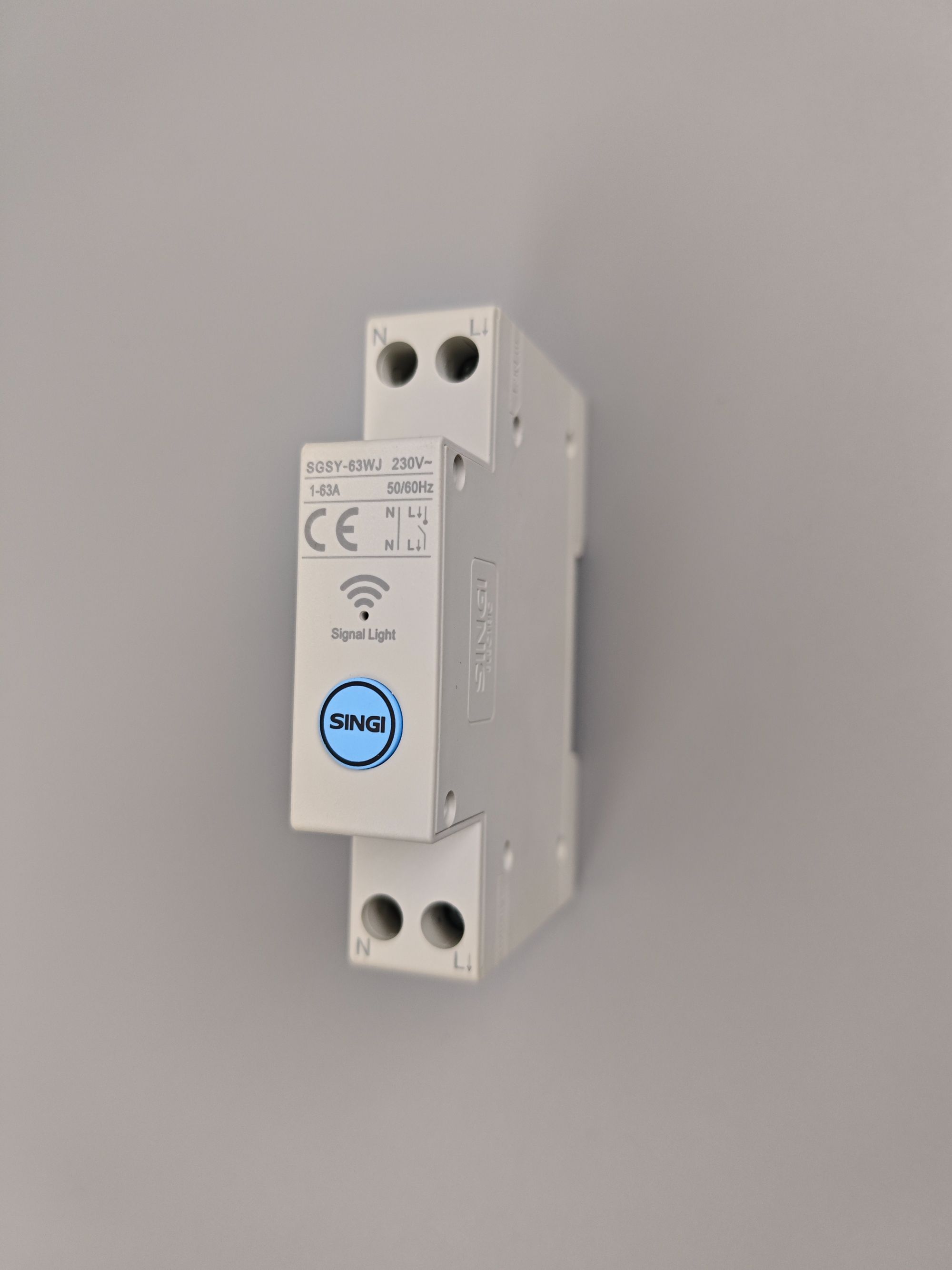
A label can sound brilliant in a conference room and still fall flat once it sits on a shelf in front of actual shoppers. Real panels tend to ignore features that only make sense to the brand team. They notice clutter, confusing icons, or claims that feel forced. When a smart label tries to do too much at once, it often loses the quiet clarity that helps a product get picked up.
Panels made up of everyday buyers are blunt in ways internal reviews rarely are. A scannable code might test well with a tech-savvy group but mean nothing to someone rushing through a store aisle. If the label requires a phone, a steady connection, or extra steps, panelists simply move on. The label has to prove its value in the first few seconds, not after a demonstration.
What survives a real panel is usually less clever than the original concept. It might drop the animated demo, shorten the promise, or make the benefit visible without any scanning. That kind of editing feels like a step backward in a pitch meeting, but it is exactly what turns a fragile smart label into something durable on the shelf.
The Supplier Race Runs on More Than Silicon
Most industry chatter focuses on transistor density and process node numbers, yet the real bottlenecks often surface in the less glamorous layers of the supply chain. High-purity chemicals, specialized gases, photoresists, and advanced packaging substrates can stall a production line just as quickly as a lithography delay. A foundry may have the most advanced etch tools on the planet, but without a steady flow of reliable wet chemicals or the right CMP slurries, wafer output grinds to a halt. These inputs carry tight purity tolerances and short shelf lives, turning inventory management into a balancing act between scarcity and waste.
Equipment maintenance and parts availability form another silent pressure point. A single electrostatic chuck or RF generator failure can idle a cluster of chambers, and lead times for certain spare components now stretch beyond what many procurement teams had planned for. Some fabs have started rebuilding local repair loops and qualifying second sources for consumables, not because the primary vendor is inadequate, but because a diversified supplier base cushions against regional disruptions. That shift quietly reshapes vendor relationships, rewarding partners who can offer consistent delivery schedules over those who compete on upfront price alone.
Finally, the race is won through synchronized logistics and trusted data sharing. Wafer starts, test yields, and material arrival times have to move in close step, especially when packaging capacity becomes the constraint. Suppliers that can respond to short-term demand swings without forcing a fab to hold weeks of buffer stock become strategic allies rather than transactional vendors. In that sense, the modern supplier race depends as much on operational rhythm and honest forecasting as it does on a new node announcement.
Field Installations Show Where Specs Fall Short
A drawing can promise a clean cable path, but actual conduit bends rarely match the listed minimum radius. Once installers pull armored cable through an existing tray, the jacket wears against sharp edges that were never mentioned in the cut sheet. The result is often a field repair that nobody budgeted for.
Termination points are another place where nominal specs drift. A connector rated for a certain conductor size assumes perfect strip lengths and clean strands. On a ladder in a hot mechanical room, the reality is shorter pigtails, limited visibility, and torque wrenches that do not fit the enclosure. Those small deviations stack up into intermittent faults.
Even environmental ratings get tested in ways lab reports do not capture. Dust, washdown spray, and vibration combine differently when equipment is mounted near a production line. Installers learn to add drip loops, swap sealing washers, and re-torque terminals after the first week—details that data sheets rarely mention but that keep the system running.
The Hidden Costs of Making Panels Talk
The initial invoice for connected panels rarely tells the full story. Once a display or control surface starts exchanging data, the organization inherits a quiet operational burden: firmware drift across units, mismatched protocol versions, retries that fail only under specific temperature or network conditions, and the human time spent tracing signals that disappear without a logged error. These are not dramatic failures. They show up as slower commissioning, repeated technician visits, and a growing collection of patch cables and configuration notes that only one person fully understands.
There is also a less visible cost tied to expectations. When panels begin to talk, staff stop checking the physical equipment and start trusting the screen. A delayed update, a cached value, or a slightly ambiguous status label can trigger unnecessary work orders or, worse, inaction when something actually needs attention. Keeping the conversation reliable means maintaining naming conventions, mapping data sources, and testing edge cases long after the installers have left, expenses that rarely appear on the original purchase order.
Security and access control add another layer that is easy to underestimate. Every panel that can receive or forward information is now part of a wider fabric, and that means certificate renewals, user permissions, logging, and periodic audits become recurring obligations. What begins as a simple feature often turns into a long-term commitment with its own maintenance calendar, one that outlives the initial enthusiasm and quietly reshapes the total cost of ownership.
Selecting a Supplier That Stays Relevant After Year One
The first year with a new supplier often feels like a honeymoon. Response times are quick, pricing seems fair, and every small issue gets immediate attention. What separates a lasting partner from a short-term vendor is the ability to keep that momentum once the initial contract is signed. It’s worth asking how the supplier plans to evolve their offerings, whether they invest in training their own team, and what their track record looks like with clients who have been with them for three, five, or even ten years.
A supplier that remains useful after year one rarely relies on a single point of contact or a one-time integration. Instead, they build processes that can absorb staff changes, market shifts, and your own company’s growth. Look for evidence of ongoing product updates, proactive cost reviews, and a willingness to renegotiate terms as your needs change. If every renewal conversation feels like starting from scratch, that’s usually a warning sign that the relationship is transactional rather than strategic.
Practical checks can reveal a lot. Ask for case studies from clients of similar size who stayed beyond the initial term, and pay attention to how the supplier handles a simulated problem during the evaluation phase. Do they offer a roadmap that includes your feedback, or does their plan seem frozen in time? A relevant supplier treats the first year as a foundation, not a finish line—and they’ll have the documentation, references, and internal systems to prove it.
FAQ
Beyond tripping on overloads, a smart breaker tracks energy use at the branch level, flags irregular load patterns, and can be reset or toggled remotely. That visibility turns a protection device into a live energy-management point.
Look closely at metering accuracy class, supported protocols like Modbus, BACnet or wireless options, and whether the firmware update path is realistic for your site. The supplier's track record with legacy panel retrofits often reveals more than a datasheet.
Teams can trace unexpected demand spikes to specific circuits before they become billing problems. Instead of walking panels with a clamp meter, staff can check load balance remotely and schedule maintenance based on actual stress patterns.
Size alone does not guarantee forward-looking design. Some of the more influential players are pushing interoperability, cybersecurity, and edge-based analytics that shape how buildings will consume and manage power over the next decade.
Yes, mostly by making waste visible. When a facility can see overnight baseload, phase imbalance, or inefficient equipment circuits, it can make targeted reductions without a full energy audit. The data gives carbon and cost initiatives the same starting point.
Many suppliers now offer retrofit-friendly options that fit standard panel formats and work with existing CTs or onboard metering. The key is verifying bus compatibility and communication wiring, which can be more limiting than the breaker itself.
Ask for reference sites with similar load profiles and verify how long firmware has been maintained. A dependable supplier will also be clear about cybersecurity patches, data ownership, and what happens to the data if you switch platforms.
Conclusion
The real test for a smart circuit breaker isn't in a datasheet but inside a crowded panel where heat, harmonics, and legacy wiring quietly expose which devices actually read loads accurately. A handful of suppliers have moved beyond basic remote trip and energy logging; their breakers now sample current signatures fast enough to distinguish a failing compressor from normal inrush. Yet many "smart" labels don't survive that environment. The gap between laboratory specs and field behavior widens when installation teams encounter cramped enclosures, mixed breaker generations, and firmware that needs constant attention. The supplier race, then, is less about silicon and more about whether the product holds up under real electrical noise and irregular loads.
What rarely appears on a bid sheet is the cost of making panels talk: gateways, edge software, compatibility checks, and the time electricians spend re-configuring networks. Some leading suppliers reduce that burden by designing for existing panel layouts and offline fallback, which matters more than a polished app. After the first year, the useful suppliers are those that continue updating trip curves, communication protocols, and diagnostic tools without forcing a full panel replacement. Choosing among the top names means looking past initial accuracy claims and asking whether the breaker will still be accurate, compatible, and serviceable once the installation dust has settled.
Contact Us
Contact Person: Jack
Email: [email protected]
Tel/WhatsApp: (+86) 13757759651
Website: https://www.singi.com