

Sinotruk HOWO 6x4 Refrigerated Truck Exporter: Your Partner in Cold Chain Excellence
2026-11-16
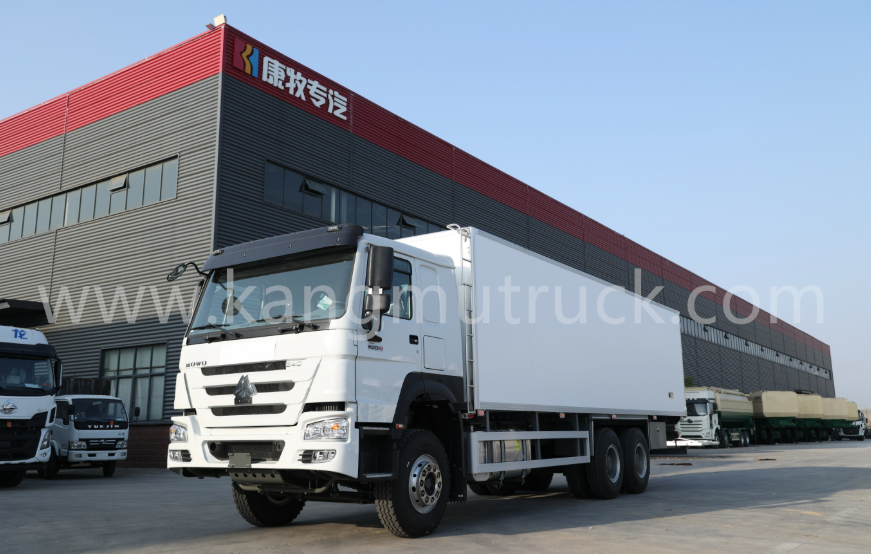
When perishable cargo is on the move, a few degrees of drift can wipe out an entire delivery. The Sinotruk HOWO 6x4 refrigerated truck is engineered for cold chain reliability, but the exporter you choose decides whether that reliability reaches your fleet. KANGMU TRUCK takes the guesswork out of that decision, delivering HOWO 6x4 reefer units that stay steady on long hauls and tight schedules. If your cold chain has been one mishap away from disaster, it's time to meet a partner that treats temperature control as a promise.
What Makes a HOWO 6x4 Refrigerated Truck Actually Hold Its Cool
A lot of people assume the refrigeration unit does all the work, but on a HOWO 6x4 reefer the real secret sits in the box walls. The panels use injected polyurethane foam at a density that leaves almost no air pockets, so heat has to fight through a thick, uniform barrier. Even under direct sun, the interior temperature stays remarkably steady because the cold energy isn't leaking through weak spots.
The doors are the usual weak link on any refrigerated truck. HOWO addresses this with triple-layer rubber gaskets that compress fully when locked, and the rear frame is reinforced so the seals don't warp after years of slamming. Underneath, a non-slip aluminum floor with channeled drainage lets cold air circulate under the cargo instead of pooling condensation that would otherwise warm the load.
The refrigeration unit isn't just bolted on; it's matched to the box volume so cold air reaches every corner. Internal ducting along the ceiling pushes air down the front wall, across the floor, and back up the doors, preventing hot pockets behind pallets. This constant, even circulation is what separates a truck that simply chills the air from one that holds a precise temperature over a full day of deliveries.
The Export Process Without the Usual Container Terminal Chaos
Exporting cargo used to mean hours of idling outside the gate, paperwork shuffled between desks, and a steady stream of radio calls trying to locate a single container. Now the sequence starts before the truck leaves the warehouse. Drivers book a delivery slot through a shared platform, Customs documents are submitted and verified digitally while the shipment is still in transit, and the terminal already knows what's arriving and when. There's no queue stretching back onto the highway, no last-minute scramble at the check-in booth.
At the terminal, the handoff is brief. The truck is scanned on entry, the container's seal and weight match the pre-filed record, and a crane assigns the box to its stack without anyone leaving the cab. Any mismatch triggers a reroute to a separate inspection lane rather than blocking the main flow. Because the vessel stowage plan was locked earlier using the same data, the container moves directly from the stack to the quay instead of waiting in a buffer yard.
The result feels closer to a synchronized relay than a port call. Every step is visible to the exporter, the carrier, and the consignee through a single tracking feed, so there are no surprise charges for waiting time or storage. Delays still happen, but they're handled as exceptions rather than the default.
Box Design That Adapts to Perishables, Not the Other Way Around
Most produce boxes are built around logistics, not lettuce. A head of romaine and a basket of strawberries have little in common when it comes to moisture loss, gas exchange, or bruise tolerance, yet they often end up in nearly identical containers. The better approach starts with the crop's own behavior: measuring respiration peaks, condensation points, and pressure sensitivity before any corrugate is cut. From there, the box's vent pattern, liner weight, and internal dividers can be tuned so the package yields where the product needs it to.
That tuning matters most during mixed loads. A design that works for citrus may suffocate mushrooms or leave basil dehydrated. Instead of forcing every item into a one-size-fits-all footprint, the packaging can shift between micro-perforated sleeves, wax-alternative coatings, and adjustable airflow channels. Some designs even use removable humidity buffers that tuck into the corners of a standard carton, letting the same outer dimensions serve several crops without compromising any of them.
The real test happens hours after packing, when temperature swings and road vibration expose weak points. A box that adapts well will show condensation in controlled amounts, bruising limited to the contact points that matter least, and no collapsed vents. That kind of result comes less from a single clever feature than from treating the package as a temporary extension of the plant's own storage environment — one that bends to the biology rather than demanding the biology bend back.
Keeping Spare Parts Ready Before the Temperature Rises
Start by pulling your maintenance records from the last two summers. Look for items that failed repeatedly—belts, filters, capacitor banks, coolant hoses—and cross-check them against what’s currently on the shelf. High ambient heat pushes electrical and rubber components harder, so a spare that sat unused through spring can suddenly become the difference between a one-hour repair and a three-day wait for delivery.
Don’t assume your supplier will have stock when the heat wave hits. Most distributors work from the same regional inventory pools, and once daytime highs climb past 90°F, common parts like fan motors and pressure switches start disappearing fast. Place orders for critical spares at least two to three weeks before the forecast turns, and ask about lead times for less common items rather than relying on overnight shipping.
Finally, store everything where it can be found and used without moving overheated equipment. Label shelves clearly, keep sensors and electronic modules in sealed bags away from direct sun, and test stored condensers or compressors before they’re actually needed. A little pre-season organization turns a potential heat-related shutdown into a quick swap instead of a scramble.
From Factory Inspection to Final Delivery: Who You Deal With
Ever wonder who is actually checking your goods before they leave the factory gates? With many suppliers, you might get a random intern with a clipboard, or worse, no one at all. Here, it is different. The person who inspects your first article is the same one who signs off on the final carton. No hand-offs, no telephone game, just one accountable set of eyes from the first stitch to the last scan.
That continuity changes the conversation. Instead of re-explaining your spec sheet to a new face every week, you deal with someone who already knows why you rejected the third batch of zippers and how you like your logos heat-pressed. They can tell you on Tuesday that the Friday shipment will be tight because a dye lot came in off-shade, not after the container has already sailed. That heads-up is not a premium service; it is just what happens when the person doing the inspection is also the person who helps load the truck.
At the delivery end, you are not chasing a tracking number through a call center. The same contact keeps an eye on the drayage, the warehouse drop, and the final mile. If a pallet gets damaged, you get a photo and a plan to replace it before you even finish your coffee. That is not a magic trick. It is simply what you get when the factory floor and your receiving dock are linked by one person who treats your order like their own.
Why Long-Haul Cold Chains Trust This Chassis Over Rough Roads
On routes where potholes are a given and washboard gravel stretches for miles, a standard chassis transfers every jolt straight into the reefer box. This one does not. Thicker crossmembers, reinforced gooseneck welds, and a suspension geometry tuned for axle articulation keep the container from twisting independently of the frame. That matters because even a two-degree misalignment can snap a corner casting or fatigue the insulation seal around the door. Fleet managers who run this chassis report fewer door gasket replacements and less micro-fracturing near the reefer unit mounts after twelve months than they saw in six with previous models.
Rough roads also punish the refrigeration system. Compressor brackets, condenser coil mounts, and wiring harnesses take a beating when the chassis acts like a rigid lever. The design here isolates the nose of the trailer with a dampened subframe, while heavy-gauge stainless steel supports hold the reefer unit steady without transmitting high-frequency vibration. The result is fewer nuisance alarm trips from pressure sensors and less wear on refrigerant lines. Operators can run longer between services, and the temperature stays flatter across the load—critical when the cargo is worth more than the truck pulling it.
FAQ
It comes down to the chassis strength and the flexibility in body building. The 6x4 configuration gives you dependable traction and a higher gross vehicle weight rating, which means you can carry more chilled or frozen goods without pushing the truck past its comfort zone. The cabin is also designed for driver comfort on long routes, reducing fatigue when schedules get tight.
Yes, the truck is usually exported as a chassis with a refrigerated box built to your specification. You can select units from recognized brands like Thermo King or Carrier, or go with a more budget-friendly domestic option. Temperature control typically covers deep freeze down to -20°C and chilled ranges around 0 to 5°C, depending on the unit and insulation package.
The extra driven axle isn't just about power. It gives better weight distribution and grip when roads get slippery or uneven, which matters a lot when you're hauling temperature-sensitive cargo that cannot afford sudden jolts. That stability helps keep the cooling system running evenly because the compressor isn't fighting against excessive vibration.
Most exporters offer polyurethane foam sandwich panels, typically 80 to 100 mm thick, which provide strong thermal resistance without adding too much weight. The inner and outer skins are often fiberglass or food-grade stainless steel, making the box easy to clean and resistant to corrosion from condensation or washdowns.
Yes, a good exporter should manage the full process: commercial invoice, packing list, bill of lading, certificate of origin, and any SASO or other destination-specific certifications. They can also arrange RoRo or container shipping and ensure the truck is properly lashed and protected during transit. Always confirm the importer's local requirements in advance.
Reputable exporters will provide a parts catalog, service manual, and a recommended maintenance schedule. Many also have a network of partner workshops in key markets, or they can ship genuine Sinotruk spare parts quickly. Remote technical support via video call is common now, which helps local mechanics diagnose issues without long downtime.
The 6x4 chassis is heavier than a light-duty truck, so it's better suited to regional distribution, factory-to-warehouse runs, or long-haul routes rather than tight urban streets. However, you can specify a multi-compartment body with separate evaporators to carry frozen, chilled, and ambient goods at once, which works well for supermarket supply chains.
Payload depends on the body weight, insulation thickness, and refrigeration unit. In practice, a Sinotruk HOWO 6x4 refrigerated truck can legally carry around 15 to 20 tonnes of cargo in many markets, but you should always check local axle load limits. The exporter can help balance lightweight body materials against insulation performance to maximize usable payload.
Conclusion
A refrigerated truck only earns its keep when the cold chain stays unbroken, and that's where the Sinotruk HOWO 6x4 gets things right. The cooling unit doesn't just blast air into a generic box; the insulation and airflow are matched to the cargo, so leafy greens, dairy, or frozen seafood each get the environment they actually need. The box itself is built to flex around the load, not force the load into a standard shape. Long hauls over rough roads are where the chassis shows its real value. Drivers don't have to nurse the truck through potholes or unpaved stretches because the 6x4 setup keeps the trailer stable, which means less temperature fluctuation inside and fewer claims for spoiled freight.
The export side is just as important as the hardware. Instead of waiting at a container terminal while paperwork piles up, buyers deal with a single point of contact who walks the order from factory inspection to final delivery. Spare parts for the cooling system and chassis are stocked before the hot season hits, so a failed compressor or worn brake pad doesn't turn into days of downtime. That kind of preparation removes the usual chaos around international shipping and gives fleet owners one less thing to worry about when their trucks are already on the water.
Contact Us
Contact Person: Shen Zhikang
Email: [email protected]
Tel/WhatsApp: 8613908668969
Website: https://www.kangmutruck.com/