
Riding Jacket Supplier Checklist for Durable Motorcycle Apparel
2026-11-16
A motorcycle jacket can look flawless in a product photo and still fail at 70 mph. That gap between appearance and performance is exactly why a riding jacket supplier checklist for durable motorcycle apparel should guide every sourcing decision—not just price or lead time. At OpeEquestrian, we treat that checklist as the difference between gear that protects and gear that merely sells.
The Abrasion Story Hiding in the Fabric Spec Sheet
A fabric spec sheet lists abrasion resistance as a number, but that number is really a compact travelogue of decisions made long before the cloth reached a showroom. The final score often traces back to fiber blends, yarn twist, weave density, and finishing passes—details that rarely appear on a hangtag. They determine whether a chair arm looks tired after two years or ten, even when two fabrics carry the same label.
The test itself is more particular than most people assume. A high Martindale or Wyzenbeek rating does not promise that a fabric will survive every kind of abuse; it documents how the material responded to one repetitive rub under controlled conditions. Daily life adds denim rivets, pet claws, and the slow grind of a body shifting against a cushion. That is a different order of friction, and a spec sheet only hints at it for readers who know the limits of the method.
What often gets lost is the relationship between abrasion numbers and the actual hand feel. A stiff, tightly woven textile can post an impressive score while feeling unwelcoming, while a softer cloth may outperform expectations because its fibers move and recover instead of breaking. The real story hiding in those columns is that a number is never a conclusion—it is a starting point for understanding how a material will age outside the test lab.
Stitch Failures Start at the Impact Zones
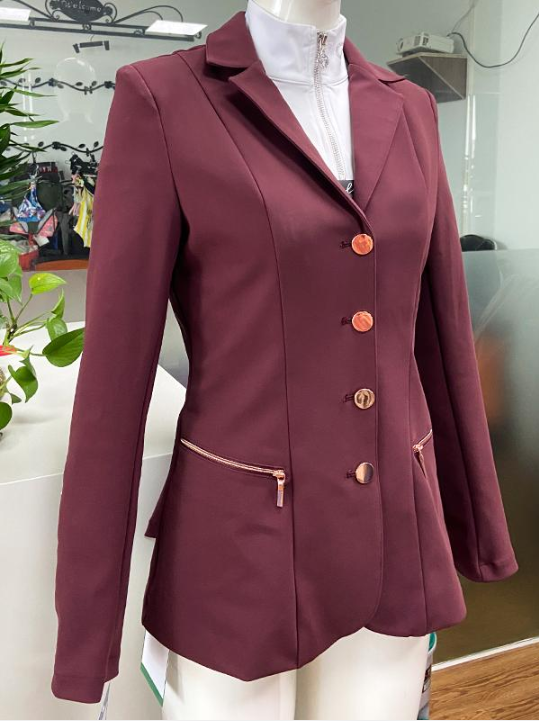
Most seam splits do not begin as a slow, even breakdown across the whole surface. They start at the impact zones, the small areas that absorb repeated force from a ball, puck, or body contact. Threads there are subjected to constant shear and compression, so a few fibers near the needle holes let go long before the rest of the seam shows any visible wear.
What makes these zones misleading is how ordinary they can look from the outside. The leather or synthetic panel flexes with every hit, gradually widening the stitch holes and rubbing the thread against the raw edges. Moisture, dried sweat, and field dust settle into those micro-gaps and act like mild abrasives. The first signs are usually a fluffy or flattened thread surface, or a stitch that sits slightly looser than its neighbors.
Checking the impact areas first is far more useful than scanning the entire item. Press along the stitches with your thumb to feel for give, and tug lightly on the surrounding material to see if the holes have stretched. Repairing these focused points early usually keeps a small separation from turning into a long, structural tear.
Zippers and Snaps That Show Their Age Early
Zippers start to complain long before the rest of the garment gives up. A once-smooth pull becomes a two-handed tug, and the teeth no longer mesh with that satisfying zip. The metal or plastic around the top stop often shows the first hint of trouble—slight corrosion, a loosened tape, or a slider that drifts down on its own. These are not dramatic failures, just quiet signals that the piece has entered its second life, where every fastening demands a little more patience.
Snaps tell their age in a different way. They lose that crisp click and begin to feel soft under the thumb, as if the spring inside has grown tired. You might notice the fabric around the snap puckering or the finish wearing thin along the rim. Sometimes a snap holds too well, refusing to release without a firm grip, while other times it gives up before you even ask. Either way, the hardware announces its years through small shifts in behavior, long before any visible rust appears.
The early aging of closures rarely matches the life of the surrounding fabric. A jacket can still look fresh at the collar and cuffs while its main zipper grinds with every upward pass. Pockets on a well-loved pair of jeans may fade evenly, but the waist snap will be the first to loosen its bite. Paying attention to these details offers a more honest read of wear than any tag or brand name ever could.
Armor Pockets That Shift When You Do
Most tactical pockets are bolted in place like they were designed for a mannequin, not a person who actually moves. These armor pockets ride on a low-friction anchor system that lets them glide a few inches with your torso as you twist, sprint, or drop into a crouch. The result is less tug on your vest, fewer bruised ribs from edge bind, and gear that stays reachable without you having to fight your own kit.
The shift is subtle enough that it never feels loose, but deliberate enough to make a real difference during long movements or awkward positions. Reach across your chest, climb over an obstacle, or sit in a vehicle and the pocket follows the natural line of your body instead of working against it. That little bit of give also helps when you're loading mags one-handed or pulling out a radio while pressed against cover.
It's a small mechanism with a big payoff for anyone who's spent hours wearing body armor and ended up adjusting straps every few minutes. Instead of fixing the vest around the pockets, you let the pockets adapt to the way you actually carry your weight.
Waterproof Claims That Need a Wet Morning Test
Most waterproof ratings are earned in a lab, not on a cold platform waiting for a delayed train. A wet morning test tells you more because it combines steady drizzle, damp wind, and the kind of moisture that clings to fabric even after the rain pauses. If the outer layer wets out in the first fifteen minutes, that claimed protection is already gone before the downpour begins.
The details fail first. Water sneaks past a coated main zipper when it is exposed to angled rain, and cuffs that fit fine in dry weather start drawing moisture upward once they are saturated. Pockets with thin storm flaps can become small reservoirs, and a hood that lacks a stiff brim will drip straight into your eyes every time you glance down.
A real test means wearing the item through a full wet commute: walking, waiting, climbing stairs, and carrying a bag. If you arrive dry at the neck, shoulders, and chest, the waterproof claim holds. If those zones are damp and cold by the time you step indoors, the label was never doing its job.
Why the Second Batch Rarely Feels Like the First
The first batch of anything carries a kind of unspoken weight. You approach it with fresh attention, measuring each step against an imagined standard. By the second round, familiarity has already begun to soften the edges. The motions feel less ceremonial and more automatic, which is not always a flaw but does shift the texture of the experience. What felt like discovery now feels like routine, and routine rarely asks for the same level of care.
There is also the problem of comparison. The second batch is never judged on its own terms; it is always held up against the memory of the first. But memory is unreliable in subtle ways, sanding down inconsistencies and amplifying the moments that felt good. So the second attempt can seem narrower, less vivid, even when the facts suggest otherwise. This gap between expectation and perception is often where disappointment takes root, quietly and without ceremony.
Perhaps the difference is not in the batch itself but in the posture of the person making it. The first time, you are willing to be surprised. The second time, you are trying not to be. That small shift in attention changes everything, and until it is named, the second batch will keep feeling like an echo instead of its own event.
FAQ
Ask for abrasion resistance test data from an independent lab, then request a sample to feel the fabric weight and inspect stitching around impact zones.
Look for tightly woven nylon or polyester blends with high denier ratings, reinforced with aramid fiber panels at elbows and shoulders.
Pull apart a seam on a pre-production sample at the shoulder and side panels; it should resist moderate hand force without thread separation or puckering.
Only if the supplier provides certification documents that match the exact jacket model, not just generic catalog claims.
Check whether cutting tables are organized, panels are consistently aligned, and workers have clear quality-control checkpoints at each stitching station.
Request a small pilot run, then compare random units from the next production batch for fabric weight, stitching density, and zipper alignment.
Uneven topstitching, flimsy zipper tape, mesh liners that tear easily, and armor pockets that shift when the jacket is twisted.
They can if applied unevenly or over an unsuitable base fabric; ask which lamination method is used and whether it has been flex-tested.
Conclusion
A spec sheet can look flawless on a screen, but the real story of abrasion resistance lives in how the fabric was tested and what numbers are left out. Suppliers worth keeping will hand over full tear and abrasion data, not just a marketing line about heavy-duty nylon. The same goes for construction because most jacket failures do not begin at the seams shown in product photos. They start at the elbows, shoulders, and back panels where pavement hits first. If those impact zones are not reinforced with doubled stitching or bar tacks, the jacket comes apart exactly when it matters.
Hardware is another quiet test. Zippers that feel stiff on day one or snaps that loosen after a few rides reveal more about a supplier's sourcing than any sample tag. Armor pockets deserve equal scrutiny; if the pad shifts when you lean forward, the jacket fails its core job. Waterproof claims are easy to print and harder to prove, and a wet morning ride will quickly show whether seam tape and coatings hold. The final check is repeatability. A first sample can impress, but the second batch is the true measure of process control. If stitching density, zipper pull, or pocket alignment drifts after approval, nothing on the original checklist matters.
Contact Us
Contact Person: Keven Tong
Email: [email protected]
Tel/WhatsApp: +86 18666477707
Website: https://www.ope-technology.com