

Reliable Oil-Free Air Blower: Your Complete Guide to Maintenance-Free Air Solutions
2026-07-24
Tired of constant upkeep and oil changes for your air blowers? Imagine a solution that delivers pure, reliable air without the hassle of routine maintenance. In a world where efficiency and cleanliness matter more than ever, oil-free technology is reshaping industries from wastewater treatment to pneumatic conveying. But not all oil-free blowers are created equal—true peace of mind comes from engineering that eliminates wear and tear, not just oil. This is where Seize Air shines, offering robust, truly maintenance-free air solutions that keep your operations running smoothly year after year. Dive into our complete guide to understand why oil-free blowers are the smarter choice and how Seize Air’s innovations can transform your workflow.
How Oil-Free Blowers Eliminate Maintenance Headaches
Traditional blowers often come with a baggage of routine oil checks, replacements, and the ever-present worry of leaks contaminating your process. With oil-free technology, you strip away that entire layer of complexity. There are no lubricants to monitor, no filters to swap out on a strict schedule, and no oily mess to clean up. This means your maintenance checklist shrinks dramatically—technicians can focus on other critical tasks instead of being tied down by a greasy chore list.
The real headache with oil-lubricated systems isn’t just the upkeep; it’s the unpredictable downtime. A missed oil change or a clogged separator can bring operations to a halt, cascading into lost productivity and rushed repairs. Oil-free blowers eliminate these failure points by design. They rely on precision-engineered air ends that run without the friction and wear that demand constant lubrication. Fewer moving parts in contact mean fewer breakdowns, so your facility runs smoother with less firefighting.
Beyond the mechanics, there’s the peace of mind that comes with cleaner output. In industries like food processing or electronics, even trace oil mist is a liability. Oil-free blowers deliver 100% oil-free air, erasing the risk of product spoilage or regulatory fines tied to contamination. It’s a smarter, simpler approach that stops maintenance headaches before they even start—no oil, no mess, no constant supervision required.
The Inner Workings of True Oil-Free Air Technology
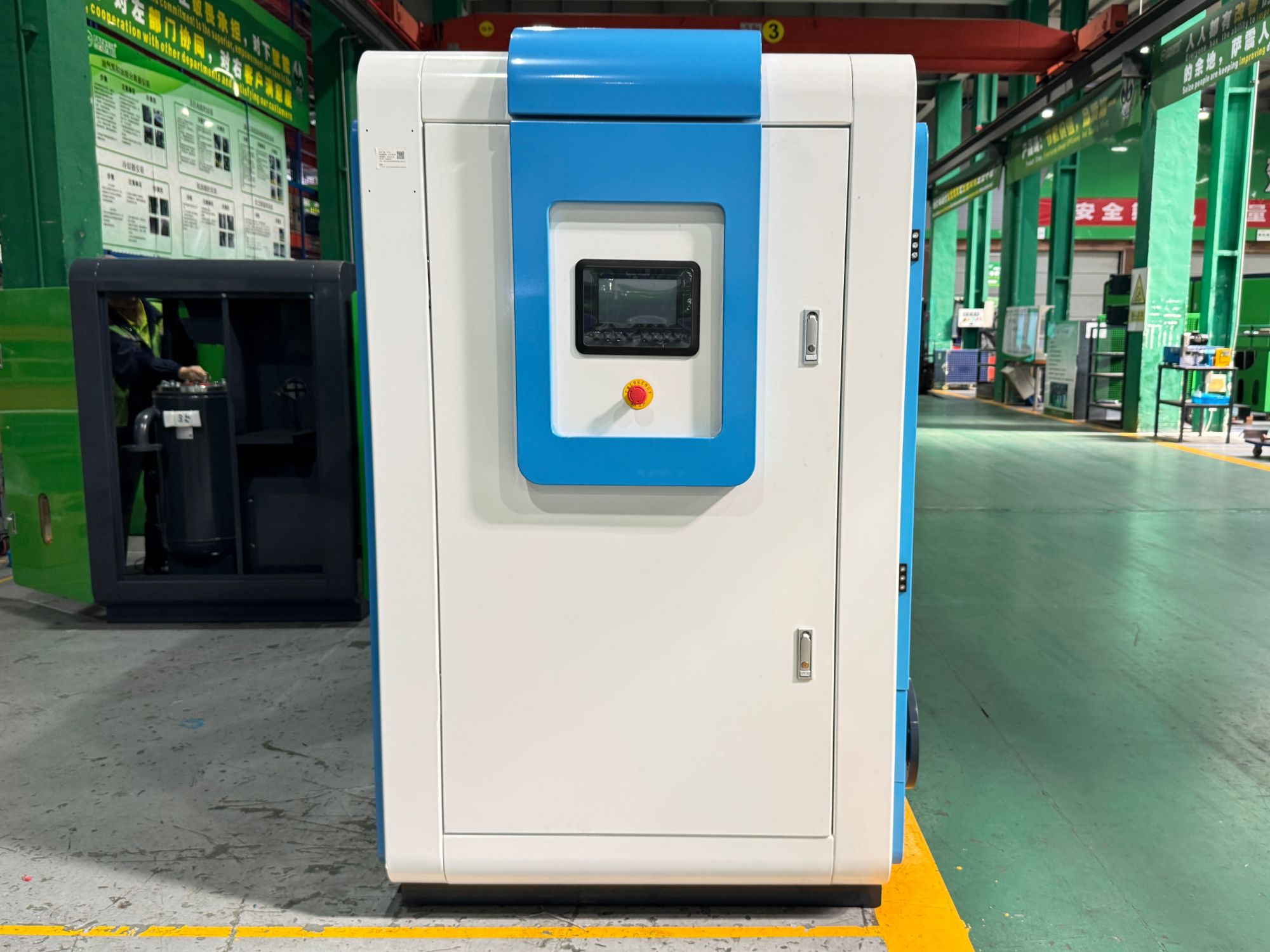
At the heart of true oil-free air technology lies a carefully engineered compression chamber where no lubricating oil ever comes into contact with the air stream. Instead of relying on oil for sealing and cooling, advanced materials like PTFE or carbon-graphite composites coat the rotors and housing walls, creating a non-stick, wear-resistant surface that maintains precise clearances without cross-contamination. This approach eliminates the need for downstream oil filtration entirely, delivering air that is inherently clean from the compression stage onward.
Temperature management becomes the central challenge when oil is removed from the equation. The compression process naturally generates heat, and without an oil bath to absorb it, designers turn to precise internal geometry and external cooling jackets. Inter-coolers between stages and specially shaped rotor profiles help dissipate thermal loads efficiently, keeping discharge temperatures within safe limits for sensitive downstream equipment. This focus on thermal control not only preserves air purity but also extends the life of internal components by preventing material fatigue.
Sealing the compression zone without liquid oil requires a dual-pronged strategy of mechanical design and material science. Labyrinth seals, visco-seals, or carefully engineered clearance gaps prevent air from bypassing the rotors, while dry-running bearings eliminate any chance of lubricant migration. The result is a closed system where the only thing moving between the intake filter and the discharge valve is clean, untreated air — a principle that remains the gold standard in pharmaceutical manufacturing, food processing, and electronics where even trace oil vapor can ruin entire batches.
Where Oil-Free Air Blowers Outperform Conventional Systems
Oil-free air blowers truly shine in environments where air purity isn’t just a preference—it’s a requirement. In food and beverage processing, pharmaceutical manufacturing, or electronics assembly, even trace amounts of oil mist can contaminate products, spoil batches, or damage sensitive components. Conventional lubricated blowers always carry a risk of oil carryover, no matter how well-maintained they are, but oil-free designs eliminate that risk entirely. This isn't just about avoiding costly recalls; it's about building a process where clean air is a given, not a constant worry.
Beyond contamination concerns, oil-free blowers show their strength in wastewater treatment and pneumatic conveying applications where reliability and low maintenance intersect. Traditional blowers demand regular oil changes, filter replacements, and leak checks—tasks that add up in both labor and downtime. An oil-free system just runs, often with nothing more than periodic air filter cleaning. For remote lift stations or aeration basins that operate around the clock, that simplicity translates to fewer service calls and a longer mean time between failures. The upfront cost might raise an eyebrow, but the lifetime savings in upkeep and production interruptions quickly tip the scales.
Then there’s the matter of operating conditions. In high-temperature settings or where the blower must endure frequent starts and stops, oil-free units maintain their composure without the thermal breakdown that degrades lubricants. They also avoid the sluggishness that cold-start oil viscosity can cause in winter. And while energy efficiency often gets touted, the real-world gain comes from how these machines hold their performance curve over time—no gradual loss of volumetric efficiency due to varnish buildup or worn seals. When a process demands unwavering output day after day, the oil-free approach isn't just an upgrade; it feels like the logical baseline.
Long-Term Cost Savings Beyond the Initial Investment
Choosing premium tools or equipment often means paying more upfront, but the real financial gain unfolds over years. Durable construction and superior materials reduce the need for frequent replacements, slashing long-term ownership costs. While lower-priced alternatives might seem appealing, they frequently lead to repeated purchases, downtime, and repairs that silently inflate total expenditure.
Efficiency is another hidden factor. Well-engineered products tend to operate with greater energy efficiency and require fewer consumables, trimming everyday running costs. Reduced maintenance demands also free up resources that would otherwise be spent on servicing, allowing teams to redirect focus and budget toward growth-oriented activities instead of constant upkeep.
Over a typical lifespan of five to ten years, the accumulated savings can easily surpass the initial price gap. When calculating total cost of ownership—including purchase, maintenance, energy usage, and eventual replacement—spending more at the outset often proves to be the more economical decision. It's an investment where the return reveals itself quietly, month after month, in the form of lower bills and uninterrupted productivity.
Selecting the Right Oil-Free Blower for Your Operations
When it comes to industrial air handling, oil-free blowers have quietly become the backbone of many processes that demand purity. Whether you're aerating wastewater, moving sensitive powders, or supplying combustion air, even trace oil contamination can wreak havoc. That's why matching the blower technology to your actual operating conditions matters far more than simply comparing horsepower ratings. Think about your pressure and flow requirements first—positive displacement (roots-type) blowers excel at lower pressures with consistent flow, while centrifugal blowers shine when you need higher pressure ratios with a smaller footprint. Start by charting your typical demand curve, not just the peak numbers.
Operating environment is another factor that often gets overlooked until it's too late. Dusty, humid, or corrosive atmospheres can choke a blower that isn't built for them. For example, if your facility deals with airborne abrasives, you'll want an enclosure that protects the motor and bearings without restricting cooling. Noise levels also deserve a second thought—some oil-free designs can be surprisingly quiet, which matters if your team works near the equipment all day. Look beyond the catalog specs and ask manufacturers how their units perform under sustained partial loads, because real-world duty cycles rarely match the test bench.
Finally, don't underestimate the long-term picture. An oil-free blower eliminates the need for lubrication maintenance, but the bearings, seals, and cooling systems still have life expectancies that vary widely by design. Check whether the model you're considering has a proven track record in applications similar to yours, and find out if replacement parts are readily available locally. Sometimes a slightly higher upfront cost pays for itself in reliability if the blower is easy to service without specialized tools. The right choice isn't just about today's production—it's about avoiding those unplanned shutdowns that no amount of overtime can fix.
Real-World Applications That Demand Clean, Dry Air
From pharmaceutical labs to semiconductor fabs, countless industries hinge on compressed air that’s meticulously filtered and dried. Even microscopic oil droplets or moisture swings can spoil a batch of tablets, corrode sensitive optics, or trigger erratic valve actuation on an automated assembly line. Food and beverage packaging is another arena where air purity is non-negotiable — a single puff of contaminated air contacting a sealing surface or blow-molding a PET bottle can taint flavor, shorten shelf life, or violate health codes. These environments don’t just want clean air; they depend on it for the very integrity of their products.
Beyond manufacturing, mission-critical systems like hospital surgical theaters and diving compressors demand breathing-quality air that’s relentlessly stripped of moisture and hydrocarbons. A bit of water vapor in a patient’s ventilator circuit or a saturation diver’s gas supply isn’t an inconvenience — it’s a direct threat to human life. Similarly, spraying and coating operations in automotive and aerospace paint shops rely on strictly regulated dew points to stop fisheyes, orange peel, and blistering from ruining a flawless finish. In these settings, the margin for error evaporates the moment humidity gets in the way.
Field applications often present an even grittier picture. Mobile compressors feeding jackhammers, sandblasters, or pneumatic tools on construction sites brave rain, dust, and temperature swings that can turn a compressor’s tank into a miniature rain cloud. Without robust drying and filtration, tool chatter, premature wear, and frozen lines in cold weather become daily headaches. Instrument air for remote wellheads or pipeline actuators tells a similar story, where a control valve that sticks due to moisture can bring an entire process to a standstill — proving that clean, dry air isn’t a luxury reserved for indoor plants, but a frontline requirement anywhere reliability counts.
FAQ
Their design eliminates oil-related failures, such as contamination or breakdowns from lubricant degradation. Precision engineering with durable, self-lubricating materials ensures steady airflow and minimal wear, even under continuous operation.
By removing oil from the compression chamber, you avoid regular oil changes, filter replacements, and the messy cleanup associated with oil leaks. The result is a cleaner, simpler system that rarely needs hands-on attention.
Absolutely. Advanced coatings and rotor profiles reduce friction and heat buildup, maintaining efficiency over time. Many models are tested to deliver stable output for tens of thousands of hours without performance dips.
You get a cleaner air supply, lower upkeep costs, and a smaller environmental footprint. They're also quieter and often more energy-efficient, making them a smart upgrade for facilities aiming to reduce downtime and utility bills.
Yes, they’re ideal. Without oil mist or residue, the air stays pure, meeting strict hygiene standards. They help prevent product contamination and pass audits more easily in industries like pharmaceuticals and electronics too.
Although the upfront price may be higher, you save significantly on maintenance supplies, labor, and disposal fees. The extended service life and energy savings often yield a lower total cost of ownership within a few years.
Maintenance is minimal but not zero. You may need to inspect inlet filters, check cooling fans, and occasionally tighten electrical connections. Most units are designed for quick, tool-free inspections that take just minutes.
Not usually. They’re compact and can be swapped in with basic piping and electrical adjustments. Many suppliers offer guidance or plug-and-play kits to streamline retrofits, so downtime is kept to a minimum.
Conclusion
Oil-free air blowers transform the way industries approach compressed air by eliminating the messy, time-consuming maintenance tied to lubricated systems. Without oil in the compression chamber, you avoid filter changes, condensate disposal, and the risk of contamination that can damage downstream equipment or spoil sensitive processes. The engineering behind these blowers relies on precision coatings, dry-running bearings, and advanced cooling that keep moving parts separated and friction low, so the technology delivers steady, pulsation-free air at low noise levels year after year. This is not just about skipping routine service calls—it’s about reliable performance in applications where even trace oil wreaks havoc, from pharmaceutical packaging to semiconductor fabrication. When you no longer need to schedule downtime for oil-related upkeep, your operation runs leaner and more predictably.
Beyond the simplicity of upkeep, the economic case for oil-free blowers unfolds over their entire service life. While the upfront cost might raise an eyebrow, total cost of ownership often tips heavily in their favor once you factor in eliminated consumables, reduced energy draw from cooler running temperatures, and fewer production interruptions. Selecting the right unit means looking past the airflow spec sheet to the real-world demands of your process—continuous or intermittent duty, ambient conditions, and required pressure stability. In wastewater plants, they aerate without sheen-forming oil mists; in food conveying, they preserve flavor purity. This versatility, backed by robust engineering that shrugs off harsh environments, makes oil-free blowers a strategic choice for anyone who cannot compromise on air quality or uptime.
Contact Us
Contact Person: Mia
Email: [email protected]
Tel/WhatsApp: +86 19821985894
Website: https://www.seize-air.com