

Reliable Current Sensing Resistors: Top Picks and Selection Guide
2026-07-04
When designing precision circuits, the right current sensing resistor can make or break your performance. From drift to power handling, subtle choices ripple through your entire system. In this guide, we spotlight top reliable picks and walk you through the key selection parameters—so you can avoid common pitfalls and make an informed decision. For deep-dive specs and premium shunt solutions, check out Milliohm.
Understanding the Core Purpose of Current Sense Resistors
At its heart, a current sense resistor is a simple yet precise component inserted into a circuit to measure the flow of current. By placing a low-resistance element in the path of the current, it creates a tiny voltage drop proportional to that current, following Ohm’s law. This voltage is then amplified and read by a monitoring system, allowing designers to track power consumption, protect against overloads, or fine-tune performance in real time. Far from being a passive bystander, it acts as the silent observer that turns invisible electrical movement into actionable data.
What sets these resistors apart isn’t just their ability to handle current, but the care taken to keep their resistance value stable despite temperature swings or aging. A standard resistor might drift when the board heats up, but a current sense unit is built with materials like metal alloys that resist thermal runaway, ensuring the measurement stays trustworthy. This reliability is what separates a vague estimate from a precise reading—critical in applications where even a few milliohms of error could mean the difference between safe operation and a fried circuit.
Beyond mere measurement, these components often double as guardians of the system. By flagging excessive current early, they give control circuits the chance to throttle back or shut down before damage spreads. In battery-powered devices, they enable accurate fuel gauging, squeezing out every last bit of usable energy without pushing cells into dangerous territory. It’s this blend of simplicity, precision, and protection that makes the current sense resistor an unglamorized yet indispensable pillar of modern electronics.
Key Electrical Parameters That Define Performance
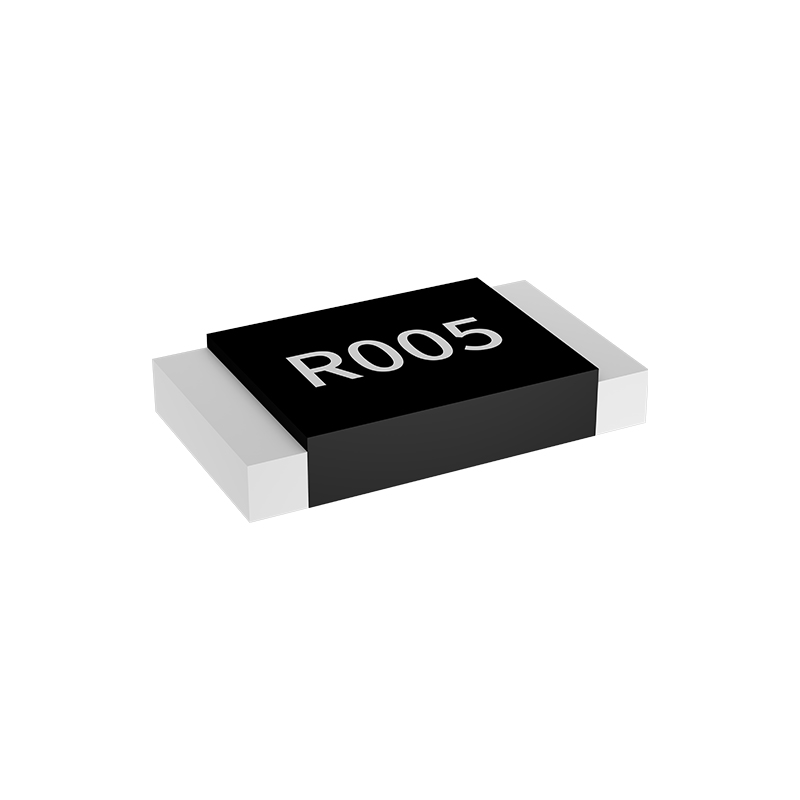
Performance in modern electronics isn't just about raw speed or power—it's shaped by a handful of electrical parameters that directly dictate how a component behaves under real-world conditions. Think of supply voltage tolerance: a chip might be rated for 3.3V, but how far can that dip before logic levels become unreliable? Or consider leakage current, often overlooked until it drains a battery in sleep mode. These aren't abstract specs; they define whether a design survives voltage spikes, temperature swings, or years of continuous operation.
Then there's the interplay between bandwidth and slew rate. A high-speed amplifier might boast a wide bandwidth on paper, but if its slew rate can't keep up, the signal edges round off, corrupting data. Similarly, input impedance isn't just a number—it determines how much a measurement probe disturbs the circuit. In precision analog, even femtoamps of bias current can throw off a sensor reading. Engineers learn to read between the lines of datasheets, knowing that a single parameter rarely tells the full story.
Thermal parameters often become the silent limit. As a MOSFET switches, its Rds(on) seems low, but at elevated junction temperatures, that resistance can double, causing more heat and eventually thermal runaway. Likewise, capacitor derating under DC bias can shrink effective capacitance by 80%, destabilizing power rails. The key is understanding that these parameters aren't fixed—they dance with frequency, temperature, and voltage. A great design anticipates that dance, not just the headline numbers.
Exploring Common Materials and Construction Styles
Walking through almost any neighborhood, you'll notice how the choice of materials quietly shapes a building's character. Brick facades carry a sense of permanence and warmth, their earthy tones deepening over decades as they weather the seasons. In contrast, sleek glass and steel structures reflect the sky, projecting a modern, forward-looking vibe that changes with the light. Even traditional wood siding, whether painted crisp white or stained dark, evokes a connection to nature and craftsmanship that feels approachable and familiar. These aren't just aesthetic decisions—they're about how a building ages, how it holds up against local weather, and the kind of upkeep it demands.
Construction styles tell a parallel story, often rooted in regional traditions and practical needs. A timber-frame house with exposed beams speaks to a heritage of hand-cut joinery, while contemporary modular builds suggest efficiency and precision engineering. In coastal areas, you might find homes raised on stilts, using materials that resist salt and moisture—practical choices that become part of the area's visual identity. Urban infill projects often blend industrial materials like corrugated metal with reclaimed brick, creating a layered look that bridges old and new. This kind of mixing isn't random; it reflects a growing appreciation for honesty in materials, where nothing is hidden behind false fronts.
What makes a building feel truly resolved, though, is when material and style work together without feeling forced. A rustic stone cottage with a heavy slate roof fits naturally into a hilly landscape, just as a flat-roofed stucco villa looks at home under a hot sun. The best designs don't just pick materials from a catalog—they honor the local supply chain, the skills of available craftspeople, and the microclimate. Next time you pass a building that catches your eye, consider how its skin and skeleton came together. Often, the choices are a quiet nod to the land, the labor, and the life that happens inside.
Thermal Behavior and Long-Term Stability Considerations
Materials exposed to fluctuating temperatures can undergo subtle yet cumulative changes that are often overlooked in short-term tests. Expansion and contraction cycles, for instance, may gradually weaken interfacial bonds or induce microcracking, especially in composites where mismatched coefficients of thermal expansion come into play. Even in homogeneous substances, repeated thermal stress can alter crystalline structures or accelerate phase separation. Understanding these mechanisms requires looking beyond immediate degradation and considering how thermal history shapes material integrity over thousands of cycles.
Long-term stability is not simply about surviving extreme temperatures—it is more often compromised by prolonged exposure to moderate heat. Oxidation, chain scission, or cross-linking in polymers, as well as corrosion or diffusion in metals, progress slowly but steadily when materials operate near their upper service limits. The synergy between thermal energy and other environmental factors, such as humidity or reactive contaminants, frequently determines the real-world lifespan. Realistic assessments therefore demand accelerated aging protocols that closely replicate field conditions rather than idealized laboratory extremes.
A growing body of work emphasizes the role of thermal preconditioning and stress relaxation in predicting decades-long performance. Instead of relying solely on short-term strength retention, engineers now explore indicators like enthalpy recovery in glasses or the evolution of viscoelastic damping to gauge hidden changes. These approaches uncover latent vulnerabilities that conventional pass/fail tests might miss, offering a more nuanced picture of how materials will truly behave after years of service.
Evaluating Real-World Use Cases Across Industries
Real-world use cases cut through theoretical promise, revealing where technology genuinely solves problems versus where it merely adds complexity. In healthcare, for instance, AI-driven diagnostic tools have moved beyond labs into clinics, helping radiologists detect anomalies faster, yet their true value only emerges through rigorous evaluation—measuring not just accuracy but also impact on patient outcomes and workflow integration. Similarly, in manufacturing, predictive maintenance systems are often touted for reducing downtime, but a close look at actual deployments shows that success hinges on data quality and staff adaptation rather than algorithmic sophistication alone.
Cross-industry evaluation uncovers pattern failures that remain invisible within a single domain. The retail sector’s personalization engines, when assessed alongside financial fraud detection systems, highlight a shared challenge: balancing precision with interpretability. A recommendation algorithm might prioritize click-through rates, but without explaining its choices, it erodes customer trust—a lesson the banking industry learned when opaque credit scoring models drew regulatory scrutiny. Such parallels demonstrate that use cases are not just isolated implementations; they are narratives of adaptation, often rewriting best practices in unexpected ways.
Finally, evaluating use cases means looking beyond the initial deployment to long-term evolution. In agriculture, for example, IoT sensors for soil monitoring promised optimized irrigation, but field studies revealed that smallholder farmers often abandoned the technology due to maintenance hurdles. The successful cases were those where the solution evolved alongside community practices, incorporating local knowledge and simple interfaces. This pattern repeats across industries: the most resilient use cases are living systems, constantly refined through feedback loops that blend technical metrics with human factors—a standard that no white paper can fully capture.
Practical Tips for Integration and Layout Design
Neglecting the return path for high-speed signals is a classic pitfall. Every signal trace should have an adjacent, uninterrupted ground plane to minimize loop area and electromagnetic interference. Think of it as giving each signal a dedicated lane—without it, the entire design can suffer from crosstalk and signal integrity issues.
Thermal considerations often take a backseat until it’s too late. Spread power-hungry components across the board to avoid concentrated hotspots, and use thermal via arrays to conduct heat to opposite layers or heat sinks. A well-thought-out layout can prevent the need for costly redesigns after initial thermal testing.
Differential pairs require special attention: maintain constant trace width and spacing, and match lengths precisely within a few mils. Even minor skew can degrade performance significantly in high-speed interfaces like USB or PCIe. Route them together, avoiding 90-degree angles and layer transitions whenever possible.
FAQ
A current sensing resistor, often called a shunt resistor, is a precision resistor placed in series with a load. By measuring the voltage drop across it and applying Ohm's law (I = V/R), you can accurately determine the current flowing through the circuit. These resistors typically have very low resistance values to minimize power loss and avoid disrupting the circuit's normal operation.
Standard resistors usually have higher tolerances, larger temperature coefficients, and are not optimized for low resistance values. Current sensing requires minimal self-heating, high accuracy, and stability over temperature to avoid measurement errors. Specialized current sense resistors are built with materials like metal alloy or metal foil to deliver precise, repeatable readings even under demanding conditions.
Start by balancing two factors: the voltage drop you can tolerate and the smallest current you need to measure. A larger resistance gives a larger voltage signal, making it easier to detect small currents, but it also wastes more power and can affect circuit performance. Many designers target a voltage drop of 50–100 mV at full load. Once you've chosen a resistance, verify that the power dissipation (I²R) stays well below the resistor's rated power, and check the amplifier's input range can handle the developed voltage.
Metal strip and metal alloy resistors are among the most robust. They feature low inductance, excellent surge tolerance, and very low temperature coefficient of resistance (TCR). Wirewound resistors aren't ideal due to their inductance, while thick film can suffer from higher noise. For precision work, metal foil resistors offer ppm-level TCR and superb long-term stability, though they come at a higher cost. Brands like Vishay, Bourns, and Rohm have strong offerings in this space.
Absolutely, and it's often recommended for low resistance values. A 4-terminal (Kelvin) connection separates the current-carrying paths from the voltage-sensing paths, eliminating errors caused by lead resistance and contact resistance. This is especially critical when measuring resistances below 10 milliohms, where even a tiny parasitic resistance can skew results. Many high-precision current sense resistors come with dedicated sense terminals for this purpose.
Underestimating self-heating and its effect on accuracy. As current passes through the resistor, it generates heat, which changes the resistance value if the TCR is high. This leads to a measurement error that compounds over time. Another common mistake is placing the sense resistor in the wrong leg of the circuit—low-side sensing is simpler but can introduce ground offsets, while high-side sensing avoids that but requires a more complex amplifier. Always simulate the thermal behavior and consider the layout to keep connections short and wide.
Conclusion
Current sense resistors are the unsung heroes of precision power management, quietly enabling accurate current monitoring in everything from battery fuel gauges to motor drives. Their core job is deceptively simple—convert current into a tiny voltage drop—but choosing a reliable one requires balancing several subtle electrical parameters. Resistance value and tolerance set the baseline accuracy, while the temperature coefficient of resistance (TCR) dictates how stable that value stays as heat builds. Power rating and voltage coefficient further define the safe operating area, and low inductance becomes critical in fast‑switching circuits. Material choice amplifies these traits: metal alloy and metal foil elements deliver exceptional TCR and pulse handling, thick film offers cost‑effective versatility, and thin film strikes a middle ground with reasonable precision and compact footprints. This interplay of materials and construction determines not only initial performance but also long‑term drift, a factor often overlooked until field failures arise.
In the real world, these resistors face vastly different challenges—automotive under‑hood modules must survive thermal shock and vibration, industrial drives endure continuous high currents, and portable electronics demand minuscule footprints with minimal power loss. Application‑specific selection is what separates a robust design from a marginal one. Layout also plays a pivotal role: using four‑terminal Kelvin connections eliminates trace resistance errors, while generous copper pours help siphon away heat and keep the resistor within its derating curve. Thermal management is equally about long‑term reliability; a part that runs consistently hot will age faster, eroding accuracy. The smartest picks aren’t necessarily the most expensive, but the ones where materials, rating, and layout work harmoniously. When sourcing a reliable current sense resistor, look beyond just the datasheet specs—evaluate it in the context of its intended thermal environment, mounting technique, and the true precision your application needs to endure over its product life.
Contact Us
Contact Person: Yuying Gao
Email: [email protected]
Tel/WhatsApp: +86 18926013721
Website: https://en.milliohm.net/