
Professional MCM Flexible Stone for Interior Walls: A Modern Design Solution
2026-10-19
Interior walls have long been the silent storytellers of a space—until now. What if you could wrap a room in the organic texture of stone without the weight, cost, or installation headaches? Enter MCM flexible stone, a material that's quietly reshaping modern interior design. Among the names pushing this innovation forward, Magic Stone stands out for its professional-grade flexible stone solutions that blend durability with a stunningly natural aesthetic. In this post, we’ll explore why this modern design solution is turning heads and how it can transform your next project.
Soft Stone Surfaces for Hard-Working Walls
When a wall takes daily abuse from leaning furniture, scuffed bags, or busy corridors, most finishes start showing their age within months. Soft stone surfaces flip that expectation. Instead of a hard shell that chips or a painted layer that peels, these mineral-based panels offer a tactile give under pressure, yet they resist the kind of wear that would leave conventional drywall looking tired. The surface feels almost like honed limestone, but it flexes just enough to absorb impact without cracking.
Maintenance becomes less of a chore because the material doesn't trap dust in deep textures or require resealing. A simple wipe with a damp cloth handles scuffs that would normally demand repainting. For hallways, mudrooms, or commercial entry points where walls work as hard as the floors, this combination of softness and resilience changes how you think about wall protection.
Flexible by Name, Durable by Nature
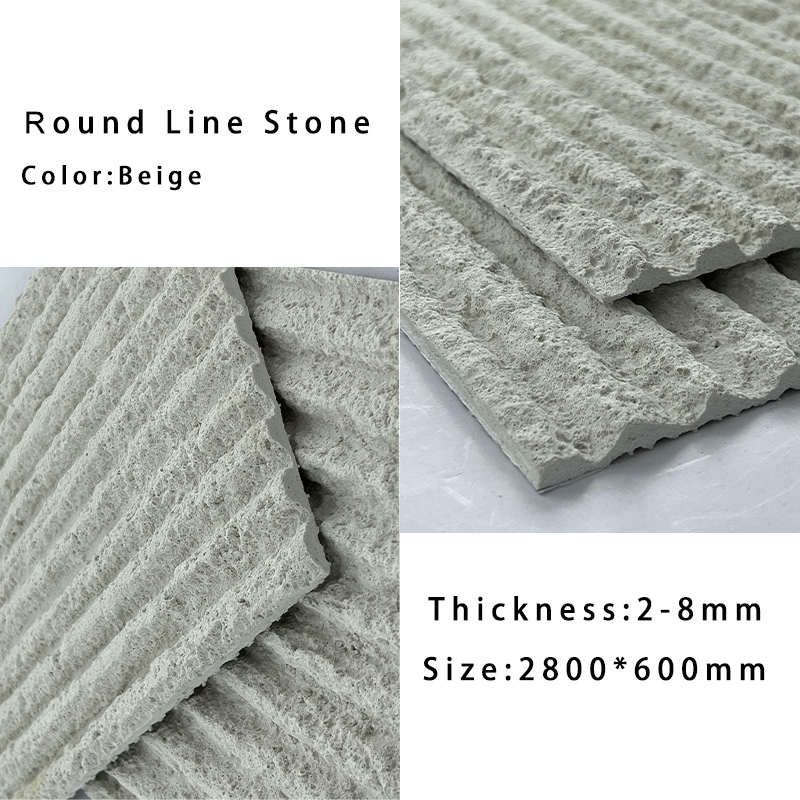
The bend isn't a weak point here. You can twist it around awkward corners, wrap it into tight coils, or stretch it across uneven ground, and it still snaps back to the shape you need. That kind of give usually comes with a trade-off, but the materials underneath don't crack or thin out after repeated flexing.
What makes the difference is how the layers are put together. Instead of relying on a single soft shell, the inner core handles the constant motion while an outer skin takes the scrapes, sun exposure, and everyday bumps. Even after months of being yanked, stepped on, and left out in changing weather, the surface stays intact and the connections hold.
You get a tool that moves with you rather than fighting you on the job. It doesn't kink at the worst moment, and it won't turn brittle after a season of hard use. That balance between easy movement and long-term toughness is what the name actually means.
Shaping Stone Around Corners, Not Cutting Corners
True stonework reveals its character at the edges. A flat slab can be rushed through a saw, but a corner demands patience—each degree of the curve is negotiated by hand, the chisel meeting the grain at the angle the stone itself prefers. Cutting corners, in this trade, doesn't save time; it forfeits the very reason the stone was chosen. The corner is where light breaks, where shadow pools, where a room's geometry becomes tactile. To shape stone around that turn is to accept that the material has a memory, and that memory only honors the craftsman who listens.
The phrase works as a quiet manifesto for any meticulous work. You can cut the corner—trim the timeline, skip a step, force a material to behave against its nature—and the result will hold for a while, maybe long enough to pass inspection. But the corner is an honest witness. It bears stress differently, weathers differently, catches the eye differently. Shaping around it means the tool follows the arc rather than interrupting it. The finished edge doesn't just sit in the wall; it participates in the wall's life, expanding and contracting with the seasons without cracking because the fibers were never severed in a lie.
There's a difference between efficiency and erasure. Shaping stone around a corner preserves the full thickness, the structural intent, the visual weight. Cutting the corner removes material that was never yours to take. The first approach leaves a surface that feels inevitable, as though the stone grew that way. The second leaves a seam that will always look like a shortcut—because, in the end, it is one. That's why the best masons will tell you the corner isn't an obstacle to be simplified; it's the test that proves the whole piece was worth making.
The Lighter Side of Interior Stone Design
Stone doesn’t have to feel like a cave wall. A growing number of designers treat marble, travertine, and limestone as playful material rather than permanent armor. You’ll see thin slabs backlit to glow like paper lanterns, chunky offcuts stacked into whimsical side tables, and polished pebbles arranged as if they’ve rolled in from a cartoon beach. The palette leans toward chalky whites, blush pinks, and pale greens—tones that bounce light around instead of swallowing it.
There’s also a quiet humor in the patterns themselves. A slice of onyx might hold a cloud formation; a vein of quartzite can look like a lightning strike frozen mid-flash. Pair that with rounded edges, unexpected furniture shapes, or even stone “pillows” carved to look soft, and the room stops taking itself so seriously. It’s still durable, still grounded—just not afraid to wink at you from the coffee table.
From Flat Panel to Fluid Form
The era of the rigid flat panel is fading. Early screens were static, rectangular, and indifferent to their surroundings—simply containers for pixels. Fluid form pushes beyond that boundary, enabling surfaces to curve, stretch, and reshape themselves in response to both content and context. A display no longer has to feel like a framed window; it can become a living material that bends light and attention in subtle, organic ways.
This shift matters because design constraints change. Instead of aligning elements to fixed edges, creators now work with soft gradients, dynamic contours, and surfaces that invite touch without sharp boundaries. The transition from flat to fluid also changes how users perceive space: interfaces feel less like objects and more like environments, where information flows naturally across curves and around corners. The form itself becomes part of the message, not just a neutral backdrop.
Ultimately, moving from flat panel to fluid form is about letting go of the assumption that screens must be flat to be functional. When form follows intent rather than hardware limits, the result is a quieter, more adaptive visual language—one that melts into daily life rather than standing apart from it.
A Wall Finish That Bends Without Breaking
Rigid plaster and stiff panels often fight the building as it settles. This finish works the other way. It gives slightly under pressure, absorbing movement instead of cracking along stress lines.
A flexible binder lets the material stretch over rounded corners, curved partition walls, and even substrates that shift with temperature swings. You can trowel it thin, build it up, or leave a subtle texture without worrying about micro-fractures appearing later.
Beyond standard flat walls, designers use it in areas where traditional finishes fail: behind radiators, around window returns, on stairwell curves. The result looks like solid plaster, but behaves more like a tough skin.
FAQ
MCM stands for modified clay material. It's produced by blending mineral powders with a polymer binder, then forming the mix into thin, pliable sheets. The result looks like natural stone but weighs a fraction as much and can bend around corners, something rigid panels can't do.
Yes, in most cases. The surface needs to be clean, dry, and free of loose grout. A high-quality primer or bonding agent helps the adhesive grip. Because the sheets are so light, they don't require the same structural support as heavy stone.
A soft cloth or sponge with mild soap and water is enough for everyday dust and smudges. Avoid abrasive scrubbers and acidic cleaners, which can dull the surface. For stubborn stains, a pH-neutral stone cleaner works well.
Yes, it's moisture-resistant once sealed. In showers, proper waterproofing behind the sheets is still essential, but the material itself won't warp or grow mold. For backsplashes, a simple wipe-down keeps it looking fresh.
The range includes replicas of travertine, slate, limestone, and even concrete-like textures. Colors span warm sands, cool greys, earthy browns, and charcoal. Some lines offer custom color matching for larger projects.
It has a slight texture that mimics stone grain, but it's warmer and softer than quarried rock. People often describe it as a matte, almost leather-like surface. If you want more depth, a light clear coat can add a subtle sheen.
Material costs are typically 30–50% lower than natural stone, and you save even more on labor because installation is faster and requires less prep. Shipping is also cheaper due to the low weight.
Yes, many first-timers handle it with good results. The sheets cut with a utility knife, and they're forgiving to reposition during the adhesive's open time. For large or complex walls, though, a professional installer can ensure perfectly straight seams.
Conclusion
MCM flexible stone redefines what interior walls can do. Unlike rigid panels that demand perfectly flat substrates and sharp, unforgiving corners, this material brings a soft, almost textile-like surface to high-traffic areas. It looks like quarried stone but handles like a heavyweight fabric, wrapping around columns and curved partitions without the need for miter cuts or awkward seams. Installers can shape it around corners without cutting corners on quality—the surface remains intact, continuous, and visually seamless. That blend of softness and strength means it absorbs everyday knocks and scuffs while maintaining the elegant, mineral-rich character of natural stone.
Another advantage is its weight. MCM flexible stone is dramatically lighter than traditional stone veneer, so it opens up design possibilities on upper floors, ceiling transitions, and retrofit projects where structural load is a concern. You can move from flat panel layouts to fluid, sculptural forms without reinforcing the wall or sacrificing durability. The material bends without breaking, resisting cracks even when the substrate shifts slightly or where temperature changes cause movement. For architects and designers, this is a modern solution that bridges the gap between raw stone aesthetics and the practical demands of contemporary interiors—giving walls a finish that feels both grounded and surprisingly adaptable.
Contact Us
Contact Person: Vito
Email: [email protected]
Tel/WhatsApp: 86 13088879266
Website: https://www.magicstonemcm.com