

Polyester Geogrid Supplier Delivers High-Strength Reinforcement Solutions
2026-05-26
In critical infrastructure, stability begins beneath the surface—and that’s where high-strength polyester geogrids make all the difference. As demand rises for reliable, long-lasting ground reinforcement, choosing the right supplier becomes a strategic advantage. WEN FENG STONE stands at the forefront, delivering advanced polyester geogrid solutions engineered to excel under extreme loads and harsh conditions. When every layer counts, settling for less simply isn’t an option.
Stronger ground, built to last: polyester geogrid performance in demanding environments
When you're dealing with soil that just won't cooperate—think loose sands, soft clays, or areas battered by heavy rainfall—polyester geogrids quietly get the job done. Their high tensile strength is a given, but what really sets them apart is how they maintain that strength year after year, even when buried in aggressive soils or subjected to constant dynamic loads. Unlike some materials that creep or degrade when you turn your back, these grids lock aggregate in place, spreading stress so effectively that the ground beneath stays stable long after construction crews have moved on.
Down in the layers where chemical exposure and biological activity conspire against man-made structures, polyester's natural resistance shines. It doesn't rot, it shrugs off pH extremes, and it handles the sort of around-the-clock abrasion that would leave lesser reinforcement shredded. This durability translates into fewer callbacks and a lifespan that outlasts the pavement or embankment it supports—something job site veterans learn to appreciate after a few harsh winters and scorching summers.
Installation side, the flexibility of polyester makes it forgiving on uneven subgrades. It lays flat, grips the fill without slipping, and doesn't require the sort of careful handling that eats up hours. For projects ranging from access roads over swampy ground to reinforced slopes holding back decades of erosion, this geogrid becomes the silent partner that lets engineers sleep at night knowing the ground below won't suddenly change its mind.
Inside the manufacturing process that sets premium polyester geogrids apart
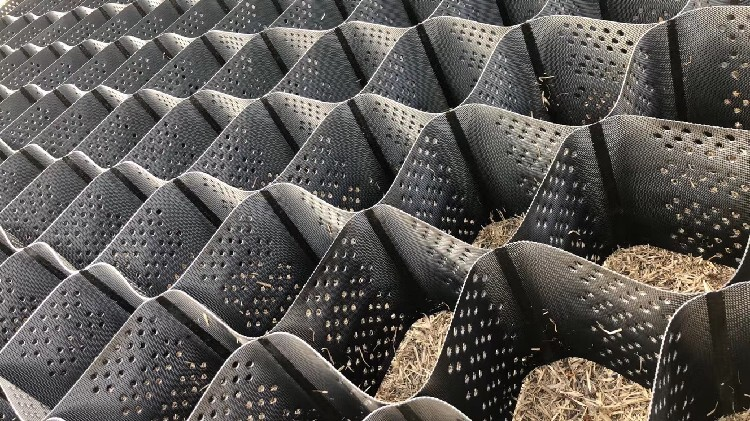
The journey begins with carefully selected high-tenacity polyester yarns, engineered to deliver exceptional tensile strength without compromising flexibility. Unlike standard geogrids that rely on basic polymers, premium variants undergo a precision knitting or weaving process where each junction is reinforced through advanced thermal bonding or specialized coating techniques. This ensures that the grid structure maintains its integrity under extreme loads, resisting deformation even in challenging soil conditions.
What truly sets the process apart is the meticulous quality control integrated at every stage. From the initial extrusion of yarns to the final rolling of the geogrid, continuous monitoring systems check for uniform aperture size, consistent rib thickness, and proper interlocking strength. Manufacturers often apply proprietary protective layers that shield the polyester from UV degradation, chemical attacks in acidic or alkaline soils, and microbiological deterioration, significantly extending the product’s service life in demanding civil engineering projects.
Finally, the tailored finishing treatment ensures optimal interaction with surrounding aggregate. The surface is engineered to maximize frictional resistance, locking the grid into the soil matrix and preventing pull-out failure. This thoughtful integration of material science and manufacturing precision results in a geogrid that not only stabilizes roadways and retaining walls but also adapts to the specific mechanical and environmental demands of each project, setting a new benchmark for long-term ground reinforcement.
From roads to retaining walls: real projects that rely on advanced polyester reinforcement
Polyester reinforcement has quietly become a backbone of modern civil engineering, showing up in places you might never notice unless you know where to look. Take highway construction: layers of polyester geogrid are now routinely sandwiched between asphalt courses to keep cracks from travelling upward. The result isn't just a smoother ride—it's a pavement that can handle heavy truck loads for decades without the alligator cracking that plagues conventional roads.
Retaining walls tell a similar story. In steep terrain, using polyester straps or grids to reinforce the soil behind a wall face allows for structures that are both taller and more slender than traditional gravity walls. A recent slope stabilisation project along a winding mountain pass used this approach to carve out extra lane width without eating into the downhill side. The reinforced fill stood up to seasonal rains without a hint of movement, while the slim profile kept the adjacent natural slope largely undisturbed.
What ties these projects together is an understanding that polyester doesn't just add strength—it changes how loads are distributed within a structure. Rather than battling natural forces, the reinforcement works with the soil or asphalt matrix, bridging weak spots and damping stress concentrations. This shift in design thinking has opened the door to longer service lives and fewer unplanned repairs, whether on a busy urban freeway or a remote retaining wall holding back a hillside.
Cost-effective soil stabilization without sacrificing long-term durability
Stabilizing soil on a budget often means cutting corners, but that doesn't have to be the case. By combining locally sourced materials like fly ash or slag with small doses of traditional binders, projects can slash material costs without compromising strength. This hybrid approach takes advantage of industrial byproducts that would otherwise go to waste, turning a low-cost solution into a high-performance one. Field tests show that properly proportioned blends can match or even exceed the durability of cement-only mixes, all while keeping expenses in check.
Another smart strategy involves mechanical stabilization—compacting granular materials into weak soils to create a solid base. This method reduces the need for expensive chemical additives and works especially well in areas with plenty of natural gravel or crushed rock. When paired with a thin layer of binder, the compacted matrix resists erosion and freeze-thaw cycles year after year, proving that simple techniques can deliver lasting results without a hefty price tag.
Finally, advanced curing techniques and on-site quality control ensure that every dollar spent translates into decades of service. Monitoring moisture content and temperature during curing prevents premature failures, while regular strength testing catches inconsistencies early. By focusing on the process as much as the materials, contractors can achieve durable soil stabilization at a fraction of the expected cost, making long-term reliability accessible even for smaller-scale projects.
The testing protocols behind reliable high-strength geogrid solutions
At the core of every durable high-strength geogrid lies a rigorous testing framework that goes well beyond basic industry standards. Manufacturers invest in long-term creep rupture tests, sometimes stretching over 10,000 hours, to verify that the product can withstand sustained loads without excessive deformation. These evaluations simulate decades of field stress, ensuring that the geogrid won't fail prematurely under embankment or retaining wall pressures. It's a painstaking process, but it's what separates dependable solutions from those that merely meet minimum specs.
Chemical and environmental resilience are equally critical, as geogrids often contend with aggressive soils, alkaline conditions, or fluctuating moisture. Specialized immersion tests expose polymer ribs to harsh chemical solutions at elevated temperatures, mimicking accelerated aging. By measuring the retention of tensile strength after these exposures, engineers can confirm that the product won't degrade unexpectedly in landfill liners or mining heap leach pads. Without such targeted protocols, even a high-strength grid can turn brittle and lose its reinforcement capability over time.
Installation damage is another frontline for testing. Field trials and lab-based drop tests replicate the impact of heavy compaction equipment and sharp aggregate, revealing how much strength a geogrid sacrifices during construction. This data feeds into design reduction factors, giving civil engineers a realistic assessment of in-service performance rather than relying on pristine lab specimens. Ultimately, it's this layer of practical, worst-case validation that builds trust in geogrid reliability under real-world conditions.
Environmentally considerate design: how polyester geogrids support sustainable construction
Polyester geogrids represent a quiet but profound shift in how civil engineering projects can balance performance with ecological awareness. Their core contribution lies in reducing the raw material footprint of construction. By reinforcing soil structures, these geogrids allow the use of locally sourced, lower-quality fill that would otherwise be deemed unsuitable, eliminating the need to import virgin aggregates from distant quarries. This not only cuts embodied carbon from transportation but also preserves natural landscapes that would be scarred by excessive mining. The material’s longevity further amplifies its green credentials—unlike metallic reinforcements that corrode, high-tenacity polyester withstands aggressive soil chemistries for decades, meaning fewer replacement cycles and less maintenance-related disruption.
Beyond material efficiency, these systems actively foster ecological integration. When used in steepened slopes or retaining walls, the reinforced soil mass becomes a viable growing medium for deep-rooted vegetation. The open-grid structure interlocks with grass, shrubs, and even tree roots, creating a stable biome that mimics natural hillsides. This vegetated finish not only sequesters carbon but also provides habitat corridors, manages stormwater through natural infiltration, and mitigates the urban heat island effect—all while performing the structural duty of conventional concrete or steel walls. Compared to rigid gray infrastructure, a polyester geogrid-reinforced green face demands less concrete and steel, two industries notoriously heavy in CO₂ emissions.
From a holistic project lifecycle perspective, the sustainability argument extends to resilience and adaptability. Sites reinforced with polyester geogrids often require shallower excavation depths and narrower construction footprints, minimizing land disturbance and preserving mature tree roots or adjacent ecosystems. The flexibility of the system accommodates ground movements without catastrophic failure, reducing the risk of environmental releases from collapsed structures. Maintenance demands are low, and at the end of a structure’s life, the geogrid can be cleanly separated from the fill, leaving behind unadulterated soil that can be reused or returned to nature—a stark contrast to the demolition debris of conventional retaining solutions.
FAQ
Its high tensile strength and low elongation properties ensure long-term stability in demanding ground conditions.
They conduct rigorous testing for tensile strength, creep resistance, and durability under various environmental conditions before shipping.
They’re common in road bases, retaining walls, bridge abutments, and slope stabilization where the ground needs extra support.
Their engineering team provides design guidance, installation training, and project-specific recommendations from planning through completion.
Yes, they resist chemical degradation from common soils and have excellent resistance to biological factors, making them suitable for challenging sites.
They maintain a robust inventory and flexible production lines, so they can quickly fulfill bulk requests without sacrificing quality.
Conclusion
A leading polyester geogrid supplier is redefining ground reinforcement with solutions that deliver exceptional strength and longevity even in the most demanding environments. The performance of these high-tenacity polyester geogrids stems from a meticulously controlled manufacturing process, where premium raw materials are engineered into a structure that resists creep, chemical degradation, and installation damage. Rigorous testing protocols, including long-term creep rupture and installation damage simulations, ensure every batch meets the highest reliability standards. This commitment to quality translates directly to the field, where the geogrids provide robust soil stabilization at a fraction of the cost of traditional methods, without compromising decades of service life. The result is a reinforcement solution that maintains its integrity under heavy loads and harsh conditions, making it ideal for infrastructure that must stand the test of time.
The real-world impact of advanced polyester reinforcement is evident across a spectrum of projects, from reinforced soil slopes and retaining walls to heavily trafficked roads and railway bases. In each application, the geogrids improve load distribution, reduce aggregate thickness, and accelerate construction timelines, all while delivering measurable cost savings. Moreover, the environmentally considerate design of these solutions supports sustainable construction goals by minimizing the need for imported fill, lowering carbon emissions, and extending the life cycle of vital infrastructure. By integrating high-strength engineering with ecological awareness, this polyester geogrid supplier is not merely providing a product but delivering a comprehensive reinforcement strategy that balances performance, economy, and planetary stewardship.
Contact Us
Contact Person: Jennifer LEE
Email: [email protected]
Tel/WhatsApp: 8618553418999
Website: https://vip.e-baixing.com/wenfengshitong