

Plastic Corrugated Box Supplier: Your Guide to Durable Packaging Solutions
2026-10-04
When a cardboard box arrives dented or soggy, the real cost isn't the box—it's the ruined product inside. That's why more businesses are switching to plastic corrugated boxes, and why the search for a reliable supplier matters more than the spec sheet. In this guide, we'll cut through the jargon and show you what durable packaging actually looks like in practice. Along the way, you'll meet ShiTeng Packaging, a supplier that's built a reputation on tough, reusable solutions.
Why Plastic Corrugated Boxes Survive Drops That Destroy Cardboard
Drop a cardboard box from shoulder height and the corner will likely crumple, the seams may split, and whatever is inside suddenly becomes the shock absorber. Plastic corrugated boxes, on the other hand, tend to hit the floor with a hollow thud and bounce once or twice without any visible damage. The reason isn't just that plastic is "stronger"—it's that the material behaves completely differently under sudden impact. Cardboard is made from bonded paper fibers that tear and buckle when a concentrated force hits an edge or corner. Once those fibers separate, the structural integrity of that section is gone.
Plastic corrugated sheet is usually extruded from polypropylene or a similar copolymer, which gives it a natural flex memory. When a corner strikes concrete, the plastic compresses and then springs back, dissipating the energy across the fluted structure instead of letting it concentrate in one spot. This is why you'll often see a plastic crate with scuff marks but no deep creases after years of rough handling, while a cardboard box that takes the same drop will show a permanent dent or a collapsed side panel.
Moisture also plays a quiet but important role in drop survival. Cardboard loses a significant portion of its compression strength after being exposed to humidity, even without getting visibly wet. That means a cardboard box that would barely survive a drop in dry weather may fail completely on a damp warehouse floor. Plastic corrugated boxes don't absorb water, so their impact resistance stays essentially the same whether they're stored in a cold truck or a humid basement. That consistency is often the key difference between a container that lasts for one shipment and one that survives dozens.
Custom Dividers for Awkward Parts and Fragile Components
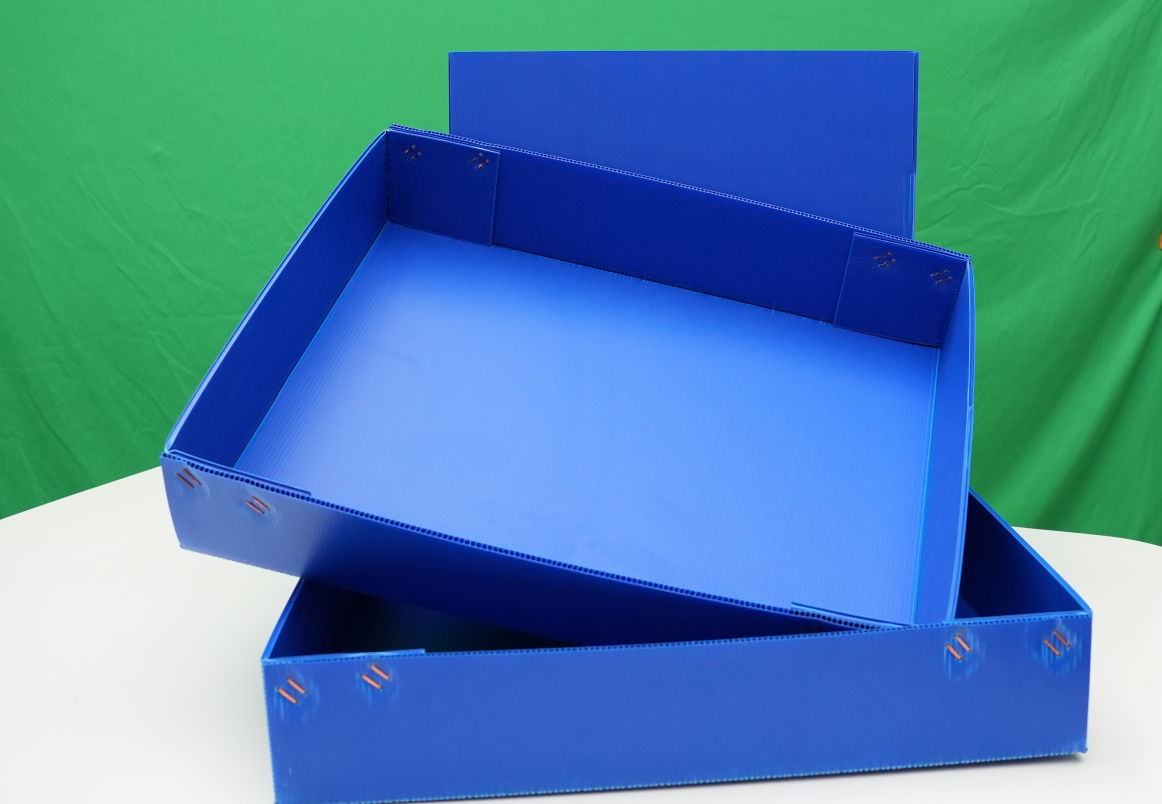
When packing awkward parts and fragile components, standard foam inserts rarely hold up. Custom dividers solve this by shaping the protection to the exact geometry of each item. Instead of wrestling with generic slots, you get a cradle that accounts for protruding edges, odd curves, and delicate surfaces that need isolation from one another.
The real advantage shows up during transit. Fragile components often fail when they shift inside a carton or rub against adjacent pieces. Thoughtfully designed dividers lock each part into its own cell, using materials like cross-linked polyethylene or corrugated plastic with die-cut contours. That way, even if the outer box takes a hit, the internal architecture absorbs the shock before it reaches your component.
For awkward parts, the trick is mapping the contact points and relieving pressure where the material is thinnest. A well-built divider system doesn't just separate; it suspends or supports the item in a way that spreads load evenly. This reduces the chance of stress fractures or surface scuffs, especially for glass, ceramic, or precision-milled metal parts. In practice, custom dividers turn a risky packing job into a predictable one.
How Much Compression Strength You Actually Need per Pallet
Pallet compression strength isn't a one-size-fits-all number—it's tied directly to how much weight the bottom pallet in a stack will bear. Start with the maximum load per pallet, then multiply by the number of pallets stacked above it. For example, if each pallet holds 1,200 kg and you stack four high, the bottom pallet supports 3,600 kg from the load alone. But that's just the starting point, not the final spec.
You'll need a safety factor to account for uneven weight distribution, temperature shifts, moisture, and the slow creep of corrugated or plastic under constant pressure. A common rule is to multiply the static load by 1.5 to 2.0 for long-term storage. Dynamic forces during transport—bumps, forklift handling, sudden stops—can add another 30–50% to the requirement. So that 3,600 kg static stack might need a pallet rated for 7,000 kg or more if it's moving through a rough supply chain.
The material and design also matter. Wood pallets typically lose strength as they absorb humidity, while plastic pallets can deform under high heat. Measure the actual compression strength at the pallet's weakest point, usually the top deck under a concentrated load. Instead of guessing, test a sample pallet with your real stack height and load pattern—many warehouses are surprised to find they need far less than the "maximum" rating, or far more because of poor load bridging.
Supplier Questions That Reveal Quality Before You Order
You can't judge a supplier's quality by their catalog photos or a polished sales pitch. Before you place an order, push past the brochure and ask pointed questions about raw material sourcing, batch consistency, and what happens when something goes wrong. A supplier who can name the exact mill or component vendor—and explain how they handle rejects—tells you far more than a spec sheet ever will.
Ask for a recent customer reference that isn't on their website, and then call that person. The real test is how a supplier behaves after a shipment arrives damaged or a tolerance slips. If they dodge questions about returns, rework, or on-time delivery history, treat that as a red flag. Quality isn't a certificate on the wall; it's a repeatable process you can verify.
Finally, don't accept vague promises like 'we always do quality control.' Get specific: How many units do they inspect per lot? Do they use a third-party lab or in-house testing? What's their defect rate over the past six months? The suppliers who welcome these questions are usually the ones who understand that quality is built long before the first box leaves their dock.
Washing and Reusing Boxes Across Multiple Production Cycles
In many production environments, the cost of one-way packaging quickly adds up, so a growing number of facilities are turning to a straightforward practice: washing and reusing boxes instead of discarding them after a single run. The idea is simple—after each production cycle, boxes are collected, inspected, and sent through a cleaning process that removes dust, residues, and any lingering contaminants. This isn't just about saving money on new boxes; it's also about keeping the line moving without waiting for fresh shipments. Over time, crews learn which cleaning methods work best for different box materials, from compressed air for light debris to sanitizing washes for food-grade or pharmaceutical applications.
One of the trickier parts of reusing boxes across multiple cycles is deciding when a box should be retired. Repeated washing can weaken corrugated walls or cause plastic totes to become brittle, especially if hot water or harsh detergents are involved. Many operations now use a simple visual checklist—tears, warped corners, faded barcodes, or stubborn stains that won't come out—to flag boxes that have reached the end of their useful life. By setting clear thresholds and training handlers to spot early signs of wear, facilities avoid the costly mistake of shipping product in a box that fails mid-transit. Some also rotate inventory so that boxes aren't washed too many times in a row, giving them a chance to dry fully between cycles.
The payoff goes beyond the obvious reduction in packaging spend. Reusing boxes cuts down on waste hauling fees and keeps bulky cardboard out of compactors, which can lower a plant's overall environmental footprint without needing a formal sustainability program. It also builds a habit of resourcefulness among staff—once people see that a box can safely go through five or ten washes, they start treating it less like a disposable item and more like a reusable tool. The key is to standardize the wash and inspection steps so that every box gets the same treatment, then track how many cycles each box has survived. With a bit of attention to drying time and storage conditions, most boxes can handle far more reuse than their single-use design suggests.
Where Lightweight Plastic Outperforms Wood and Metal Crates
In food processing and pharmaceutical environments, plastic crates remove the splinters, rust, and absorbent surfaces that make wood and metal a liability. A cracked wooden slat can trap moisture and bacteria, while a dented steel edge can tear packaging or cut a worker. Plastic stands up to repeated washdowns, mild acids, and contact with blood or brine without swelling, corroding, or picking up odors.
Automated handling lines reward consistency as much as brute strength. Plastic molds to tight dimensional tolerances, so a stack of twenty stays square instead of leaning or jamming sensors the way warped wood or bent metal often does. That predictability reduces downtime in high-speed sortation, and the weight savings—frequently thirty to fifty percent lighter than steel—ease the load on conveyors, robotic arms, and lift-assist equipment.
Long-haul freight reveals a similar advantage. Lighter crates burn less fuel per trip, and because plastic doesn't absorb moisture, tare weight remains stable in humid or refrigerated trailers. Empty return trips also improve: nestable or collapsible plastic designs reclaim trailer space without the costly disassembly that rigid wood and metal crates usually demand.
FAQ
Plastic corrugated boxes are built from polypropylene or polyethylene, which resist impact, moisture, and most chemicals. Unlike cardboard, they won't weaken when wet or lose shape after repeated handling. The fluted core adds rigidity without adding much weight, so they can handle rough transit and stacking far longer than typical paper-based options.
You'll see them in automotive parts handling, food processing, agriculture, pharmaceuticals, and electronics manufacturing. Any operation that moves products through wet washdowns, cold storage, or abrasive environments tends to favor plastic corrugated over fiberboard because it holds up under repeated cleaning and heavy use.
Yes, most suppliers offer cut-to-size sheets, die-cut panels, or fully assembled boxes built to your internal dimensions. You can specify length, width, height, and wall thickness. Many also add dividers, foam inserts, or interlocking tabs to keep fragile components from shifting during transport.
Absolutely. Plastic corrugated boxes perform well in freezers, coolers, and wet processing areas. They don't absorb water, so they won't warp, delaminate, or harbor bacteria. That makes them a common replacement for wax-coated cardboard in food and seafood operations.
Start with the total weight of your contents and how boxes will be stacked. Lighter products under 15 pounds often work with 3mm or 4mm walls. Heavier or sharper items may need 5mm to 8mm thick panels. For very dense loads, a smaller flute pitch adds crush strength. A knowledgeable supplier can run a sample test with your actual product to confirm.
Stock sheet and standard box sizes often ship within a few days. Custom die-cut or printed runs usually take two to three weeks, depending on tooling and order volume. Rush options exist at many suppliers, but it's wise to plan around your production schedule to avoid air freight on bulky box orders.
They're designed for multiple trips. Many operations get 20 to 50 uses per box before replacing them. At end of life, polypropylene corrugated is recyclable through industrial film or rigid plastic streams, though local acceptance varies. Some suppliers run take-back programs to reuse or regrind worn boxes into new sheet.
Yes, conductive and static-dissipative versions are available for electronics and sensitive components. These are typically made with carbon-loaded polypropylene or a topical anti-static coating. Specify your surface resistivity requirements, usually between 10^4 and 10^11 ohms, so the supplier matches the right material to your cleanroom or assembly line standards.
Conclusion
Switching from cardboard to plastic corrugated boxes often starts with a simple frustration: the same drop that splits a cardboard corner leaves a plastic box barely scuffed. That kind of toughness matters in busy warehouses, but it is only one piece of the puzzle. For awkward parts or fragile components, a supplier who can build custom dividers into the box itself removes the need for foam dunnage and keeps every item from knocking against its neighbor. Before you commit, though, ask the right questions. How are the flutes welded? What resin is used? A supplier who hesitates on those details will likely hesitate on quality, and you deserve better than a box that fails on its third trip.
On the pallet, the real test is compression strength. You do not need a box rated for 2,000 pounds if your stacked load only reaches 600, but underestimating that number means crushed bottom layers and damaged goods. Work with your supplier to calculate the load per pallet, not just per box. Then look at the longer picture. Plastic boxes can be washed and reused across many production cycles, which changes the math when compared to single-use cardboard or heavy wood crates. In applications where every pound counts, lightweight plastic outperforms wood and metal without sacrificing protection. A good supplier will help you balance drop survival, divider design, pallet load, and washability into one durable solution that fits how you actually ship.
Contact Us
Contact Person: Mr. Ge Man
Email: [email protected]
Tel/WhatsApp: 8613710506492
Website: https://www.shitengzx.com