

Phased Array Transducer Brands: How to Choose the Right One for Your Inspection Needs
2026-09-15
Most phased array transducer guides read like spec sheets—dry, generic, and of little help when you are standing in front of a scanner with a stack of job cards. The truth is, not all brands perform the same in the field. A transducer that excels in a lab may struggle with rough surfaces, high temperatures, or tight access. That is why choosing the right brand isn't about picking the biggest name; it's about matching the transducer's actual behavior to your inspection reality. And some of the most interesting options come from focused manufacturers like Siansonic, who prioritize application-specific design over mass-market shortcuts. Before you commit to a brand, here are the factors that truly separate the leaders from the followers.
What Separates One Phased Array Transducer Brand from Another in Real Use?
In the field, the differences between phased array transducer brands rarely show up on a spec sheet. One probe might have identical frequency, element count, and aperture dimensions as another, yet behave completely differently when you're wedged against a corroded pipe at 3 p.m. on a Friday. The real separation comes down to how the manufacturer has tuned the backing material, the consistency of the piezocomposite, and the way the acoustic lens wears after a few hundred scans. Cheap transducers often start out fine but drift quickly; premium ones hold their focal spot and sensitivity much longer, which means fewer recalibrations and fewer false calls.
Another practical divider is ergonomics and cable management. A transducer that's slightly heavier or has a stiff cable strain relief will fatigue your wrist during a full day of manual scanning. Some brands use low-profile connectors that sit flush against the wedge, while others leave a bulky lump that catches on every pipe support. When you're working inside a vessel or climbing around a heat exchanger, that small difference translates into either clean, repeatable data or a frustrating afternoon of fighting your own equipment.
Finally, real-world support and replacement predictability matter more than any marketing claim. A brand that keeps consistent acoustic properties across production batches means your encoded setups and TCG curves remain valid when you swap in a new probe. Some manufacturers quietly change piezoceramic suppliers or adhesive formulations without telling anyone, and suddenly your calibration blocks don't match your field results. The best transducers are not just well-built; they're boringly predictable, year after year, which is exactly what you want when an inspector signs off on a weld.
Frequency, Element Count, and Pitch: Reading the Specs That Matter
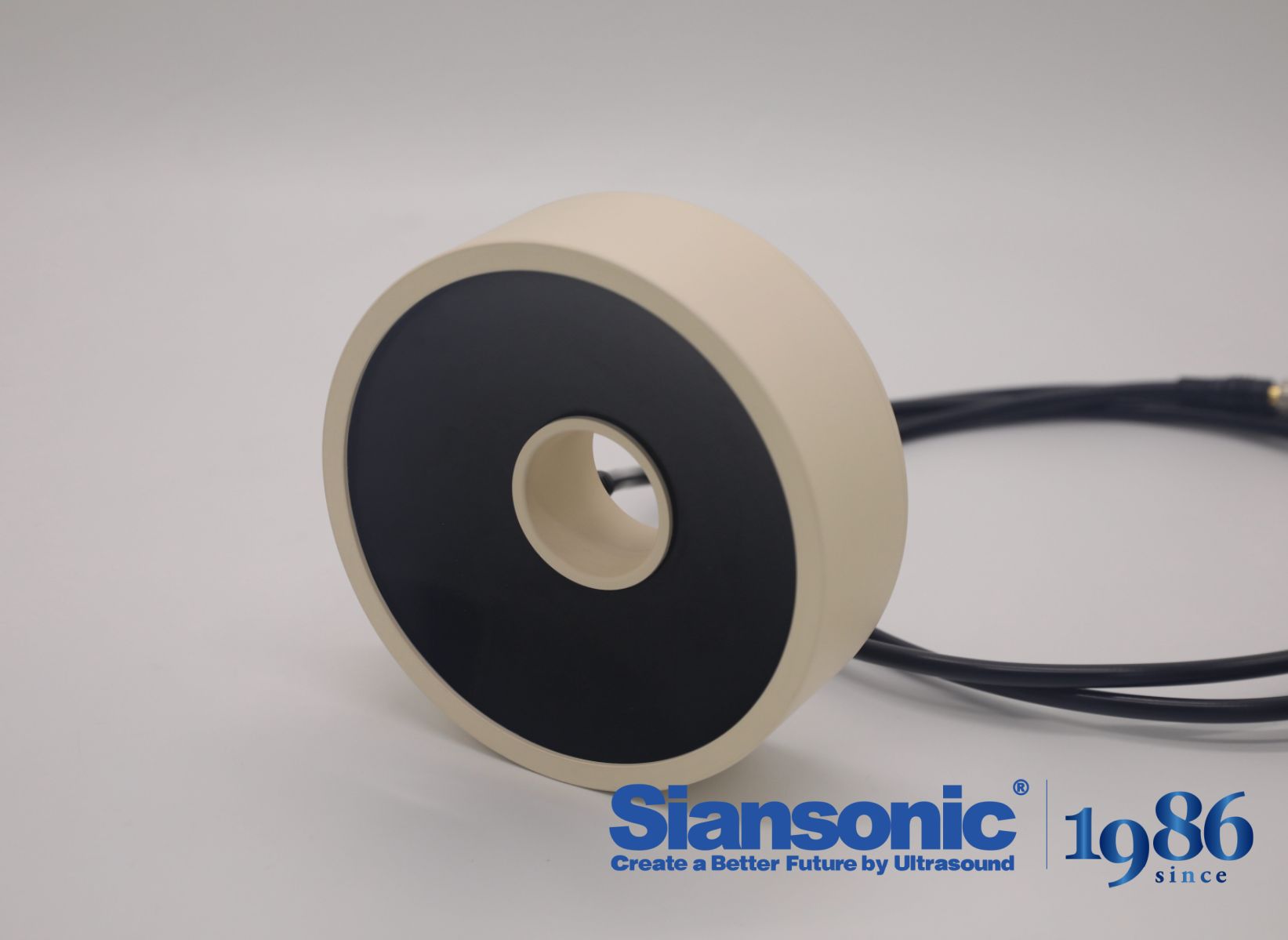
When you're comparing LED displays, it's easy to get caught up in brightness numbers and resolution claims that don't tell the whole story. Three specs that often fly under the radar—frequency, element count, and pitch—actually shape what you see far more than a simple "4K" sticker. Frequency controls how smoothly motion renders, element count determines the raw number of light sources driving the image, and pitch sets the physical distance between those elements. Skip any of them, and you might end up with a screen that looks great on a spec sheet but terrible in your actual space.
Frequency is usually listed as refresh rate, and it matters most when content moves. A 60Hz panel can smear fast action or scrolling text, while 120Hz or higher keeps edges crisp. Element count, often called pixel or LED count, isn't the same as resolution—it's the total number of individual light points, which affects brightness consistency and color mixing, especially at close range. Pitch, measured in millimeters, tells you how tightly those elements are packed. A 2mm pitch is fine for indoor viewing from a few feet away; outdoors or at distance, a 4mm or 6mm pitch still looks sharp but costs less per square meter.
So when you read a display's spec sheet, don't just scan for the biggest numbers. Match frequency to your content (live sports need more than slideshows), match element count to your expected brightness and uniformity needs, and match pitch to your typical viewing distance. A little attention to these three details can save you from buying a screen that underperforms in the exact situation you bought it for.
Wedge Fit and Connector Compatibility: The Overlooked Make-or-Break Details
Most installation guides skim over the wedge and connector interface, treating it as a given. In practice, that's exactly where field failures start. A wedge that seats even half a millimeter proud changes the contact angle, and then you're chasing intermittent opens that no re-seating of the connector fully resolves. The worst part is how subtle it looks on a continuity test.
Compatibility is rarely binary—it sits in a gray zone of tolerance stacking. One manufacturer's connector body might accept another's wedge, but the locking ramp engagement differs just enough that vibration works it loose over time. You won't catch it on day one, or even week one, but around month six the connector starts backing out under thermal cycling. That's the real make-or-break detail: not whether it fits in your hand, but whether it stays fitted under load.
A quick sanity check before final assembly saves more downtime than any fancy diagnostic tool later. Mic the wedge thickness against the connector's cavity depth, then rock the seated wedge side to side—any detectable movement means the retention feature isn't fully captured. If you're mixing brands or generations, don't assume the old wedge works in the new housing. Pull a few samples, mate them, and yank test to failure. It's the only way to know whether the overlooked details will be your problem or someone else's.
Why a Field Demo Tells You More Than Any Manufacturer Brochure
A glossy brochure can show you a machine’s specs, but it can’t show you how it behaves when the ground is uneven, the operator is tired, or the material isn’t exactly what the lab tested. Field demos strip away the marketing polish and expose the real friction points—how the controls respond under load, whether the guards actually stay in place after a few hours, or if the advertised cycle time holds up when everyone’s watching. You learn what breaks, what squeaks, and what the sales team conveniently leaves out of the PDF.
There’s also the matter of fit. A brochure tells you the reach, the horsepower, the weight class. A demo tells you whether it fits your crew’s habits, your yard’s layout, and your tolerance for downtime. Maybe the machine’s theoretically perfect, but the cab is too cramped for your tallest operator, or the attachment swap takes twice as long as the video suggested. Those nuances don’t live on a spec sheet—they live in the first half hour of real work.
And let’s not ignore the unspoken stuff: how the vendor responds when something goes wrong mid-demo. Do they scramble to fix it, or do they blame the operator? That moment tells you more about the next five years of ownership than any warranty clause. Paper promises are cheap; a machine that performs when the mud is deep and the deadline is tight is the only honest brochure you’ll ever get.
Lead Times, Repairs, and Local Support: The Hidden Selection Criteria
Lead times are less about what a supplier promises and more about what they've actually done under pressure. A vendor can state four weeks, but if their best customers routinely jump the queue, your order gets pushed without notice. Look at how they prioritize during peak season and whether they've ever missed a deadline for a client with your order volume. That past behavior is the real lead time.
Repairs and local support separate suppliers who sell boxes from those who keep your operation running. A low upfront price means nothing if a burnt-out drive sits idle for two weeks because the nearest technician is a flight away. Ask where spare parts are physically stored, how many repair calls the local team handles monthly, and what the average time-to-fix is for common failures. Suppliers that can answer quickly usually have their logistics sorted.
The hidden criteria matter because they surface only after you've signed. Before that, request a sample repair ticket from a client in your region, not a reference call with a cherry-picked happy customer. Check if their local support includes preventive maintenance visits or just emergency callouts. These details reveal whether a supplier intends to be a partner or just a one-time vendor.
When a Budget Transducer Ends Up Costing More Over the Inspection Lifecycle
A budget transducer often looks attractive on a purchase order, but the true cost emerges later. Cheaper units tend to have looser manufacturing tolerances and less stable internal components. As a result, they drift from their original calibration faster, which forces more frequent verification cycles. Each extra calibration check consumes technician time, interrupts measurement routines, and can even require sending the device back to the supplier if it falls outside acceptable limits.
Downtime is another hidden expense. When a low-cost transducer fails mid-run, the inspection line stops. The immediate loss is obvious, but the secondary effects can be worse: batches may need to be retested, material can be scrapped because of unreliable readings, or defective product may slip through because the sensor was not catching borderline dimensions. These events rarely show up in the initial budget comparison, yet they can erase the upfront savings within a few months.
Over a multi-year inspection lifecycle, budget transducers often require more replacements, more spare parts inventory, and more manual oversight. A mid-range or premium device with better repeatability and longer calibration intervals usually costs less per measurement when all factors are included. The lesson is not that price is irrelevant, but that purchase price alone is a poor predictor of total ownership cost. Teams that evaluate drift specifications, mean time between failures, and vendor support tend to avoid the trap of paying more over time for a device that was cheap at the start.
FAQ
Start by looking at the probe's frequency range and element pitch. A reputable brand will clearly list those specs, and you want a manufacturer that offers documentation on beam focusing capabilities for your specific material. Don't just pick a brand because it's popular—match the specs to your weld geometry and expected flaw sizes.
It does, but more isn't always better. A 64-element probe gives you more steering flexibility, while a 16-element one can be plenty for straightforward thickness checks. Cheaper brands sometimes pack elements but skimp on spacing consistency, which leads to noisy signals. Look for tight manufacturing tolerances over raw element count.
That's a big one. If your team already owns a set of wedges or a specific scanner, switching brands can mean buying an entire new accessory kit. Some brands use proprietary connectors, while others follow common interface standards. Check whether the transducer mates with your current delay lines—otherwise you're looking at hidden costs.
Yes, some manufacturers put extra effort into ruggedized housings and strain relief on the cable entry. If you work in high-temperature or dusty environments, look for probes with sealed cases and abrasion-resistant lenses. Asking other inspectors in your sector what lasts them more than one season is often more useful than reading marketing sheets.
A lot. Even the best transducer will underperform if your acquisition unit doesn't recognize it or can't apply proper focal laws. Some brands lock advanced features behind their own software, so mixing and matching can limit you. Verify that your flaw detector and analysis package support the exact probe model you plan to buy.
Often yes. For basic carbon steel welds under 25 mm, an entry-level probe from a less expensive brand can do the job if it meets the required code. The risk comes when you need repeatable results across different operators or temperatures. If you're only doing occasional checks, spending less upfront may be reasonable—but keep a spare on hand.
Wedge design affects the refracted angle and coupling stability. Some brands integrate the wedge and probe as a matched set, which removes guesswork but reduces flexibility. Others let you mix wedges from third parties, which is useful if you inspect unusual geometries. If a brand only offers a narrow range of wedges, make sure it covers your typical weld preparations.
Start with the material velocity and expected attenuation. For thin stainless steel, you might need a higher frequency with a small footprint to avoid dead zones. For coarse-grained castings, a lower frequency probe with a larger aperture may work better. Good brands provide velocity ranges and recommended inspection depths, so use those as a starting point rather than guessing.
Conclusion
Brand differences in phased array transducers often surface only after repeated use on real parts. A spec sheet may list identical frequency, element count, and pitch, but crystal cutting tolerances, matching layer uniformity, and damping consistency vary widely between manufacturers. Those variations affect beam steering accuracy, side lobe suppression, and signal-to-noise ratio on curved or coarse-grained materials. Instead of chasing higher element counts or tighter pitch as if they were universal upgrades, match the aperture and frequency to the actual thickness, geometry, and attenuation of your test piece. Wedge fit is just as critical: a slightly mismatched wedge contour can create air gaps, shift the incident angle, or wear unevenly, while connector seating problems cause intermittent signal dropouts that are easy to blame on the instrument. Field demos on your own flawed samples reveal these practical issues far faster than reading polished brochures.
Beyond the hardware itself, supply chain and support often decide long-term satisfaction. Ask about typical lead times for both standard and custom wedges, turnaround for rework or cable replacement, and whether local technical staff can recalibrate or troubleshoot without shipping units overseas. A cheaper transducer may look attractive up front, but if it fails after fewer cycles, requires special-order consumables, or drifts between inspections, the hidden cost of repeated downtime, re-inspection, and scrapped setups quickly outweighs the initial saving. Some brands maintain tighter batch-to-batch consistency, which means replacing a worn transducer does not force a full requalification of your inspection procedure. Choose the brand that proves itself on your parts, with your wedges and cables, under your schedule pressures, not the one that only wins on a paper comparison.
Contact Us
Contact Person: Ivy Zhang
Email: [email protected]
Tel/WhatsApp: +86 1081502288
Website: https://www.siansonic.com/