

OEM PET Honeycomb Dry Truck Body Solutions: Lightweight and Durable Transport Innovation
2026-07-28
In the fast-paced world of logistics, every ounce and every mile counts. Traditional truck bodies often compromise between strength and weight, but what if you could have both? Enter OEM PET honeycomb dry truck body solutions—a breakthrough that redefines lightweight durability. At the forefront of this transformation is Whole Chain Tech, pioneering advanced materials that slash fuel consumption while enduring the toughest hauls. Curious how this honeycomb core technology is reshaping freight transport? Let’s unpack the innovation driving the next generation of efficiency on the road.
The PET Honeycomb Difference: Rethinking Truck Body Materials
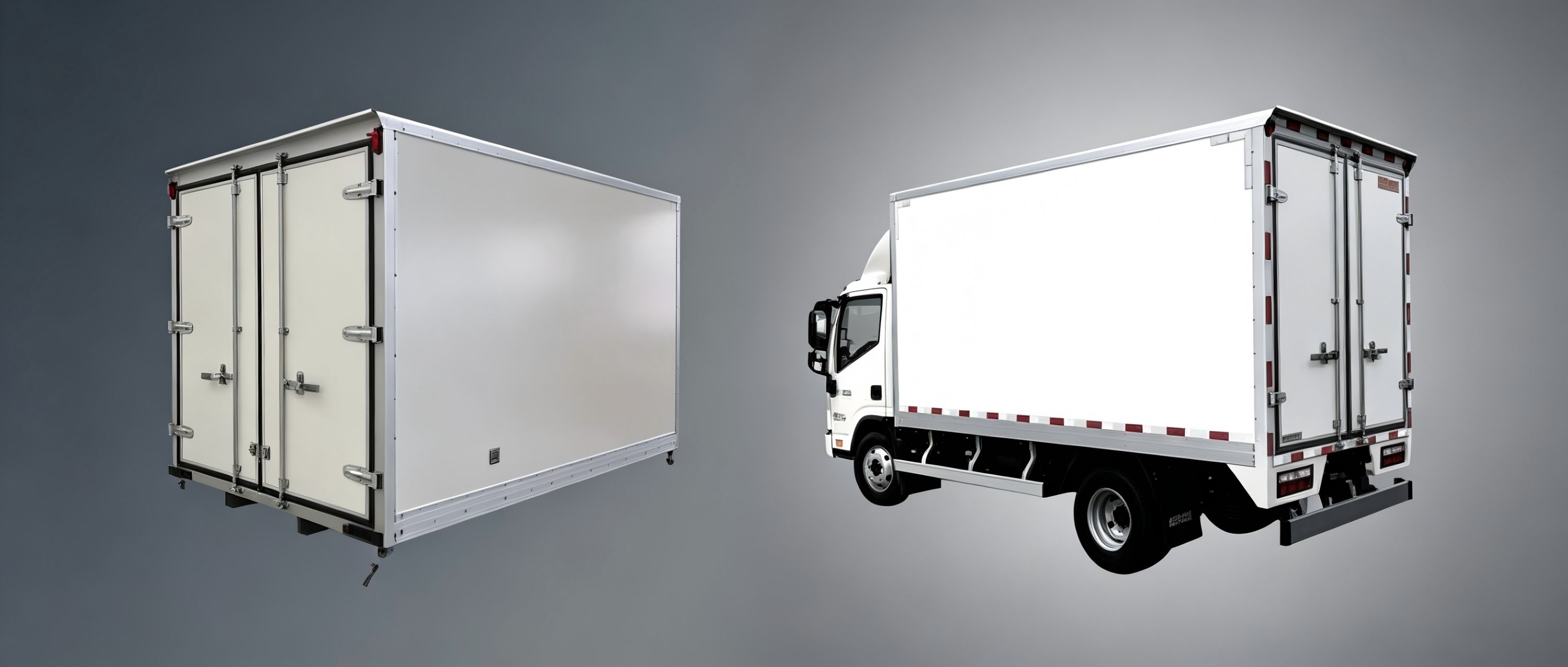
When it comes to building truck bodies, the material you choose shapes everything from fuel efficiency to lifecycle costs. PET honeycomb panels flip the script on conventional thinking, offering a combination of properties that often seem contradictory. They’re incredibly light yet remarkably strong, fully recyclable yet tough enough to handle daily abuse. This isn’t about incremental improvement—it’s a different category of material that makes you question why we ever settled for wood, steel, or aluminum in the first place.
What really sets PET honeycomb apart is how it handles stress and environment. Unlike plywood, it won’t rot, swell, or splinter when moisture inevitably finds its way in. The closed-cell structure means water has no route to travel, so delamination becomes a non-issue. And since it’s a thermoplastic, dents and minor impacts don’t leave permanent scars—the material tends to bounce back. Fleet operators quickly notice fewer returns to the shop for body repairs, and that translates directly to more days on the road earning revenue.
Beyond durability, the weight savings force a reconsideration of vehicle design. Shedding hundreds of kilos compared to traditional builds allows for heavier payloads without exceeding axle limits, or it can simply improve fuel consumption on lighter loads. The integration potential is equally overlooked. PET panels can be bonded into monolithic structures, eliminating thousands of fasteners and the leaks they eventually cause. Combined with thermal stability that rivals more expensive composites, it’s a material that quietly outperforms its peers while making logistics simpler and greener.
Shedding Weight, Not Muscle: How Lighter Bodies Boost Efficiency
Carrying less weight without sacrificing muscle mass transforms how efficiently the body moves through space. Every extra pound of non-functional mass demands additional energy to accelerate, decelerate, and stabilize during activity. When that weight is fat rather than muscle, you lose the metabolic and protective benefits of lean tissue while still lugging around dead weight. A lighter, muscular frame creates a virtuous cycle: less impact on joints, faster recovery between efforts, and a higher power-to-weight ratio that directly translates to improved performance in everything from hiking uphill to sprinting across a tennis court.
The efficiency boost comes down to basic physics and physiology. Moving a lighter body requires less oxygen consumption at any given speed, which means heart rate stays lower and glycogen stores last longer. But the key is preserving—or even building—muscle during weight loss, because muscle is the engine that drives movement. Too often, crash diets strip away hard-earned muscle along with fat, leaving people metabolically sluggish and prone to injury. By contrast, a gradual approach that pairs strength training with a modest calorie deficit tells the body to burn fat while sparing protein, so you emerge lighter yet stronger, with a metabolism that still burns hot.
In practical terms, shedding weight while holding onto muscle can shave minutes off a long run, make bodyweight exercises feel effortless, and reduce the daily wear and tear that leads to chronic pain. The feeling of moving with less gravitational resistance is often described as liberating—suddenly, stairs don't leave you winded, and weekend adventures feel less like a chore. It's not about extreme leanness, but about optimizing the body's composition so that every bit of weight you carry is useful. That shift in perspective, away from the scale number and toward what that weight is made of, is where the real efficiency begins.
Durable by Design: Engineering for the Long Haul
True durability isn’t a byproduct of overbuilding. It comes from deliberate choices early on—selecting materials that age well, anticipating stress points, and designing joints that flex rather than break. When engineers prioritize legacy over launch day, they create systems that adapt to decades of wear without demanding constant attention. This mindset rejects planned obsolescence, instead weaving longevity into the fabric of every component.
Long-haul engineering also requires a humble respect for real-world conditions. Humidity, vibration, thermal swings—these aren’t edge cases but certainties. Designing for them means leaving room for maintenance, using generous tolerances, and documenting the rationale so others can carry the work forward. A truly durable design is one that can be understood and serviced long after its original creators have moved on.
Custom OEM Fit: Built Around Your Fleet, Not the Other Way
Every fleet has its own rhythm, its own set of demands that can't be squeezed into a one-size-fits-all solution. That's why our approach starts with your trucks—not our catalog. We engineer each component to mirror the exact specifications of your vehicles, ensuring a seamless integration that feels less like an add-on and more like it was always meant to be there.
From bumper to tailpipe, the design process prioritizes how your fleet actually operates day to day. Whether it's unique mounting points, unconventional load requirements, or specific clearance needs, we adapt our manufacturing to accommodate the quirks of your equipment. The result is a setup that doesn't force your team to compromise or work around awkward fits.
It's a partnership rooted in understanding that no two fleets are identical. By bending our expertise to match your existing vehicles, we eliminate the usual headaches of retrofitting and give you components that enhance performance without disrupting the workflow you've already perfected.
The Hidden Savings: Fuel, Maintenance, and Beyond
It’s easy to focus on the price tag when buying a vehicle, but the real story unfolds over time. Fuel efficiency is the most immediate hidden factor—a car that sips petrol can quietly save you hundreds each year compared to a thirstier counterpart, without any change in your driving habits. But it doesn’t stop there. Routine maintenance costs vary wildly between models, influenced by part availability, labour rates, and even the engineering philosophy behind the oil filter placement. A vehicle that’s cheap to buy might demand premium synthetic fluids or specialised tools for simple repairs, eating away at any initial savings.
Then there’s the world beyond the garage: insurance premiums, depreciation curves, and residual values that shape your long-term financial picture in ways that aren’t discussed at the dealership. Insurance companies assess risk based on repair costs and theft statistics, often penalising seemingly ordinary cars while favouring less obvious choices. Depreciation hits some models like a cliff after three years, while others hold value with remarkable resilience, effectively paying you back at resale time. Even tyre wear and brake longevity differ between vehicles, accumulating into noticeable sums over a decade of ownership.
What few people calculate is the cost of compatibility—the way a car meshes with your life’s geography. A vehicle that demands frequent trips to a specialist mechanic, located an hour away, adds a hidden tax in time and inconvenience. Likewise, a model with a reputation for burning through batteries in cold climates can leave you stranded with jump-start expenses and missed appointments. The hidden savings aren’t just about money left in your pocket; they’re about avoiding the slow drip of stress and hassle that erodes the pleasure of owning a car. Choose wisely, and the machine rewards you with an almost invisible efficiency—a lightness in your monthly budget and peace of mind on the road.
Greener Miles: The Eco-Edge of Advanced Composites
Every gram shaved off a vehicle’s weight translates into a tangible drop in fuel burn and tailpipe emissions. Advanced composites, like carbon fiber and glass fiber reinforced polymers, achieve this without the trade-offs of traditional lightweight metals. Their high strength-to-weight ratio allows for thinner, smarter structures that maintain crashworthiness while drastically cutting mass. The result is a car that sips fuel or extends battery range, making each mile measurably cleaner.
Beyond the road, the eco-advantage extends into manufacturing. Producing composite components often requires less energy than stamping steel or welding aluminum, and the ability to consolidate dozens of parts into a single molded piece slashes assembly line complexity and waste. Furthermore, emerging recycling methods can now reclaim fibers from end-of-life composites, giving these materials a second act in new products and closing the loop on resource use.
The quiet revolution of composites isn't just about incremental gains—it's reshaping how we think about vehicle life cycles. By designing for disassembly and integrating bio-based resins, the next wave of composites promises a mobility ecosystem where performance, safety, and planetary health aren't competing interests but mutual allies. In this light, advanced composites aren't simply making cars lighter; they're making every journey count toward a sustainable future.
FAQ
PET honeycomb panels provide an outstanding strength-to-weight ratio, significantly reducing the overall mass of the truck body without sacrificing structural integrity. This lightweight design directly improves fuel efficiency and payload capacity while the inherent moisture and chemical resistance of PET ensures long-term durability, even in challenging logistics environments.
By cutting down the unladen weight, operators can carry heavier loads per trip, which directly lowers the cost per unit transported. Fuel consumption also drops noticeably, and the reduced stress on tires and suspension components further slashes maintenance expenses over the vehicle's lifetime.
Absolutely. The modular design of the honeycomb panels allows for flexible tailoring of dimensions, door configurations, internal fixing points, and insulation levels. Manufacturers can integrate these bodies onto various chassis types, and additional features like side doors, load-securing rails, or specialized coatings can be incorporated to match precise operational needs.
PET honeycomb resists moisture absorption, rotting, and delamination, which are common failure points for plywood. Compared to aluminum, it does not corrode or permanently deform under moderate impacts. The closed-cell structure also provides natural sound and thermal dampening, contributing to a more resilient and maintenance-friendly body over years of heavy use.
These panels often incorporate a high percentage of post-consumer PET, diverting plastic waste from landfills and reducing the carbon footprint of production. At the end of the body's life, the material is fully recyclable, creating a circular economy loop that supports green logistics initiatives without compromising performance.
The honeycomb core's energy-absorbing properties offer improved impact resistance, helping to shield cargo from road shocks and minor collisions. The smooth interior surfaces prevent snagging and abrasion, while optional thermal insulation and moisture barriers keep temperature-sensitive or water-vulnerable goods in optimal condition throughout transit.
It is ideal for dry freight distribution, including retail goods, electronics, furniture, and parcel delivery. The lightweight design is particularly beneficial for last-mile delivery vehicles where frequent stops and urban fuel efficiency are critical, as well as for long-haul semitrailers aiming to maximize payload within legal weight limits.
Although the initial investment may be slightly higher, the savings from reduced fuel bills, lower maintenance, and higher payload capacity typically offset the extra cost within a short period. The extended service life and recyclability further enhance the long-term value, making it a smart financial decision for modern fleets.
Conclusion
The shift to OEM PET honeycomb dry truck bodies marks a fundamental rethinking of how cargo transport can merge efficiency with resilience. At its core, the PET honeycomb panel replaces traditional heavy materials with a structure that mimics nature's own weight-to-strength ratio—lightweight yet remarkably rigid. This isn't just about trimming kilograms; it's about enabling a truck to carry more payload per trip without sacrificing the toughness demanded by daily logistics. Fleets adopting these bodies notice the immediate impact: less strain on engines, quicker acceleration in urban stop-and-go cycles, and a noticeable drop in fuel consumption figures that directly improves per-mile economics. The material also dampens vibration, protecting both the cargo and the vehicle's frame from the micro-stresses that accumulate over thousands of kilometers, extending the lifecycle of the entire rig.
Durability here is engineered in from the molecular level outward. The PET honeycomb core resists moisture intrusion and corrosion far better than plywood or metal liners, eliminating the swelling, warping, and rust that often cut a traditional body's service life short. Since OEM integration means the body is designed around a fleet's exact chassis and operational profile, every mounting point and door seal is tailored—no aftermarket compromises. Hidden savings pile up fast: lower maintenance intervals, less idle time at the pump, and reduced brake wear due to the lighter build. On the environmental side, the advanced composite construction means fewer raw materials consumed upfront and lower lifetime CO₂ output per delivery. It’s a quiet revolution that turns each freight run into a smarter, cleaner, and more profitable move.
Contact Us
Contact Person: Ethan
Email: [email protected]
Tel/WhatsApp: +86 13963964935
Website: https://www.wholechaintech.com/