

OEM Multi Chamber Laundry Pods: The Smart Choice for Bulk Buyers
2026-10-25
Think multi-chamber laundry pods are just a gimmick? For bulk buyers, the real advantage lies in what those separate chambers deliver: higher perceived value, better cleaning performance, and a product that stands out on crowded shelves. As an OEM partner with deep manufacturing expertise, LANJIEYA has been quietly helping brands turn this format into a profit engine. Here’s why skipping single-chamber pods might be the smartest move you make this year.
Where Most Laundry Pod Suppliers Fall Short
The most obvious shortfall shows up in cold or short cycles, where an underperforming pod film leaves a slimy, half-dissolved layer on the dispenser or the rubber door seal. Customers rarely blame the supplier—they blame the brand. But the root cause usually sits upstream: a film formulation optimized only for warm-water lab tests, never for the hard water, low water pressure, or quick-wash settings that real machines use. When that residue dries, it becomes a stubborn, flaky deposit that takes multiple rinse cycles to clear, and every complaint chips away at repeat purchases.
Batch consistency causes just as much damage, but it's less obvious. You can approve a golden sample that splits cleanly and dissolves without a trace, only to receive a shipment months later where the pods feel softer, leak slightly at the seam, or drop their fill weight by a few grams. Those shifts don't always appear on a certificate of analysis, but they're immediately noticeable on a packing line or in a user's hand. Suppliers that lack an internal stress-testing routine—running samples through cold washes, long storage, and high-humidity conditions—tend to drift. And drift is exactly what turns a once-dependable product into a customer service headache.
The most avoidable failure is poor change communication. A supplier might switch the polymer grade in the outer film or swap a fragrance component to trim costs, and the first signal reaches you through a batch of complaints rather than a proactive notice. Stronger suppliers document every formulation tweak, share aging data without being asked, and treat the pod's film and liquid core as one interdependent system. The ones that don't are essentially asking you to do their quality control for them.
Multi-Chamber Engineering Without the Marketing Fluff
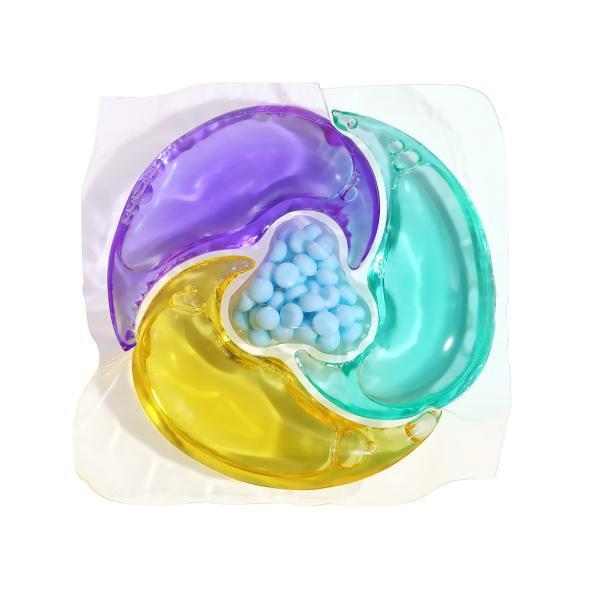
Multi-chamber engineering starts with isolating each cavity so that wall thickness, material durometer, and geometry drive independent load responses. Instead of chasing vague notions of comfort or responsiveness, the design sets a target pressure–displacement curve for every chamber. A typical three-chamber layout, for instance, may have the outer chamber compress first under light load, the middle chamber engage at mid-range force, and the inner chamber absorb peak impact. Orifices or one-way valves between cavities are sized by flow coefficient so that air transfer neither bottoms out under heavy load nor leaves the structure under-supported during rapid loading cycles.
On the manufacturing side, wall uniformity and seal integrity matter more than any brochure claim. For blow-molded or injection-molded parts, parting line position, gate location, and venting directly affect wall distribution, which in turn shifts each chamber's stiffness. Validation usually involves pressure cycling every cavity individually and checking for permanent deformation beyond 0.5% at rated pressure. When combining dissimilar materials such as TPU and rubber, the bonded interface must handle at least twice the maximum shear stress to avoid delamination. Final assembly testing records force–displacement data against the finite element model, with a typical acceptance band of ±5%, and any deviation triggers a tooling or material adjustment before release.
Custom Pod Formulations That Actually Sell
Most custom pod lines stall because they hand over too much control. The ones that actually move don’t start with a blank canvas—they offer two or three proven base profiles and let customers adjust strength, cooling, or a single accent note. That small tweak feels personal without forcing people to build a formula from scratch, which keeps repeat orders consistent and the production side manageable.
A winning formulation also leans into familiar-but-unexpected pairings. Instead of plain mango or plain mint, combine a familiar core with a subtle tail note, like white peach behind a cooling mint or cocoa shell under a dry tobacco. That “almost know it, can’t quite place it” effect gives customers a reason to come back and talk about it, which matters more than offering thirty flavors nobody remembers.
Naming and packaging do a lot of the selling before anyone tries the product. Drop the lab codes and percentage lists. Use sensory, scene-based names—like “Fogged Orchard” or “Cold Copper”—and run short-run custom batches where customers vote on the next limited profile. Scarcity plus a name people can already taste turns a custom pod from a novelty into a repeat buy.
The Bulk Buyer's Guide to Consistent Quality
Consistency doesn't come from trusting a single perfect sample. It comes from building a repeatable inspection rhythm. Ask for line samples at three points during a production run, not just a pre-shipment photo. Compare those against your agreed reference standard under the same lighting if possible. Small shifts in density, surface finish, or packaging compression show up early when you look at mid-run output rather than final pallets.
Put tolerances in the purchase order, not in an email thread. A clear range for weight, dimension, moisture, or defect rate gives the supplier room to work without guessing. If you only say "high quality," every factory will define that differently. Instead, specify what must never vary: seam strength, thread count, batch viscosity, whatever your product actually depends on.
Build a short scorecard with three to five measurable traits and score each shipment the same way. Over time this does more than catch bad lots; it reveals which suppliers drift under pressure and which ones control their inputs. Re-audit only when scores dip, and share the trend with the supplier so they can fix root causes before your reorder hits the line.
Cutting Costs Without Cutting Corners
Trimming a budget often triggers fears of compromised quality, but the smartest savings come from rethinking habits rather than slashing essentials. Start by auditing recurring expenses with fresh eyes: renegotiate vendor contracts, consolidate software licenses, or switch to energy-efficient equipment. These moves rarely affect the end product yet can free up meaningful cash flow for months to come.
Another overlooked lever is process waste. Map out daily workflows and flag duplicated approvals, manual data entry, or idle inventory. Small tweaks like batching orders, automating routine reports, or cross-training staff can reduce overtime and rush fees without touching the customer experience. The goal is to spend less effort on low-value tasks and redirect it toward high-impact work.
Finally, involve your team in the hunt for savings. Frontline employees often know exactly where money leaks—from unused subscriptions to packaging overruns. Create a simple channel for cost-saving ideas and reward those that stick. When people feel ownership over efficiency, they protect quality as fiercely as they protect the bottom line.
OEM Partnerships That Scale With Your Brand
A strong OEM partnership isn't about offloading production—it's about building an extension of your own team. The right partner adapts to your growth curve, adjusting capacity and capabilities as demand shifts, without forcing you into rigid contracts or compromise on quality. You keep the vision; they bring the manufacturing muscle and process discipline to make it real.
What sets scalable OEM relationships apart is how they handle the less glamorous parts: component sourcing, tolerance control, quick-turn prototyping, and line flexibility when a new SKU takes off. Instead of renegotiating every quarter, you share forecasts, co-invest in tooling when it matters, and agree on transparent metrics that keep both sides accountable. That's where trust stops being a slogan and starts being a supply chain advantage.
Over time, the best partnerships evolve into a shared playbook. Your OEM knows your tolerances, your finish standards, your packaging quirks. You know their lead times, their bottlenecks, their backup suppliers. That mutual knowledge lets you launch into new markets or new product categories with far less friction—because the operational foundation has already been stress-tested, not just promised.
FAQ
These pods split detergent, stain remover, and sometimes fabric softener into separate compartments inside a single dissolvable casing. When the pod hits water, each chamber releases its contents at the right moment, so different ingredients stay stable until wash time.
Single-chamber pods often force all ingredients to coexist, which can limit formula strength. Multi chamber designs let you combine ingredients that would otherwise react with each other in storage. For resellers and private label brands, that means a more premium product and fewer complaints about inconsistent cleaning.
Most OEM partners let you adjust the number of chambers, color combinations, scent profiles, enzyme levels, and packaging design. You can also request specific certifications or regional formula tweaks, though minimum order quantities usually rise with deeper customization.
Yes, generally the MOQ is higher because the production line runs more complex molds and filling steps. Many suppliers start around 20,000 to 50,000 units per SKU, but some smaller manufacturers may accept lower volumes if you use their existing stock formulas.
That depends on the film and formula. High-quality multi chamber pods use a polyvinyl alcohol film that dissolves quickly even at low temperatures. If cold water performance matters to your customers, ask the OEM to run dissolution tests at 15°C or below before you commit.
Both paths exist. Some OEMs only offer their pre-tested bases with light modifications. Others will develop a bespoke formula with you, but that involves longer lead times, stability testing, and often a higher upfront fee. Be clear about your target price per wash before going custom.
Resealable stand-up pouches and rigid tubs with child-resistant lids are the most common. For club stores or bulk packs, flow-wrapped bags inside cardboard boxes reduce plastic use and shipping volume. Make sure the packaging keeps moisture out, because any humidity can cause the PVA film to soften.
Look for their experience with multi cavity molds, film compatibility testing, and third-party safety certifications. Request samples from their existing production line, not just lab batches. Also ask about their defect rate for leaking pods, since a small leak can ruin an entire bag in humid climates.
Conclusion
Many laundry pod suppliers fall short where it matters most: leaky chambers, uneven fill weights, and films that burst before the wash cycle even starts. A focused OEM partner takes multi-chamber engineering seriously, not as marketing fluff but as precise compartment sealing that keeps enzymes, surfactants, and brighteners separate until they hit the water. That means every pod delivers targeted action on stains, whites, and colors without cross-contamination. For bulk buyers, this engineering discipline translates into far fewer customer complaints and returns. Custom formulations push the advantage further—you can adjust for local water hardness, fragrance trends, or eco-certification demands instead of settling for generic off-the-shelf options that fail to stand out on retail shelves.
Consistency is the quiet backbone of any large-volume order. A reliable OEM runs tight batch controls from raw material sourcing to final seal integrity tests, so pallet 50 performs exactly like pallet 1. That repeatability lets you cut costs without cutting corners: smarter film gauges, optimized pod geometry, and direct factory relationships reduce waste and freight overhead. Over time, the right partnership scales with your brand. As volumes grow, you gain better unit economics, priority production slots, and a formulation roadmap that evolves with consumer preferences. Choose an OEM that treats multi-chamber pods as an engineering discipline rather than a commodity, and you turn a routine bulk purchase into a durable competitive edge.
Contact Us
Contact Person: Zhao Yanlong
Email: [email protected]
Tel/WhatsApp: 8615832007309
Website: https://www.gzlanjieya.com