
Mayonnaise Supplier Selection: A Practical Guide for Quality and Reliability
2026-11-16
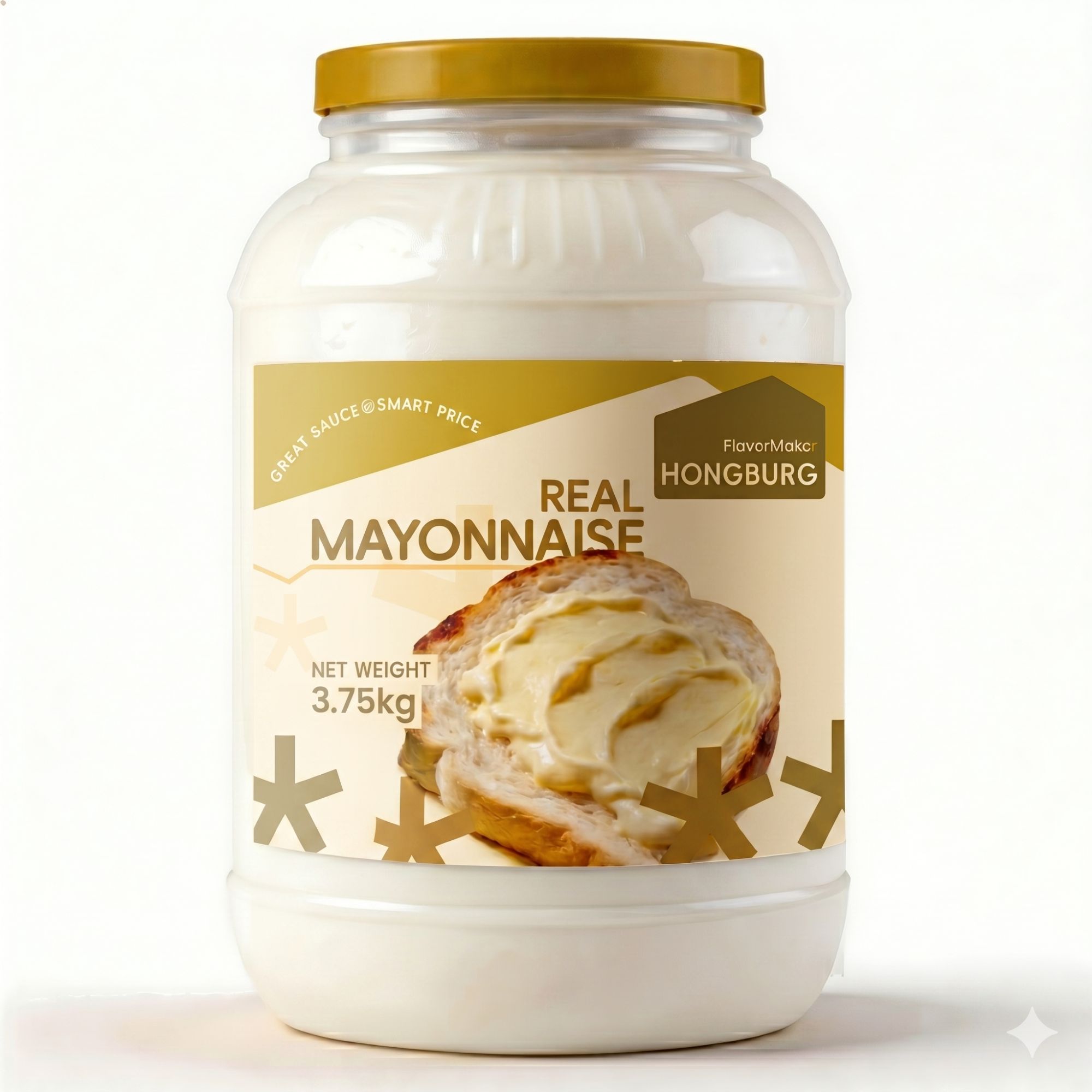
Choosing a mayonnaise supplier might seem straightforward—until a batch arrives watery, split, or with a flat, forgettable taste. In commercial kitchens and food production lines, consistency isn’t just a preference; it’s the foundation of every dish that leaves your kitchen. This guide cuts through the noise, offering a clear-eyed look at what actually matters: sensory quality, supply chain transparency, and long-term reliability. Along the way, we’ll highlight what sets dependable partners apart, including how producers like HONGBURG FLAVORMAKER build trust through rigorous sourcing and flavor precision. If you’re ready to move beyond samples and spreadsheets to a partnership that holds up under pressure, read on.
Spotting Red Flags Before They Wreck Your Menu
A dish that needs a paragraph of backstory before anyone orders it is already in trouble. When the description leans on nostalgia or chef anecdotes just to justify the price or the odd ingredient pairing, it’s masking a lack of honest flavor appeal. Trust the items guests actually reach for without hesitation—those are the quiet workhorses, not the ones that require table-side persuasion.
Watch how the same ingredient shows up across multiple sections uninvited. If roasted beets land in a salad, a risotto, and a taco without a strong concept tying them together, you’re likely looking at a kitchen trying to burn through overstock rather than curating a menu. This kind of forced repetition dulls the lineup and signals supply-driven decisions rather than guest-driven creativity.
Feedback hides in places other than comment cards. A dish that consistently comes back half-eaten, or one where the garnish is always left on the plate, tells a story no amount of server upselling can fix. When bartenders start modifying a cocktail on the fly because customers keep sending it back, that’s not a tweak—it’s a red flag that the original recipe never really worked in the first place.
The Taste Test That Predicts Customer Loyalty
Most food brands still rely on surveys and star ratings to measure how much customers love them, but those tools capture what people think, not what they actually feel. A blind taste test flips that script. When someone can't see the label, the packaging, or the price, all that's left is the sensory truth—texture, aroma, flavor balance—and that raw reaction has an uncanny way of revealing whether they'd truly come back for more. It turns out the palate is a far more honest loyalty predictor than the conscious brain.
What makes a simple sip or bite so predictive is the emotional memory it creates. If a product delivers a distinct, pleasurable taste that stands out from the noise of competing options, it doesn't just satisfy a moment of hunger or thirst—it builds an expectation that the customer will want to repeat, even without thinking about it. That quiet anticipation is the bedrock of habitual buying, the kind that survives a price hike or a competitor's flashy ad campaign. In studies with hundreds of participants, blind taste preference lines up remarkably well with long-term repurchase data, often far better than focus group feedback or intent-to-buy scores.
The real magic, though, isn't just in the test itself—it's in using the insights to refine the product until that involuntary smile, the slight head tilt, or the immediate second taste becomes the norm. Companies that treat blind taste testing as a diagnostic tool rather than a one-off competition unlock a deeper connection with their audience. They learn that loyalty is rarely about being the loudest brand on the shelf; it's about becoming the taste people silently search for without realizing it.
Beyond the Label: What Ingredient Lists Actually Reveal
Ingredient lists are governed by a simple but often misunderstood rule: ingredients appear in descending order of predominance. This means the first few items make up the bulk of what you’re buying, while those at the tail end might be present in trace amounts. A jar of tomato sauce that leads with tomatoes signals a very different product from one starting with water or cheap fillers. The distance between the first and fifth ingredient can reveal a lot about a brand’s priorities—and your value for money.
Beyond the obvious, the real stories hide in the middle of the list. Phrases like “natural flavors,” “spices,” or “enriched flour” are umbrella terms that can mask dozens of individual compounds, some of which may be far from what you’d expect. Meanwhile, the same ingredient can wear different disguises—sugar, for instance, pops up under more than fifty names. Learning to spot these aliases and grouping them mentally gives you a sharper picture of what you’re actually consuming, far beyond what the front label suggests.
Then there’s the quiet finale: the sub-ingredient lists nested inside parentheses after compound ingredients. A chocolate chip cookie might list “chocolate chips (sugar, cocoa butter, soy lecithin…)” and suddenly the real composition shifts. These nested lists keep the overall ranking legal but can completely reframe how you interpret the product. Paying attention to those brackets lets you see the recipe within the recipe—often the part that matters most for taste, texture, and nutritional impact.
Consistency You Can Count On, Batch After Batch
Every production cycle brings familiar results, but not by accident. Behind each batch is a system that refuses to cut corners—measurements are checked twice, raw materials sourced from the same trusted suppliers, and processes that never drift out of spec. This isn't about fancy promises; it's about a quiet rhythm where the product you receive today behaves exactly like the one you ordered six months ago.
Our lab team treats each mix like it's the first one they've ever made, even when they've done it a thousand times. That level of attention might seem excessive, but it's the only way to erase the tiny variations that often go unnoticed until they cause headaches down the line. From the moment ingredients are weighed to the final seal on the container, nothing is left to chance—and the proof shows up in your own quality checks, where surprises simply don't happen.
People often ask how we maintain such tight repeatability without sacrificing speed. The answer is boring, honestly: we standardized the boring parts. Temperature, humidity, timing—these aren't checkboxes on a form, they're guarded by equipment that auto-corrects before a deviation can even register. And when a new operator joins the floor, they shadow someone who can spot a color shift or a viscosity change by feel alone, long before an instrument beeps. That blend of machinery and human instinct keeps every batch locked to the same fingerprint, no matter the day or season.
Logistics That Won’t Leave You Empty-Handed
We know the quiet panic of a late shipment that undercuts an entire launch. Our approach rearranges fulfillment around real-time demand signals, so what’s trending on Monday reaches doorsteps by the time the buzz peaks—not a week later when interest has moved on. It’s supply chain choreography, stripped of guesswork.
The difference lives in the overlooked corners: temperature-controlled consolidation for fragile goods that have no business sitting in a hot trailer; micro-hubs placed where last-mile delays usually happen, turning same-day delivery from a premium promise into a baseline expectation. You ship less air and more value, without buffering every inventory buffer to the ceiling.
We built the overflow logic so your backstock doesn’t double as dead capital. Dynamic rerouting leaps into action when a route freezes or a port clogs, shifting cargo to alternative channels that keep promises intact. Customers notice the box on their step, not the three fire drills it bypassed to get there—and that’s exactly the kind of invisibility that sticks.
Negotiating Terms That Protect Your Bottom Line
Before you even sit down at the table, get ruthless about your numbers. Know the exact point where a deal stops making financial sense—not just the obvious costs, but the sneaky ones like extended payment terms, scope creep risks, and the price of your own team’s time if the project drags on. When you have that line etched in stone mentally, you stop negotiating from a place of hope and start operating from clarity. The moment a concession threatens to dip below it, you walk. Not out of ego, but because you’ve already done the math.
Too many people treat negotiation like a tug-of-war over price, but protecting your margin often means reshaping the deal entirely. If a client pushes for a discount, hand them a revised scope that strips out services or shifts part of the work back onto their team. Frame it as a collaboration: ‘We can absolutely hit that number—here’s what that version of the project looks like.’ Suddenly the conversation isn’t about giving something away; it’s about letting them decide what they’re willing to sacrifice. You preserve your profitability by ensuring every concession they receive is paid for with a trade-off that costs you far less.
Long-term contracts can bleed you dry if you let them, so bake in safeguards that keep pace with reality. Tie pricing to an objective index if possible, or build in scheduled checkpoints where terms can be revisited if certain triggers—like spikes in raw materials or a 15% jump in labor hours—are met. Slide a clause into the fine print that caps liability at the value of the agreement, so a minor misstep doesn’t spiral into a catastrophic drain. Clients rarely object to these if you present them as mutual protections, not ultimatums. After all, a partnership that inadvertently bankrupts one side helps no one.”
FAQ
Skip the generic Google searches and tap into industry trade associations or chef forums. You'll get unfiltered feedback on who consistently delivers and who cuts corners. Then, narrow your list to those who are transparent about their oil origins and emulsification methods, not just their price per kilo.
Taste is just the beginning. Let the sample sit in a warm kitchen for a few hours to check emulsion stability — if it breaks or separates, that's a non-starter. Also, spread it on a toasted piece of bread and see how it behaves under heat. That tells you more about texture and fat quality than any spec sheet.
It's all about their raw material buffers. Ask what their minimum oil inventory is — not the production capacity. A supplier who only buys oil spot-market can leave you high and dry when palm or sunflower markets spike. The reliable ones hold at least a few weeks' worth, even if it costs them more.
Look beyond the ISO 22000 or BRC certificates hanging on the wall. Ask for the actual audit report from the last announced and unannounced audit, and check for non-conformity details. A supplier that shares those openly has nothing to hide. Ignore any cert that's self-declared, like 'premium quality guarantee' without third-party backing.
Request a fatty acid profile of the current oil batch, not a marketing sheet. Pay attention to the oleic acid content and peroxide value. If they hesitate or send outdated data, it's a red flag. Seasoned buyers also run a quick frying test at home: if the oil foams or smokes at low temps, the refining is poor.
Insist on a dedicated production window clause. It means your batch is run when the equipment is freshly cleaned, reducing cross-contamination risks. Also, lock in a mutual continuity plan — if their key emulsifier supplier goes down, what's the backup? The answer reveals a lot about their overall reliability.
Don't just rely on their COA (certificate of analysis). Send your first three production batches to an independent lab for rheology and sensory profiling. Then, set up a 'golden standard' reference jar that you both sign off on. Every future delivery gets compared to that physical benchmark, not just a number on paper.
Not if you know where to look. Request their RSPO Mass Balance or Segregated supply chain certificates for palm-based oils, and check for recent traceability audits. A genuine sustainable supplier can pinpoint the mill and even the plantation region. If they only talk about 'green initiatives' without specifics, move on.
Conclusion
Selecting a mayonnaise supplier goes far beyond price. It begins with sharp observation: a supplier who suddenly changes their oil source without notice, delivers with inconsistent dates, or dodges questions about stabilizers is already showing cracks that could shatter your menu's reputation. A real taste test isn't a quick dip; it's about how the mayo holds up on a hot sandwich, how it binds a coleslaw, and whether that creamy finish lingers just right—because that's what builds customer loyalty. Turning the jar reveals the truth behind the label: excessive fillers like modified starches, ambiguous “natural flavors,” or egg-yolk ratios that fall short of the 65% mark scream corner-cutting. True reliability means you can open a batch in July and one in December and find the same velvety body, same acidity kick, same shelf stability without separation—no unwelcome surprises.
Then there's the backbone of partnership: logistics that honor your rhythm. A supplier with regional cold-chain gaps or a habit of shipping partial orders will leave you scrambling during peak service. Lock down terms that matter—penalties for late deliveries, price-lock periods on key fats like soybean or avocado oil, and flexibility to adjust volumes without penalties ensure your bottom line stays protected. The best suppliers act as an extension of your kitchen, not a catalog number, so you can focus on delighting guests instead of managing mayonnaise crises.
Contact Us
Contact Person: Peter Song
Email: [email protected]
Tel/WhatsApp: +86 18920189778
Website: https://www.hongburg.com