
Leading China Eyelash Brush Manufacturer Shares Expert Tips for Flawless Lashes
2026-06-23
Dreaming of flawless lashes that turn heads? It all starts with the right brush and a few insider secrets. Now, KLDZS, a leading China eyelash brush manufacturer, is revealing the expert techniques that can take your lash game from ordinary to extraordinary. Keep reading to unlock tips that beauty pros don't want you to miss.
How Brush Shape Transforms Your Lash Game
The shape of your mascara wand is more than just a design choice—it’s the secret behind every lash look you love. A curved brush, for example, mirrors the natural arch of your eye, gripping even the tiniest lashes in the corners and lifting them skyward. The result? An instant curl that holds all day without the need for a lash curler. On the other hand, a straight brush might look simple, but its evenly spaced bristles coat each lash from root to tip with precision, creating a clean, defined finish that’s perfect for everyday wear. The way the bristles interact with your lashes determines whether your look ends up soft and fluttery or bold and fanned out.
Tapered and cone-shaped brushes take things a step further by combining multiple effects into one tool. A tapered tip lets you zoom in on the inner and outer corners without smudging, while the broader base builds volume exactly where you need it most—right at the center of your lash line. Meanwhile, ultra-slim brushes with micro-bristles are built for those impossible-to-reach lower lashes, separating them one by one so they look fuller without clumping. It’s not just about what the brush looks like; the density, length, and arrangement of the bristles transform the same mascara formula into completely different results. You’re basically getting a custom lash application every time you switch brushes.
What makes brush shape so transformative is how it responds to your unique eye shape and lash texture. Almond eyes might love a curved brush for extra lift, while round eyes often benefit from a wand that fans lashes outward. If your lashes are naturally straight, a densely bristled brush can coax them into a curl that won’t fall flat. Sparse lashes? A brush with staggered bristle lengths grabs every single hair and builds them up without overloading with product. Paying attention to brush design isn’t just a detail—it’s the difference between a mascara that works and one that works wonders for you.
Bristle Density: The Secret to Clump-Free Volume
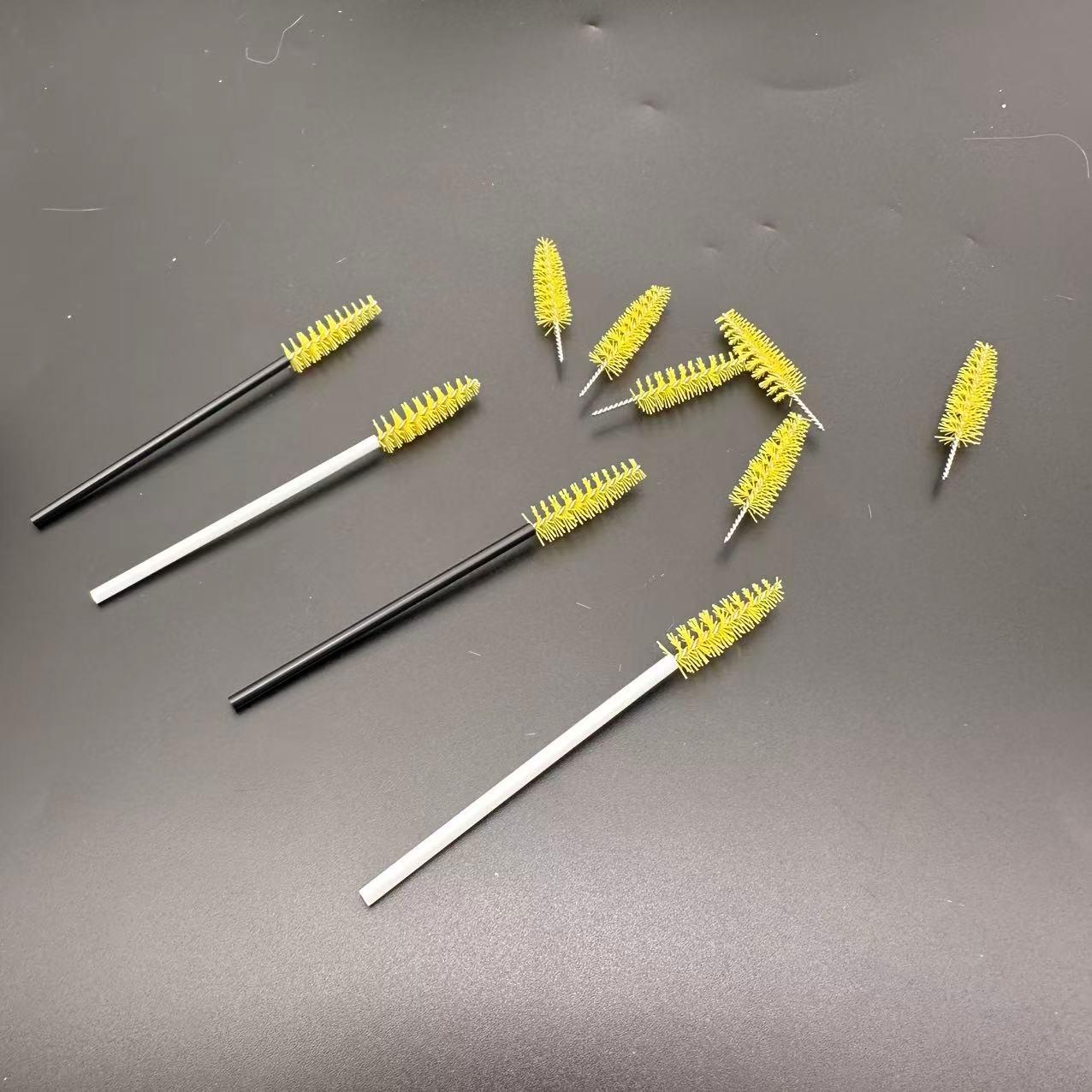
When it comes to achieving that perfect, clump-free volume, bristle density is often overlooked. Too many bristles packed tightly together can trap product, causing buildup and clumping that weighs lashes down. On the other hand, sparse bristles might not grab enough mascara, resulting in a lackluster finish. The sweet spot lies in a balanced density that allows each lash to be coated individually, separating and lifting as you comb through.
The science behind it is simple: bristles with just the right amount of space between them act like micro-combs. They grip every single lash, distributing product evenly from root to tip without excess. This not only prevents lashes from sticking together but also builds volume gradually, layer by layer. You’ll notice the difference immediately—lashes that look fuller yet defined, with a soft, fluttery lift that lasts all day.
Next time you’re shopping for mascara, take a close look at the wand. Run your finger over the bristles lightly to feel the density—you want them to be firm but not stiff, with a slight give. Avoid wands where the bristles are so dense they look like a solid tube; those often deliver clumps. Instead, opt for a design that feels like a plush, flexible brush. That’s the secret to unlocking volume that’s bold, beautiful, and utterly clump-free.
Material Matters: Why Synthetic Fibers Outperform
When you're halfway through a rainy hike and your cotton tee is clinging to you like a second skin, you start to understand why synthetic fabrics exist. They don't absorb moisture in the same stubborn way; instead, they wick it away, dry fast, and keep chafing at bay. That's not magic—it's chemistry, designed for motion and mess.
Then there's the longevity factor. A polyester jacket can survive years of weekly washes without losing shape or color, while a wool blend often requires a gentle cycle and a prayer. Synthetics shrug off abrasion, resist wrinkles, and won't turn into a moth buffet when you store them. For anyone who'd rather live their life than babysit their clothes, that's a quiet victory.
It's not just about performance in harsh conditions, either. Think about the budget-friendly reality: a pair of nylon leggings might cost half as much as a high-end organic cotton version but still deliver squat-proof coverage and stretch that doesn't sag. For everyday wear that has to keep up with a commute, a workout, and a surprise downpour, synthetic fibers simply make practical sense without the constant care or cost.
Mastering the Wiggle Technique for Flawless Coverage
The wiggle technique might sound a bit odd, but once you try it, it’s a total game-changer for even coverage. Instead of sweeping product across your skin, you use a quick, tight side-to-side or circular shimmy with your brush or sponge. This motion presses the formula into pores and fine lines, giving you a smooth, blended look without obvious streaks or patchiness.
Start with a dense, flat-top brush or a damp beauty sponge. Pick up a small amount of product—you can always add more—and begin wiggling from the center of your face outward. Keep your wrist loose and the pressure barely there; let the tool do the work. Around tricky areas like the nose crease or jawline, angle the edge of your brush or sponge to feather things out seamlessly.
What makes this method stand out is how it practically melts the makeup into your complexion, leaving you with that coveted skin-like finish. A common misstep is loading up too much product, which ends up dragging the skin rather than gliding over it. Stick with thin layers and you’ll build coverage without heaviness. It also cuts down on blending time because the wiggling buffs everything in faster than linear strokes ever could.
Cleaning Habits That Extend Your Brush’s Lifespan
Many artists don’t realize that the way they clean their brushes can either add years to their favorite tool or cause it to shed bristles within weeks. Instead of scrubbing the ferrule—the metal part that holds the hairs—focus on gently massaging the soap into the belly of the bristles. This prevents water and pigment from seeping into the glue that holds everything together, which is often the hidden culprit behind loose hairs and misshapen tips.
Temperature matters more than you’d think. Hot water might feel like it’s blasting away paint more efficiently, but it actually expands the ferrule and weakens the natural oils in the bristles. Lukewarm water paired with a mild, artist-grade soap keeps the fibers resilient while still lifting stubborn color. After rinsing, reshape the brush with your fingers and let it dry flat—never upright in a cup, where moisture can trickle down and rot the handle from the inside.
A habit that truly sets apart well-loved brushes comes down to avoidance: skip the harsh quick-fixes like leaving them soak in solvent overnight or chipping off dried acrylic with a fingernail. Those minutes saved now cost you a precision tool later. Instead, embrace a slow, mindful rinse immediately after use, and consider using a brush restorer every few months to condition the fibers. Your brushes won’t just survive—they’ll develop a supple, responsive character that machine-made replacements simply can’t replicate.
When to Swap: Signs Your Brush Has Retired
Have you noticed your brush dragging across the canvas, leaving behind uneven streaks instead of smooth, flowing strokes? It’s a subtle shift, one you might attribute to a bad painting day, but over time, those frayed bristles and stubborn paint buildup are clear signals that your trusty tool has quietly stepped into retirement. The moment you find yourself fighting the brush rather than guiding it—when it no longer holds its shape or springs back after a stroke—listen to that frustration. It’s not your technique slipping; it’s the brush telling you it’s done.
Pay attention to the little things: bristles that fan out like a bad hair day, a ferrule that wiggles loose with every rinse, or paint that refuses to fully wash out even after a thorough cleaning. These aren’t just quirks; they’re the retirement farewells of a brush that’s served its time. When you catch yourself compensating—pressing harder, double-dipping to fix what should have been a single clean line—that’s your cue. A functioning brush feels like an extension of your hand, not a problem to solve.
And then there are the moments when you’re standing in front of a fresh canvas, brush in hand, and something just feels off. You can’t pinpoint it, but the connection is missing. That hesitation, that subtle lack of fluidity, is the most honest sign. Don’t ignore it. You owe it to your craft to work with tools that respond as you imagine, so when your brush starts holding you back rather than pushing you forward, swap it out. Your next stroke will thank you.
FAQ
A good brush should have densely packed bristles with a slight curve to hug the natural lash line. The bristles need to be firm enough to separate lashes but soft enough to prevent irritation. A tapered tip also helps reach inner corner lashes easily.
Start by wiping off excess product on the tube’s rim. Wiggle the brush at the base of your lashes and slowly pull it upward in a zigzag motion. This separates lashes and distributes the mascara evenly, reducing clumps.
Pumping the brush in and out of the tube introduces air and dries out the mascara. Applying too much pressure or using a brush with uneven bristles can also lead to spider lashes. Another mistake is not cleaning the brush regularly, which affects performance.
Gently wipe the brush with a lint-free tissue after each use to remove dried residue. Once a week, soak the bristles in warm water with mild soap, rinse thoroughly, and let it air dry completely. Avoid harsh chemicals that can damage the bristles.
Before applying mascara, warm your lash curler slightly with a blow dryer for a few seconds—test the temperature first. Then, use the brush to push lashes upward at the root and hold for a moment. Follow with a second coat focusing on the tips to lock in the curl.
Natural bristles give a softer, more natural finish ideal for sensitive eyes, while synthetic bristles are better at holding and evenly distributing thicker formulas. Silicone brushes, for example, create a sleek, clump-free look but may not add as much volume.
Use a small, precise brush and apply a thin coat from the root to the tip, focusing only on the upper lashes. Skip the lower lashes or use a tiny amount. Blot the brush lightly on tissue before applying to remove excess and achieve a barely-there effect.
There are curved brushes for curl, straight ones for length, ball-tipped for details, and comb-like brushes for separation. Choose based on your needs: if you have short lashes, go for a slim, tapered brush; for sparse lashes, pick a fuller brush to build volume.
Conclusion
Achieving a flawless lash look starts with the right tool, and a top Chinese manufacturer reveals why brush design is everything. The curvature of the brush dictates how easily you reach every lash—deeply curved wands hug the eye’s natural contour for instant lift, while tapered tips target those stubborn inner corners. Pair that with properly spaced bristles, and you avoid the dreaded clumps that ruin a fresh coat. The experts stress that density is key: too tight and the formula smears; too sparse and you lose definition. They recommend synthetic fibers for their sleek, uniform texture that glides smoothly and grabs the perfect amount of product without absorbing it like natural hairs. Combine this with the wiggle technique—gently rocking the brush from root to tip in tiny zigzag motions—and you coat each lash evenly, building volume that stays separated and feathery. It’s a game-changer that turns an average mascara into a professional finish.
But even the best brush won’t perform forever. Cleaning it weekly with a gentle, oil-free solution keeps bristles flexible and prevents product buildup that can scratch the delicate eye area. Let it air-dry completely to avoid bacteria. The manufacturer notes subtle signs your tool has retired: bristles start to fray, the wand feels rough, or application becomes patchy despite fresh formula. Swapping your brush every three months isn’t just hygienic—it guarantees the crisp, fanned-out result you expect from day one. These insights, from a leading supplier to global brands, show that mastering your lash brush is the real secret to camera-ready eyes.
Contact Us
Contact Person: Caiju Zhang
Email: [email protected]
Tel/WhatsApp: +86 14763963294
Website: https://www.kldbrush.com