

Industrial Heating and Cooling Solutions for Optimal Facility Performance
2026-10-25
When a facility's heating and cooling systems fall out of sync, the hidden toll shows up in warped materials, sluggish equipment, and energy bills that don't add up. Tongbaote tackles this with industrial heating and cooling solutions built around real-world thermal loads. This post unpacks how matching thermal control to your facility's actual demands drives steadier output, longer asset life, and lower operating costs.
What Happens When Your Facility Runs Hot or Cold for Even an Hour?
A single hour of temperature drift might not sound like much, but industrial and commercial facilities often operate within tight thermal tolerances. Even a brief excursion beyond the setpoint can trigger a cascade of problems—sensitive materials may degrade, condensation can form on equipment, and control systems may begin hunting for stability. The real cost isn't just the hour itself; it's the recovery time and the hidden damage that often goes unnoticed until later.
For temperature-sensitive processes such as pharmaceutical storage, food production, or server rooms, running hot or cold for sixty minutes can compromise product integrity. Electronics may overheat and throttle performance, while cold spots can cause brittle failures in certain materials or cause lubricants to thicken. Energy consumption also spikes as HVAC systems work harder to compensate, and frequent short-term fluctuations can shorten the lifespan of compressors and chillers through unnecessary cycling.
Beyond the immediate physical effects, there's the operational ripple. A one-hour deviation may require batch rejection, recertification, or unplanned maintenance. In regulated industries, even a minor excursion must be logged and investigated, consuming staff time and raising audit concerns. Ultimately, what seems like a minor blip can erode both profit margins and trust in your facility's reliability—making real-time monitoring and rapid response far cheaper than the alternative.
Right-Sizing Climate Systems for Actual Production Demands
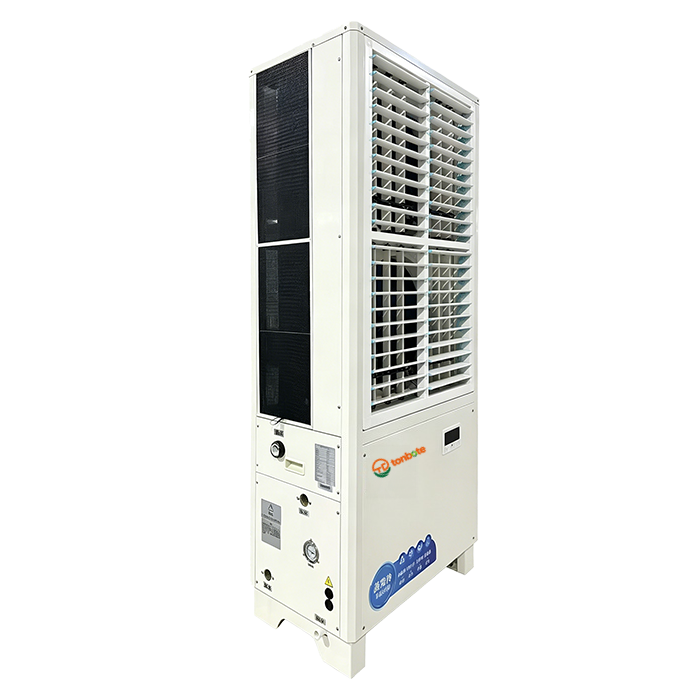
Most facility teams still treat climate system sizing as a one-time guess based on peak summer afternoons and worst-case occupancy. In production environments, that logic falls apart quickly. Actual thermal loads shift with batch schedules, equipment duty cycles, door openings, and even raw material staging. Right-sizing means measuring those patterns for weeks, not relying on a static load calc, then matching system output to the real range of demand rather than a theoretical maximum.
Oversized units short-cycle, pull more power than needed, and struggle with humidity control because they cool the air too fast to remove moisture. Undersized units simply never reach setpoint during heavy runs. A better approach starts with sub-metering the production floor and logging temperature, humidity, and equipment draw at fifteen-minute intervals. From that data you can identify the true peak sustained load and the typical operating band, then select equipment that runs in its most efficient range most of the time. Adding variable capacity compressors or staging multiple smaller units often beats a single large machine for both comfort and energy cost.
Lower Energy Bills Without Compromising Temperature Precision
Most HVAC setups lose money by cycling hard around the set point, overshooting a degree or more just to recover. Inverter-driven compressors and variable-speed fans hold a much tighter band, so the system idles at a low, steady load instead of slamming on and off. That keeps the room exactly where you want it without the repeated startup spikes that inflate monthly bills.
Per-room zoning paired with remote sensors makes precision pay off even more. Spaces that are empty can sit a degree or two away from the main target, while occupied rooms get the exact temperature requested. The equipment runs longer at reduced capacity, which costs far less than short, full-power bursts through a single thermostat.
A narrow deadband around 0.5°C or 1°F, combined with adaptive recovery, lets the system anticipate warm-up and cool-down instead of chasing the dial. Modulating controls then trim output continuously, so energy use drops but the feeling of the room stays predictable and precise.
How Different Industries Tackle the Same Thermal Challenges
A smartphone tucked into a pocket and a wind turbine spinning in a coastal gale face the same underlying enemy: excess heat. Yet their solutions rarely overlap on paper. Consumer electronics lean on ultra-thin vapor chambers and graphite films to spread thermal energy across a palm-sized surface, while heavy machinery relies on bulky oil-based cooling loops that can shrug off vibration and dust. The physics is identical, but the constraints—weight, cost, noise, lifespan—force engineers down wildly different paths.
Nowhere is this split more visible than in electric vehicles and data centers. Both generate punishing heat loads from lithium-ion cells or server racks, and both flirt with liquid cooling. But an EV battery pack must survive potholes, crashes, and -30°C winters, so automakers use dielectric fluids or glycol coolants sealed inside crash-resistant channels. Data centers, by contrast, can submerge entire circuit boards in tanks of non-conductive liquid, trading mechanical durability for near-silent operation and extreme heat rejection. One solution prioritizes physical abuse; the other chases energy efficiency per square foot.
Aerospace pushes the same thermal playbook to its extreme. Jet engine turbine blades endure temperatures that would melt the metal they are made from, so engineers drill microscopic holes and blow cooler air through them—a trick that would be pointless in a laptop but vital at 1,500°C. Medical devices, meanwhile, must manage heat without fans or noisy pumps, often relying on phase-change materials that absorb warmth during a brief procedure and release it slowly afterward. The core challenge never changes: move heat away from where it can do harm. How each industry answers that challenge is a lesson in smart compromise.
Simple Maintenance Habits That Prevent Costly Thermal Failures
Thermal failures rarely announce themselves with a bang. More often, they creep in as a faint smell, a subtle slowdown, or a fan that suddenly sounds like it's working harder than it should. The good news is that most of these catastrophes trace back to a handful of oversights that are shockingly easy to fix. Start with airflow: blocked vents and dust-caked intake grilles are responsible for a surprising number of overheating incidents. A quick visual check once a month, plus a gentle vacuum or blast of compressed air around vents and heat sinks, can prevent the slow heat buildup that eventually cooks sensitive components.
Next, pay attention to thermal interface materials. That grey or silver paste between your processor and its cooler degrades over time, drying out and losing its ability to transfer heat. If you're comfortable opening a case, reapplying a quality thermal compound every couple of years is cheap insurance. But do it properly—less is more, and an uneven spread can create hotspots. Also, listen to your machine. A fan that rattles, whines, or spins erratically is a warning sign that bearing wear or accumulated dust has already begun to sap cooling efficiency. Replacing a failing fan early costs a fraction of the component it protects.
Finally, think about where your equipment lives. That cupboard with no airflow, the carpet that blocks bottom vents, or the sunny window ledge all turn ordinary ambient conditions into a slow oven. Elevate laptops, keep desktops off thick carpet, and maintain at least a few inches of clearance around exhaust areas. Simple habits like shutting down instead of piling papers on a warm machine might feel trivial, but they starve the conditions thermal failures thrive on. A little routine attention here saves you from the sudden, expensive silence of a dead board later.
When to Upgrade Your Heating and Cooling Controls
Most people don’t think about their thermostat until a room feels stuffy or the heating bill jumps for no obvious reason. If you’re still adjusting a basic dial or pushing buttons on a controller that predates smartphones, the upgrade window may already be open. Modern controls learn your schedule, respond to humidity, and can even detect when a window is left open. The real question isn’t whether new tech exists—it’s whether your current setup is quietly costing you comfort and money every month.
Pay attention to uneven temperatures between rooms, short cycling, or a system that runs far longer than it used to. If you’ve added insulation, replaced windows, or changed how you use different parts of the house, your old controls are probably out of sync with the actual load. A control upgrade makes the most sense right after those changes, not years later. Also, if you’re planning to install a heat pump or zoned dampers in the near future, doing the controls at the same time avoids ripping out wiring twice.
FAQ
Start by mapping every heat source and cold load in the facility. Equipment layouts, shift patterns, and even dock door usage change the load profile more than most people expect.
The issue often isn't the equipment; it's that the control zones don't match how the space is actually used. A welding bay next to a quality lab needs different treatment than one large average setpoint.
Look at heat recovery first. Exhaust air from compressors or ovens can preheat incoming fresh air in colder months. That single change often pays for itself faster than a full equipment swap.
Yes, and it causes more than wasted fuel. Short cycling leads to uneven temperatures, moisture issues, and extra wear on components. Matching capacity to real demand is key.
It's the foundation. Even the best heating or cooling system underperforms if the building shell leaks. Sealing high-bay doors and insulating process piping often gives a better return than adding capacity.
Consider a hydronic system with reversibility or a combined heat pump setup. It lets you move heat from process areas that need cooling to zones that need warmth, instead of running two systems against each other.
Ignoring water quality in boilers and cooling towers is the big one. Scale and corrosion silently cut efficiency. Also, skipping belt alignment checks on air handlers leads to premature bearing failures.
If the core compressors, coils, or burner assemblies are still in good shape, a controls upgrade and targeted component replacement can extend life by years. Full replacement makes sense only when repair costs approach 60% of new equipment.
Conclusion
Even brief temperature swings can disrupt production, from material expansion in precision manufacturing to stability issues in pharmaceutical storage. Many facilities either oversize or undersize their HVAC systems, leading to wasted energy or an inability to hold critical setpoints. Right-sizing starts with analyzing actual thermal loads rather than relying on square footage alone. By integrating variable-speed drives and smart zoning, plants can cut electricity bills without sacrificing temperature consistency. These strategies have proven valuable across food processing, data centers, and chemical production—each industry facing unique but overlapping thermal demands, from rapid cooling cycles to strict humidity control.
Proactive maintenance matters just as much: clogged filters, uncalibrated sensors, or worn compressor components can quietly erode performance until a costly failure occurs. Routine inspections and minor repairs are far cheaper than emergency replacements. At the same time, when control panels lack remote monitoring or adaptive algorithms, upgrading them can further optimize operations, turning a reactive system into a responsive one. Ultimately, optimal facility performance depends on matching thermal infrastructure to real-time production conditions rather than fixed assumptions. This holistic approach keeps facilities running steadily under fluctuating loads and energy prices.
Contact Us
Contact Person: Wanshu Chen
Email: [email protected]
Tel/WhatsApp: +86-13662871206
Website: https://www.mbcee.com