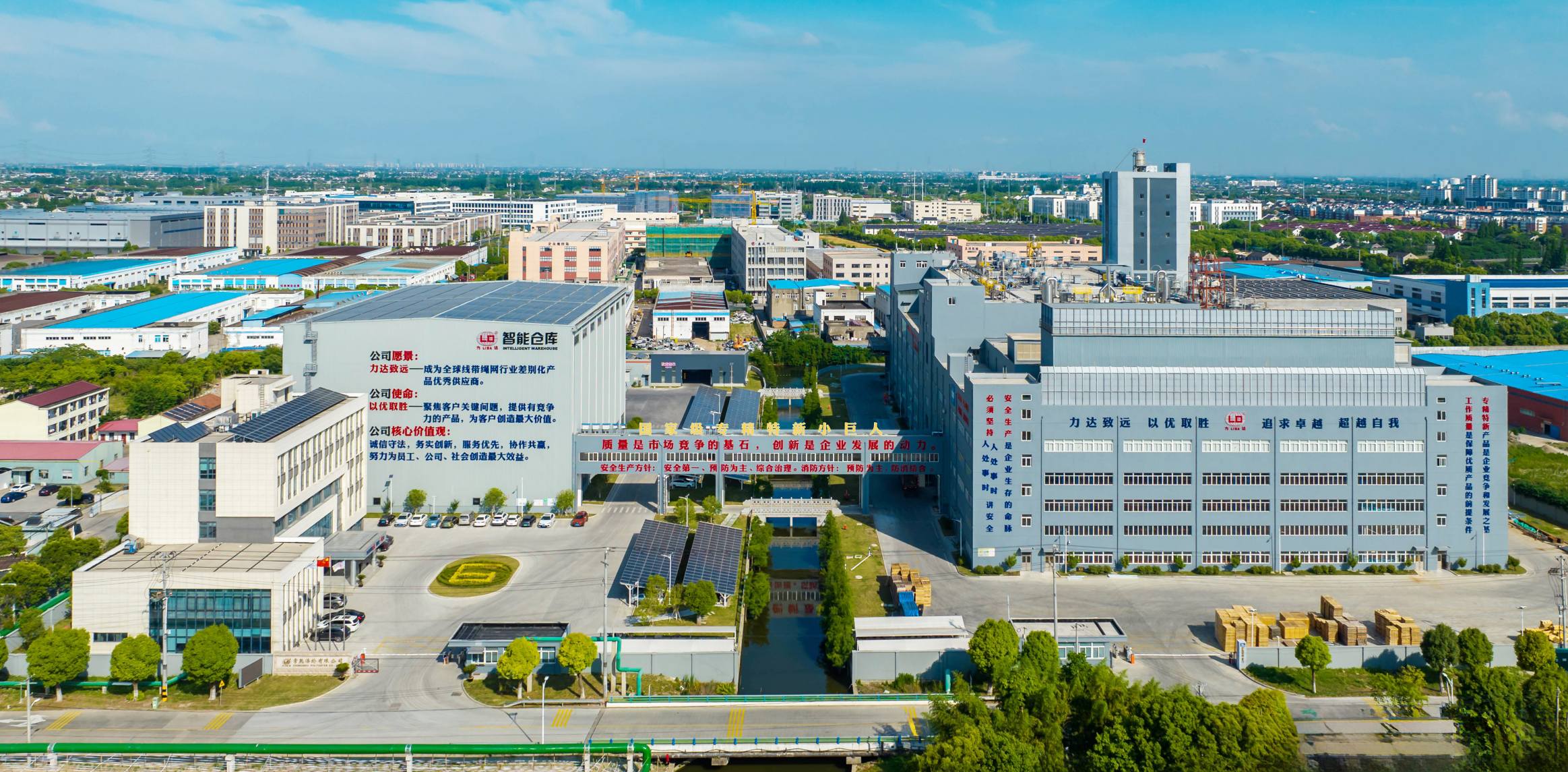

High Tenacity Recycled Polyester Filament Yarn Company: Your Guide to Quality and Sustainability
2026-10-10
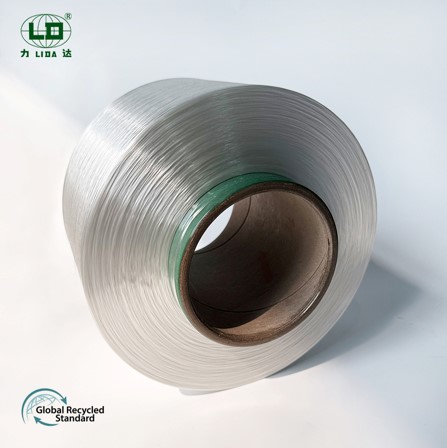
Strength doesn't have to cost the earth. That's the idea behind high tenacity recycled polyester filament yarn—and it's a specialty at Changshu Polyester. If you've been sorting through supplier claims and spec sheets, this guide cuts through the noise. We'll walk you through the key quality indicators, the recycling process that keeps performance intact, and the sustainability questions worth asking before you commit.
What Makes High Tenacity Recycled Polyester Stand Up to Stress
High tenacity recycled polyester gets its stress tolerance from the way the polymer chains are re-aligned during extrusion. After post-consumer PET is washed and melted, it passes through a high-pressure spinneret that stretches the melt and forces the molecular chains into a parallel, tightly packed arrangement. This orientation creates a dense crystalline structure that distributes load evenly across the filament, so a single point of tension doesn't become a breaking point.
Under repeated pulling, twisting, or abrasion, the material's high intrinsic viscosity keeps the chain entanglement intact, preventing the micro-cracks that typically lead to premature failure in ordinary recycled fibers. The recycled feedstock is also filtered to remove impurities that would otherwise weaken the yarn, which means the final fiber can withstand high elongation without permanently deforming. This is why it holds up in load-bearing uses like cargo straps, safety harnesses, and heavy-duty geotextiles, where failure under stress isn't an option.
Inside the Recycling Process from Bottle to Filament
Most recycled filament starts with clear PET beverage bottles. After collection, they are sorted by color and resin type, then labels, caps, and adhesive rings are stripped away because even small amounts of PVC or other plastics can ruin the extrusion batch. The clean bottles are shredded into uniform flakes, usually around 10 to 14 millimeters across.
The flakes go through a hot wash with mild detergents to remove sugar residues, oils, and leftover glue from labels. Once rinsed, they must be dried to a moisture content below 50 parts per million. Any trapped water turns to steam during melting and creates bubbles or weak spots in the filament, so drying can take several hours at controlled temperatures.
From there, the dried flakes are fed into a single-screw extruder and heated to roughly 250 to 260 degrees Celsius. The molten PET is forced through a narrow die, cooled in a water bath, and pulled through a laser micrometer that adjusts the winding speed to hold diameter within about 0.05 millimeters. A final filter screen often sits before the die to catch any particles that would clog a printer nozzle later.
Quality Benchmarks That Go Beyond Standard Spec Sheets
Most spec sheets tell you what a product is made of, but they rarely reveal how it behaves after six months of daily use. Our benchmark process starts where typical cut sheets stop: we cycle components through accelerated wear simulations, expose finishes to salt spray and UV chambers, and measure tolerance drift after repeated load cycles. The numbers we publish come from these long-run trials, not just from initial lab samples.
Beyond durability, we also score ergonomics and serviceability under real working conditions. A hinge might meet its torque specification on paper, yet feel gritty after dust exposure. A coating might pass a standard adhesion test but still show micro-cracking around machined edges. Those subtle failures rarely appear in a datasheet, so we document them with photographs and failure timelines. This gives you a clearer picture of where a product will actually hold up and where it will need attention.
Finally, we compare each result against field returns and technician feedback, not just internal pass/fail criteria. If a material passes our lab thresholds but shows early wear in actual installations, we adjust the benchmark upward. That loop keeps the standards honest and pushes suppliers to improve the things spec sheets tend to hide.
How Circular Production Cuts Carbon Without Cutting Corners
Circular production often gets reduced to a slogan about recycling bins and reused pallets, but the real carbon savings hide in how materials flow through a factory floor. Instead of insisting every component be virgin-sourced and perfectly uniform, manufacturers can recover offcuts, remelt sprues, and recondition worn tooling—steps that slash embodied emissions without touching a single tolerance spec. The trick is treating waste not as a disposal cost but as a raw material with its own quality controls, so the final product still meets the same durability and performance benchmarks.
The carbon math gets compelling when you stop measuring only the energy used during machining or assembly. A circular line pulls carbon out of the supply chain upstream: less mining, less primary smelting, fewer long-haul shipments of bulk feedstock. Those avoided upstream emissions rarely show up on a factory's utility bill, yet they often outweigh the electricity consumed by the entire production run. By sourcing secondary materials from within a tight regional loop, a plant can cut its total carbon footprint by double digits while keeping output volume steady.
What keeps this from being a corner-cutting exercise is the discipline of material passports and traceability. Every recovered lot gets tested for composition and mechanical properties before it re-enters the line, and the blend ratios are adjusted just like any other process variable. When operators can see the actual carbon intensity per kilogram of input material, they make trade-offs that protect both the planet and the product—opting for a slightly higher recycled content in a non-critical housing while preserving virgin stock for load-bearing parts. That targeted, data-driven reuse delivers the emissions reduction without compromising function, lifespan, or safety margins.
Finding a Supplier Who Backs Sustainability with Data
Plenty of suppliers claim sustainability, but the real test is whether they can show the underlying numbers. Ask for specific, time-stamped data: carbon emissions per unit produced, water consumption per batch, waste diversion rates, or the percentage of renewable energy in their mix. A trustworthy partner will share these figures openly and explain the measurement method, not just recite a polished mission statement.
Go beyond marketing summaries. Request raw operational data or third-party verified reports—utility bills, lifecycle assessments, or audit findings from recognised bodies. If a supplier offers vague percentages without a clear baseline or time period, treat that as a warning sign. Solid sustainability data should be traceable to actual production volumes, comparable across months or quarters, and consistent enough to spot trends.
Finally, check whether the data drives real change. Ask how a specific metric led to a different packaging choice, a new supplier for raw materials, or a process tweak that cut energy use. A supplier that gathers numbers but never connects them to operational decisions is simply running a reporting exercise. The right partner will show you the metric, the action it prompted, and the measurable result.
Real-World Applications Where Performance Meets Planet
From wind farms tucked into rolling hills to solar arrays powering urban transit, the push for cleaner energy is no longer a distant ideal but a daily engineering reality. Teams are rethinking how turbines, panels, and batteries interact with their surroundings, balancing efficiency gains with lower environmental footprints. The result is a new breed of infrastructure that quietly does its job without leaving a heavy mark on the land or air.
At the same time, software is stepping in where hardware alone falls short. Smart grids adjust loads by the minute, routing surplus power to where it is needed most and cutting waste in real time. Predictive maintenance tools flag worn components before they fail, extending the life of equipment that might otherwise end up as scrap. These digital layers turn performance into a careful, ongoing conversation between machines and the ecosystems they serve.
What stands out in this space is not any single breakthrough, but a shift in mindset. Companies are measuring success in kilowatt-hours and carbon saved side by side, refusing to sacrifice one for the other. It is a quieter kind of ambition, driven by data and long-term thinking rather than flashy promises, and it is steadily reshaping how entire regions meet their power needs.
FAQ
It refers to the yarn’s ability to withstand substantial pulling force without breaking. During production, recycled PET flakes are melted, filtered, and spun with a higher draw ratio to align polymer chains, pushing tenacity well above standard textile yarn—often into the 6.5–8.0 cN/dtex range. That extra strength makes it suitable for load-bearing and abrasive applications.
By turning post-consumer PET bottles into durable yarn, you cut dependence on virgin petrochemicals and divert plastic from landfills or incineration. The process typically uses less energy and water than virgin polyester production, and because the yarn is fully recyclable again, it supports a more circular material loop rather than a linear take-make-dispose model.
Every batch goes through a series of physical and mechanical tests: linear density, tenacity, elongation at break, dry heat shrinkage, and oil content. We also run a melt viscosity check before spinning and keep a retained sample from each lot for 24 months, so if a downstream issue appears, we can trace it back to the exact raw material batch and machine settings.
It shines wherever tensile stress or abrasion is constant—think industrial sewing threads, webbing and slings, cargo tie-downs, tent guy lines, safety harnesses, and geotextiles. Outdoor gear and automotive interiors also benefit because the yarn holds up under UV exposure and repeated loading better than standard recycled polyester.
In many cases, yes. Modern recycling lines with advanced solid-state polymerization and precise filtration can restore intrinsic viscosity to levels that allow high-tenacity spinning. The key is raw material purity—single-source, clear PET bottles yield the most consistent results. We regularly see tenacity values within 5% of virgin high-tenacity yarn.
Look beyond the spec sheet. Ask for the actual recycling certificate chain, the percentage of post-consumer vs. post-industrial content, and how the supplier handles contamination like PVC labels or caps. A reliable partner will openly share test reports, allow factory audits, and explain exactly how they maintain color and viscosity from one container load to the next.
Yes. We can add masterbatch during extrusion for spun-dyed colors that avoid a separate dyeing step and reduce water use, or we can supply raw white yarn with a consistent hue for downstream piece dyeing. For demanding applications, we also offer finishes like low-friction lubricants or UV stabilizers tailored to the end use.
Conclusion
High tenacity recycled polyester filament yarn starts with a simple idea: turn discarded bottles into a material strong enough for demanding uses. What makes it hold up under stress isn't luck—it's the way the polymer chains are aligned during spinning and drawing. Companies that specialize in this fiber often control the entire recycling chain, from sorting and washing bottle flakes to melting and extruding the filament, because any slip in purity or temperature shows up later as weak spots. Quality benchmarks here go beyond the standard spec sheet. A trustworthy producer runs fatigue tests, checks for chemical resistance, and tracks batch-to-batch consistency, so the yarn performs the same on day one and after months of abrasion. This level of care separates a true high-tenacity product from an ordinary recycled polyester that just looks the part.
Circular production is where sustainability gets measurable. Using recycled feedstock cuts the need for virgin petrochemicals, and modern lines recover heat and reuse water to lower energy use per kilogram. But cutting carbon doesn't mean cutting corners—these manufacturers publish real data on water consumption, electricity, and emissions for each production run. A supplier who backs claims with audited numbers makes it easier for buyers to trust the environmental story. In practice, the yarn ends up in places where performance and planet must coexist: cargo lashings, automotive seat belts, geotextiles, heavy-duty ropes, and outdoor gear that has to survive weather and repeated loading. Choosing the right company comes down to asking for evidence, not promises, because a filament is only as sustainable as the process behind it.
Contact Us
Contact Person: CONNIE
Email: [email protected]
Tel/WhatsApp: 86-0512-53671634
Website: https://www.lida-yarn.com/