

Healthcare RFID Wristband Factory: Innovations in Patient Safety and Workflow Efficiency
2026-06-20
Picture a busy hospital ward where nurses no longer fumble with paper charts or misread handwritten IDs. At the heart of this quiet revolution is a simple yet powerful tool: the RFID wristband. Today, one factory is redefining what these wristbands can do—pushing patient safety and workflow efficiency to new heights. Step inside the world of BAOBI, where smart manufacturing meets life-saving precision.
Beyond the Barcode: How RFID Redefines Patient Identification
In many hospitals, patient wristbands with barcodes have long been the standard for identification. Yet, nurses often struggle with smudged prints, poor lighting, or the need to wake a sleeping patient just to get a clear scan. RFID flips this entirely—tiny tags embedded in wristbands let staff confirm identity with a simple wave of a handheld reader, working through blankets and even from a short distance. This quiet shift saves precious seconds on every check and turns a formerly disruptive task into a seamless, almost invisible part of care.
What truly sets RFID apart is the depth of information it can carry and update. Instead of a static barcode linked only to a record elsewhere, an RFID tag can store critical real-time details—like fall risks, allergy alerts, or last medication given—that travel with the patient. This transforms the wristband from a passive label into an active safety tool. For example, a transporter moving a patient to radiology can instantly verify correct identity and recent vitals without logging into a computer, reducing delays and the chance of miscommunication between units.
Beyond the bedside, RFID redefines the entire flow of patient movement. Automated checkpoints at doorways capture location data silently, offering a live view of patient whereabouts without manual entry. This means no more frantic calls to locate a missing patient for a scheduled procedure; instead, staff see exactly which zone a person is in and for how long. It’s a change that eases the mental load on nurses, cuts down on operational friction, and ultimately lets the whole system focus on what matters most—the person receiving care.
Smart Wristbands as Active Links in the Care Chain
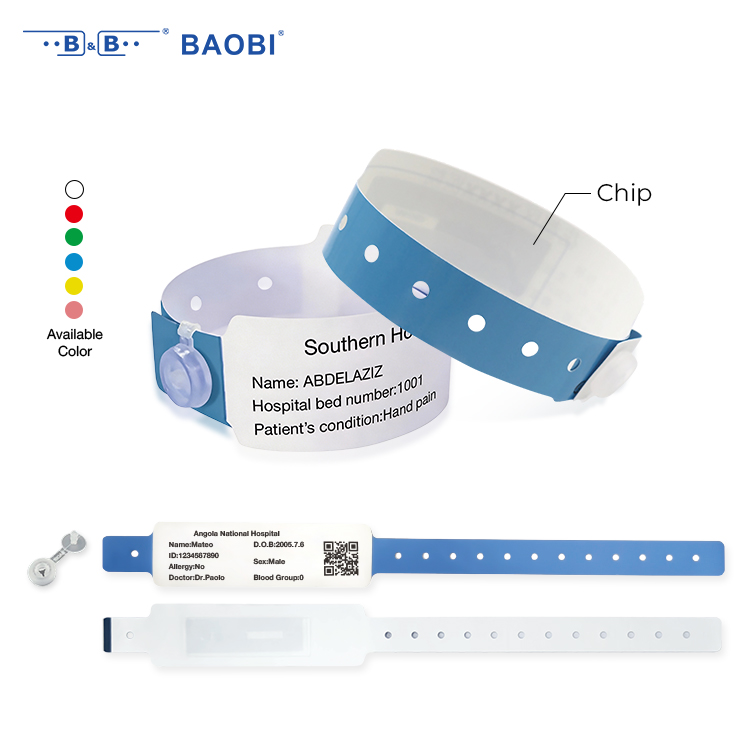
Smart wristbands bridge the gap between patients and caregivers by transmitting real-time health data without requiring any manual input. Instead of periodic check-ups that rely on memory or self-reported symptoms, these devices continuously stream heart rate, movement, and sleep patterns to a secure platform. This passive monitoring ensures that subtle changes—like reduced mobility or irregular rest cycles—trigger alerts before they escalate into emergencies, keeping the entire care team informed and responsive.
Beyond data collection, the wristbands foster a sense of connection through gentle nudges and reminders that blend into daily routines. Medication alerts, hydration prompts, and activity goals appear at contextually relevant moments, reducing the cognitive load on individuals who may already feel overwhelmed by their health regimen. For aging users or those managing chronic conditions, this unobtrusive support reinforces autonomy while creating a digital thread that weaves their everyday actions into a larger care framework.
The value of these wearable links becomes most evident in coordinated care scenarios, where multiple specialists, family members, and assisted living staff need a unified view of a person’s well-being. Instead of fragmented reports, everyone accesses the same stream of actionable insights, enabling faster decisions and more personalized interventions. By turning passive observation into proactive engagement, smart wristbands transform the care chain from a series of isolated contacts into a cohesive, living network centered on the individual.
From Admission to Discharge: Automating Every Step
Automation reshapes the entire patient journey, starting the moment they walk through the door. Digital check-in systems verify identities, populate records, and route patients to the right department without a clipboard in sight. Behind the scenes, scheduling aligns with real-time bed availability, and clinical teams receive instant alerts about new arrivals, cutting down the idle time that frustrates both staff and patients.
On the floors, workflow engines take over. Medication orders trigger pharmacy robots, lab results feed directly into the electronic health record, and nursing tasks appear on mobile dashboards the second a doctor signs off. Discharge planning begins at admission, with algorithms predicting length of stay and flagging potential barriers early, so social workers and case managers can act before delays pile up.
When it’s time to leave, automation ensures nothing slips through the cracks. Prescriptions route to the patient’s preferred pharmacy, follow-up appointments self-schedule based on calendar rules, and personalized after-visit summaries print or push to a portal as the patient walks out. Billing codes are validated in the background, claims submitted instantly, and satisfaction surveys triggered by the discharge timestamp.
Where Precision Engineering Meets Life-Saving Reliability
Every component is machined to tolerances that leave no room for error. The mindset here isn’t just about hitting specs—it’s about knowing that a single micron can determine whether a system performs flawlessly or fails when it matters most. That’s why we treat each surface finish and thread depth as more than a measurement; it’s a promise to the people who rely on this gear in the field.
But precision alone doesn’t save lives. So we pair it with a relentless testing culture. Prototypes are pushed to their breaking points in environments that mimic real chaos: extreme temperatures, shock loads, and prolonged stress cycles. Only when a design shrugs off these trials does it earn a place in our lineup. It’s an exhaustive approach, but it’s how we ensure that the equipment functions exactly as expected, without hesitation or hiccup.
That intersection of meticulous craft and unyielding validation creates something rare—a quiet confidence that lives in the tools we build. It’s not about flashy claims; it’s about engineers in workshops and operators in critical moments trusting the same thing: this part will not let them down.
Wearable Tech That Patients Forget They’re Wearing
Imagine slipping on a small, featherlight patch that monitors your vitals around the clock, yet feels like nothing more than a second skin. These devices are crafted from flexible, breathable materials that move with the body, avoiding the bulk and irritation of traditional wearables. They blend so seamlessly into daily life that patients often forget they’re even being worn, turning health tracking into a truly background process.
The magic lies in advanced sensor technology that operates passively, collecting continuous data without the need for buttons, wires, or frequent recharging. Embedded microelectronics sip power from body heat or gentle motion, so users never have to interrupt their routine to plug in. This invisible monitoring captures subtle shifts in heart rhythm, hydration, or glucose levels, offering clinicians a rich, real-time narrative while patients go about their day undisturbed.
By removing the constant reminder of illness, these forgettable wearables reduce the psychological burden of chronic disease management. Instead of feeling tethered to a medical gadget, individuals experience a quiet partnership—technology that watches over them without intruding on their sense of normalcy. It’s a shift from conspicuous treatment to ambient care, where the focus returns to living, not monitoring.
Building Digital Fortresses Around Patient Data
In an era where health records travel across networks in milliseconds, constructing robust barriers isn't merely technical—it's a moral imperative. The blueprint begins with encryption that wraps each byte in layers of mathematical armor, ensuring that even if intercepted, the data remains an indecipherable puzzle without the proper keys. Beyond encryption, real-time anomaly detection acts as a tireless sentinel, silently learning the normal rhythms of data access and pouncing on irregularities before they become breaches.
Yet the fortress extends beyond software. Physical safeguards—biometric locks, isolated server rooms, and strict access hierarchies—form the outer walls. Inside, granular permission settings ensure a nurse in the ER sees only what's necessary for immediate care, not a patient's entire history. This principle of least privilege, combined with immutable audit trails, creates a culture where every interaction is logged and accountable.
Ultimately, the strongest digital citadels are built through a partnership between technology and people. Regular drills that simulate phishing attacks and ransomware scenarios keep staff vigilant, while embedded privacy-by-design frameworks ensure that new systems are forged with protection in mind from day one. It's a continuous process—watching, adapting, and reinforcing—because patient trust isn't a one-time achievement; it's earned with every heartbeat of data the fortress guards.
FAQ
They’re wristbands embedded with radio-frequency identification chips that automatically communicate with hospital readers. Each band stores a unique ID linked to a patient’s electronic health record, allowing instant, hands-free identification and tracking throughout a facility.
We’ve integrated passive RFID tags that are read from several feet away, eliminating manual barcode scans that can miss errors. The bands also include tamper-detection layers and antimicrobial coatings to reduce infection risks, and they instantly alert staff if a patient wanders into a restricted area.
By automating patient check-ins, location updates, and asset association, staff spend less time on paperwork. For example, when a patient moves from ED to radiology, the system auto-logs the transfer and pre-fetches imaging orders, cutting average wait times by up to 20%.
The bands are made from medical-grade, latex-free thermoplastic elastomer that withstands showers, sanitizers, and extended wear without irritating skin. We exceed ISO 10993 for biocompatibility, and the RFID inlay is fully sealed against moisture and chemicals.
Yes, they’re built on standard protocols like HL7 and FHIR, so they plug directly into most EHR platforms. We offer middleware that translates RFID events into actionable HL7 messages, so no custom coding is required on the hospital side.
Absolutely. We provide both pre-printed and on-demand thermal printing solutions. The RFID chip remains fully functional under standard thermal print layers, so hospitals can add barcodes, photos, or allergy alerts while keeping all the smart tracking benefits.
Only the unique encrypted identifier is stored on the chip—no personal health data. All communication with readers uses AES-256 encryption, and the wristband can be instantly deactivated upon discharge to prevent any unauthorized access.
We’ve shifted to a closed-loop recycling program where used wristbands are collected, sterilized, and reground into raw material for new bands. Our latest line also uses plant-based plasticizers to lower the carbon footprint by roughly 30% compared to conventional PVC.
Conclusion
The shift from barcodes to RFID in patient wristbands has quietly transformed how hospitals confirm identity at every touchpoint. Instead of relying on line-of-sight scans that slow down nurses or risk misreads, these smart bands use radio frequency to instantly pull up records, verify medications, and flag allergies. They act as active participants in the care chain—not just passive labels—linking patients to real-time data without disrupting their rest. This connectivity extends beyond the bedside; it creates a digital fortress around sensitive information, encrypting transmissions so that only authorized devices can decode what’s being shared. Gone are the days of fumbling with clipboards or waking a sleeping patient for a check.
Behind that seamless experience is precision engineering honed in factories where reliability isn’t a goal—it’s a requirement. Each wristband is built to survive handwashing, MRI exposure, and constant wear, while remaining so lightweight and comfortable that patients barely notice its presence. From the moment of admission, the band automates documentation: lab draws, meal tracking, medication administration, and location alerts all flow through a single identifier. Discharge becomes a scan rather than a stack of paperwork. This marriage of industrial durability and thoughtful design means fewer errors, faster workflows, and a level of safety that wouldn’t be possible with older systems. The factory floor isn’t just producing accessories; it’s forging a critical link in modern healthcare.
Contact Us
Contact Person: Bill Xu
Email: [email protected]
Tel/WhatsApp: 8618688898707
Website: https://www.baobitech.com/