

Good Quality Popcom Production Line: Your Key to Profitable Snack Production
2026-05-18
Ready to turn fluffy kernels into a steady stream of profit? A high-quality popcorn production line isn't just equipment—it's your secret weapon in the booming snack market. Whether you're launching a new venture or scaling up, the right machinery transforms every batch into consistent, irresistible popcorn that keeps customers coming back. At the heart of reliable performance and innovation, MINGDE has spent decades engineering lines that balance speed, hygiene, and unbeatable flavor preservation. In this post, we'll walk through the essential steps, smart upgrades, and the little-known factors that separate a money-pit from a money-maker. Because when every hour of downtime chips away at your bottom line, settling for less isn't an option. Let's dive into what makes a popcorn line truly good—and why it's the smartest move you'll make this year.
Understanding the Popcorn Production Workflow
Every batch of popcorn starts long before the kernel ever meets heat. The journey involves careful selection of hybrid seeds, controlled growing conditions, and precise harvesting timelines to ensure the right moisture content—typically around 13–14%. Once harvested, kernels are cleaned, sorted by size and density, and stored in climate-controlled silos. This behind-the-scenes precision is what separates the fluffy, consistent popcorn you crave from the disappointingly chewy or unpopped kernels at the bottom of the bowl.
When it’s time to pop, the workflow shifts to a delicate dance of temperature and timing. Commercial operations use either wet-pop or dry-pop methods, each influencing texture and flavor absorption. The magic happens as internal moisture turns to steam, building pressure until the hull ruptures and the starch expands into that familiar cloud. Fine-tuning the heat ramp and agitation speed prevents scorching and maximizes expansion volume—factors that directly impact that airy crunch.
Post-popping, the workflow isn’t finished. Freshly popped corn moves quickly through seasoning drums where oil, salt, or flavor coatings are applied while the kernels are still warm and receptive. Then it’s cooled, screened to remove any remaining unpopped kernels, and packaged in nitrogen-flushed bags to preserve crispness. Every step, from field to bag, is orchestrated to deliver that satisfying pop of freshness.
Selecting the Right Machinery for Scale and Consistency
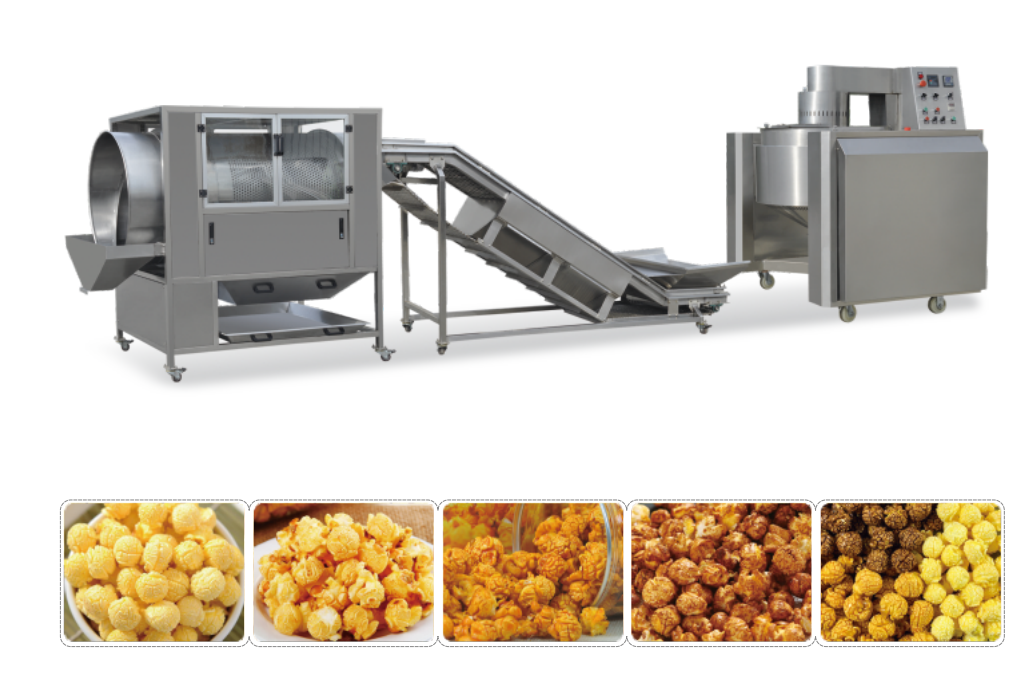
Finding equipment that can handle increased demand without sacrificing product uniformity is a challenge many manufacturers face. It’s not just about bigger motors or faster cycles; the real key lies in how a machine maintains tight tolerances over long production runs. Look beyond the spec sheet and dig into real-world performance data—talk to operators who have run the machines for months, not just the sales team with their polished demos. A machine that can hold color and thickness within a hair’s width at 100 units per hour might drift noticeably at 1,000 units per hour. That drift is what separates a capable machine from a truly production-ready workhorse.
Consistency also ties directly to how well the machinery integrates with your existing line and raw materials. A machine might be a marvel in isolation, but if it requires an overly narrow range of pre-processed inputs or a special environmental setup, your production can stall from minor supply variations. Consider the full ecosystem: how does the equipment correct for material inconsistencies? Does it have adaptive controls that compensate as tooling wears, or does it rely on constant manual adjustment? The goal is to reduce the number of variables your team has to babysit, so the output stays within spec even when circumstances aren’t perfect.
Scaling up isn’t just about buying more machines either. Sometimes the smarter move is selecting a flexible platform that can be reconfigured for different products without weeks of downtime. That flexibility can make a huge difference when market demands shift. A machine designed with modular tooling and quick-change features keeps you agile, while still delivering the repeatability you need. In the end, the right choice isn’t the flashiest or the cheapest—it’s the one that aligns your production capacity with the real-world rhythm of your supply chain, maintenance schedule, and team expertise.
Quality Control Measures from Kernel to Bag
Every shipment of raw kernels undergoes a thorough manual inspection before it even reaches the processing line. Our team looks for uniformity in size, color, and texture, rejecting any batch that shows signs of inconsistent drying or foreign matter. This hands-on check, backed by detailed lot records, sets the tone for everything that follows—if the raw material doesn't meet our baseline, it never sees the inside of our facility.
During roasting and grinding, we monitor temperature and humidity at multiple points rather than relying on a single sensor. Small adjustments are made in real time based on how the kernels behave, because even a subtle shift in ambient conditions can affect the final flavor profile. Samples are pulled every fifteen minutes and tasted blind by at least two members of the production staff who have been trained to detect off-notes like over-roasted bitterness or underdeveloped sweetness.
Before packaging, each batch passes through a metal detector and a high-speed optical sorter that flags any remaining specks of shell or discolored pieces. Finished bags are then randomly selected from the line, opened, and evaluated for seal integrity and aroma freshness. Only after a batch clears these final checks do we print the lot code, creating a direct trace from the bag in your hand all the way back to the original kernel shipment.
Flavor Innovation and Coating Techniques
Flavor innovation thrives when coating techniques become an art form rather than just a process. Modern chefs and food developers are moving beyond simple batter dips, embracing methods like electrostatic adhesion or ultrasonic embedding to lock fragile spice blends onto surfaces without heat degradation. This precision not only preserves the integrity of delicate notes like saffron or yuzu but also allows for multi-layered flavor bursts that unfold sequentially on the palate.
The real magic happens in the intersection of texture and taste. Techniques such as cryogenic freezing before coating, or using edible films infused with encapsulated essences, create an unexpected crunch that releases aromatic clouds upon biting. Imagine a shell that shatters loudly, then gives way to a slow-melting core where citrus oils and herbal resins dance together—each chewing motion triggers a new sensory chapter, making the act of eating immersive rather than routine.
Sustainability is quietly reshaping this field too. Upcycled ingredients like fruit peels or coffee cherry pulp are being reduced to fine powders and applied using micro-dusting to minimize waste while boosting flavor complexity. Pairing these with techniques like precision fermentation-derived fats as carriers adds a depth that traditional oils can't match, all while keeping the final product cleaner on labels. It’s a quiet revolution where every coat tells a story of resourcefulness and delight.
Packaging Solutions for Freshness and Shelf Appeal
Keeping food at its peak from the packing line to the pantry takes more than a barrier—it’s a careful conversation between materials and product. We start by mapping out the exact respiration rates, moisture sensitivity, and light exposure risks of what’s inside. That way, the packaging doesn’t just wrap; it actively regulates, using micro-perforations or modified atmosphere blends that slow down spoilage without drowning the food in plastic. It’s a quieter, gentler way to extend life while honoring the natural rhythms of the product.
Shelf appeal isn’t a surface trick; it’s built into the substance. Matte finishes that feel like stone, translucent windows framed by earthy tints, and structural curves that mimic the product’s own shape—these aren’t just design choices, they’re signals. They tell a story of craft and care before a single word is read. We avoid the glossy, high-contrast clichés and instead use texture and subtle color shifts that change with the light, drawing the eye without shouting. The result is a package that feels honest, and honesty holds attention longer than any flash.
Bringing both sides together means treating the package as a living system. A bag for leafy greens, for example, might breathe more where humidity builds, but stay crisp and clear where hands grip it. A coffee pouch might darken slightly in sunlight to protect the oils, then brighten back under store lights to reveal the beans’ natural sheen. These aren’t separate features; they’re woven into a single, quiet intelligence that keeps products vibrant in more ways than one.
Maintenance and Hygiene for Long-Term Profitability
A well-maintained facility not only preserves equipment but also builds trust with customers and staff. Routine cleaning schedules and timely repairs prevent small issues from escalating into costly breakdowns. When hygiene is prioritized, it becomes a subtle yet powerful part of your brand identity, encouraging repeat business and positive word-of-mouth without the need for aggressive marketing.
Profitability grows when systems run efficiently. Dirty filters, clogged drains, or neglected surfaces force machinery to work harder, driving up energy bills and shortening asset lifespans. By investing in regular deep cleans and staff training, you create an environment where operations flow smoothly. This reduces unplanned downtime and keeps revenue streams consistent, as customers rarely return to a place that feels neglected.
Hygiene also plays a direct role in employee morale and retention. A clean workplace signals that management cares, reducing sick days and turnover. Long-term profitability depends on the people who deliver your service—their comfort and health directly impact their performance. Simple habits like disinfecting high-touch areas and properly ventilating spaces pay off by protecting your team and, ultimately, your bottom line.
FAQ
Build quality and consistency are everything. A good line uses durable stainless steel, precise temperature controls, and efficient popping mechanisms to deliver uniform kernels without burning. It’s designed for continuous operation, so you don’t waste time fiddling with settings.
Less downtime and minimal waste directly protect your margins. With quick, even heating and smart oil distribution, you get more popped corn from every batch and cut customer wait times. Over weeks, that adds up to higher output and happier repeat buyers.
Focus on throughput capacity, ease of cleaning, and the type of popcorn you want to make. A versatile machine that can handle both butterfly and mushroom popcorn expands your product range. Also check for safety features and accessible parts–maintenance shouldn't be a headache.
Absolutely. Many compact models are built specifically for small spaces and lower volumes while still offering commercial reliability. They plug into standard power outlets and come with simple controls, so you don't need a huge facility or technical background to start producing.
Yes, and that's a big selling point. Look for lines with integrated coating drums or seasoning applicators. After popping, the popcorn can be tumbled with oil and flavor powder in a single seamless process, giving you consistent caramel, cheese, or spicy blends without extra manual steps.
Most mid-range systems comfortably produce 100 to 500 kg per day, depending on the model and how you run it. That's enough to supply several retail outlets or a busy concession stand. If you scale up, many lines can be linked for higher volumes.
Daily wipe-downs and weekly deep cleans of the kettle and chutes prevent oil buildup and carbon deposits. Check heating elements and thermostat calibration monthly. Spare parts like belts and brushes are inexpensive and easy to swap, so stocking a few keeps you running with minimal interruptions.
Specialized gear gives you exact control over popping temperature, agitation speed, and airflow—variables that generic equipment can't match. That means better texture, fewer unpopped kernels, and the ability to fine-tune recipes for premium snacks that stand out from store-bought alternatives.
Conclusion
A well-planned popcorn production line transforms raw kernels into a consistently crisp, flavorful snack that keeps customers coming back. Understanding the entire workflow—from kernel preparation to final packaging—is essential. It begins with precise equipment selection that matches your output goals, allowing you to maintain uniformity without sacrificing speed. Every stage, whether it's hot air popping or oil-based methods, must be calibrated to preserve texture and minimize waste. Integrating quality checks from the very start helps catch irregularities in kernel size, moisture content, or expansion rate before they affect the finished product.
Beyond basic popping, mastering flavor adhesion and coating processes sets a brand apart. The right application techniques ensure each piece carries an even layer of seasoning without clumping or fading. Packaging then seals in that freshness, using materials that block moisture and oxygen while showcasing the product attractively on shelves. Behind the scenes, rigorous maintenance schedules and thorough sanitation protocols keep lines running smoothly and prevent contamination, protecting both product integrity and profit margins. By weaving these elements together—intelligent machinery, creative flavor work, reliable packaging, and proactive upkeep—you create a production line that consistently delivers high-quality popcorn and supports long-term business growth.
Contact Us
Contact Person: LILY SUN
Email: [email protected]
Tel/WhatsApp: 0086-13969103791
Website: https://www.snackfoodmachinery.com/