

Food Grade Oil-Free Air Compressor: How to Choose the Right One for Your Needs
2026-08-15
Selecting the right food grade oil-free air compressor is critical for maintaining product purity in food and beverage processing. But with so many options, how do you know which one fits your specific needs? This guide breaks down the key factors—from air quality standards to maintenance demands—so you can make an informed choice. And if you're looking for a trusted partner, Seize Air offers a range of reliable compressors designed for sensitive applications.
Food Grade Means More Than Just Skipping Oil
Many people assume food grade simply means a product contains no oil or grease, but the standard runs far deeper. It covers every material that might touch food during production—seals, hoses, conveyor belts, and the lubricants used on machinery. A true food grade designation evaluates whether these substances can cause harm if incidental contact occurs, not just whether they are visibly oily.
The evaluation includes toxicity, odor, taste, and the ability to resist degradation in wet, high-temperature environments. A food grade lubricant may still contain oil, but it must be formulated from approved base stocks and additives that won't taint a batch or pose a chronic health risk. Skipping oil entirely doesn't solve the problem if a non-oil alternative introduces a more dangerous chemical or fails to protect equipment from wear.
Regulatory bodies such as NSF International maintain categories like H1 for incidental food contact and 3H for direct contact. Manufacturers looking beyond the surface will ask for registration letters, batch traceability, and change control procedures. In short, food grade is a system of verification, not a simple promise to leave oil out of the recipe.
Certifications That Separate Safe Air From Guesswork
A certification only matters if it references a specific test method. For air cleaners, an AHAM Verifide label with a CADR number tells you the unit was measured in an independent chamber for tobacco smoke, dust, and pollen removal. Without that published CADR figure, a “high-efficiency” claim is just a box design.
Ozone is the fastest way to separate real testing from guesswork. The California Air Resources Board maintains a list of devices that stay below a strict ozone emission limit. If a purifier relies on ions, UV, or plasma but lacks a CARB certification, you have no third-party evidence that it is not adding irritants to the room. For particle filtration, demand a filter class under EN 1822 or ISO 29463—H13 or H14—measured at the most penetrating particle size, not a vague 0.3 micron percentage.
Electrical safety can be just as invisible as air quality. A UL 867 or ETL mark means the motor, wiring, and housing have been tested against a recognized safety standard. Many sellers print “certified” without a license number or test lab, so look up the model in the certifier’s public database before trusting the badge.
How Your Compressor Directly Touches Every Product You Ship
Every bottle, carton, or casing that leaves your dock has already passed through a stream of compressed air. The forming, filling, and capping stations on a typical packaging line use pneumatic cylinders and vacuum generators that depend on stable pressure. A drop of half a bar during a shift can leave a cap slightly loose or a label with a crease — defects that customers notice instantly, even if they never mention them. In blow molding, the compressor is the mold itself: a heated preform becomes a container only because a precise blast of air forces the polymer against the cavity walls. That single breath shapes the product, literally.
Before anything is sealed, compressed air removes what shouldn't be there. Dust, static-charged particles, and tiny trim scrap are blown off surfaces or vacuumed away with venturi systems. In food and pharmaceutical operations, this step is not optional; a stray fiber in a vial or a crumb in a snack bag can trigger a recall. The air must be dry, filtered, and at the right dew point — otherwise it introduces oil mist or moisture instead of removing contamination. Many plants run point-of-use filters and desiccant dryers not for compliance paperwork, but because a single wet blast can ruin a batch of coated tablets or microchips.
The compressor's influence continues after the box is taped. Inflatable dunnage, air pillows, and bubble wrap alternatives are filled on demand at packing stations, using compressed air to cushion products against the shocks of transit. Even the pallet wrapper may rely on pneumatic stretch arms and air-driven corner boards. If a product arrives dented, cracked, or crushed, the failure often traces back to inconsistent cushioning — a result of a compressor that couldn't keep up with peak demand. Your compressor, in short, is not just a utility. It is the invisible pair of hands that holds, cleans, shapes, and protects every single item you ship.
Sizing for Real Demand Instead of Relying on a Catalog Number
A catalog number is a convenient shorthand, not a load calculation. When a replacement unit gets picked because the old plate says "Model XYZ-40," nobody stops to ask whether that 40 was ever right for the building. Schools get added onto, office layouts change, insulation gets upgraded or degrades, and the original design conditions rarely survive contact with a decade of renovations.
Real demand sizing starts with the envelope and the occupants, not the nameplate. Measure the glass, check the roof assembly, count the people and the plug loads that actually exist now. A quick block load or room-by-room calculation will often show that a "like-for-like" replacement is oversized by 20 to 30 percent—and that excess shows up as short cycling, humidity problems, and wasted power.
The payoff for doing the math is quieter operation and longer equipment life. A unit that matches the real load runs longer at steady state, pulls less peak current, and keeps space temperature flat. When the next replacement comes around, the right size will already be documented, and nobody has to guess from a catalog number again.
The Upkeep Tasks That Keep a Food-Grade Unit Truly Clean
Daily rinsing and visual checks are the first line of defense, but real cleanliness goes beyond what the eye can see. Food-grade units often develop residue in gasket grooves, drain channels, and welded seams where biofilms quietly form. Use non-abrasive scrub pads and cleaners rated for food-contact surfaces, then rinse thoroughly to remove chemical traces. After cleaning, run your fingers along seals and edges—any slippery feel means oils or sugars are still present and need another pass.
Weekly or between batch changes, break down removable parts like pump heads, valves, and sampling ports. Soaking these components in a warm, enzyme-based solution helps dissolve proteins and fats that spraying alone misses. Reassemble with food-grade lubricants only, and check that every O-ring sits flat without cracks. A quick ATP swab test on a few high-risk points will tell you whether the surface is truly clean or just looks that way.
Long-term upkeep means watching for wear that turns cleanable surfaces into contamination traps. Replace gaskets at the first sign of stiffness or discoloration, and inspect welds and passivation layers on stainless steel for pitting. Keep the unit dry when idle, since standing moisture invites bacterial growth even after thorough sanitation. A simple log of cleaning dates, swab results, and part replacements helps you spot patterns before they become recalls.
Where You Place the Compressor Changes How Well It Runs
A compressor tucked into a corner with poor airflow will struggle more than one sitting in open space. Heat builds up quickly, and every degree of extra ambient temperature forces the pump to work harder to reach the same pressure. You might not notice it right away, but run times get longer and the motor runs hotter than it should.
Distance from the point of use matters too. Longer air lines create more pressure drop, so the compressor has to cycle on at a lower tank pressure to keep the tool end happy. That means more starts per hour, more wear on the contactor, and a higher electrical bill. Keeping the unit close to where the air is actually needed, while still allowing enough room to open the drain valve, makes a measurable difference.
Vibration and mounting are often overlooked. If the compressor sits directly on a wooden floor or against a wall, the noise travels and fasteners loosen over time. A simple rubber pad or isolation mount reduces the chatter and keeps the base from walking. These small placement decisions add up to a machine that runs smoother and lasts longer.
FAQ
It means the compressor is designed so no lubricating oil can enter the compressed air stream. Food grade also implies components that contact air or condensate use materials safe for incidental food contact, and the unit often meets purity standards like ISO 8573-1 Class 0. This is critical in bakeries, beverage plants, and packaging lines where even tiny oil traces can ruin batches or trigger recalls.
Start by listing every pneumatic device or process that will draw air simultaneously. Add up their CFM requirements at the operating pressure, then add about 30% headroom for leaks and future expansion. Most food applications run between 100 and 150 PSI, but check your specific equipment. Oversizing wastes energy; undersizing causes pressure drops that hurt production.
No. Oil-free only means the compression chamber has no oil, but intake air can still carry moisture, particles, and microorganisms. Look for units with high-quality filtration and dryers. For truly critical applications, choose a compressor certified to ISO 8573-1 Class 0 for oil and specify desired particulate and water classes as well.
You avoid oil changes and oil filter replacements, but you still need to replace air filters, check belts if applicable, drain condensate, and inspect valves. Desiccant dryers need media changes. Some oil-free designs have coated rotors or scroll tips that wear over time and require planned replacement. Overall maintenance is often simpler but not zero.
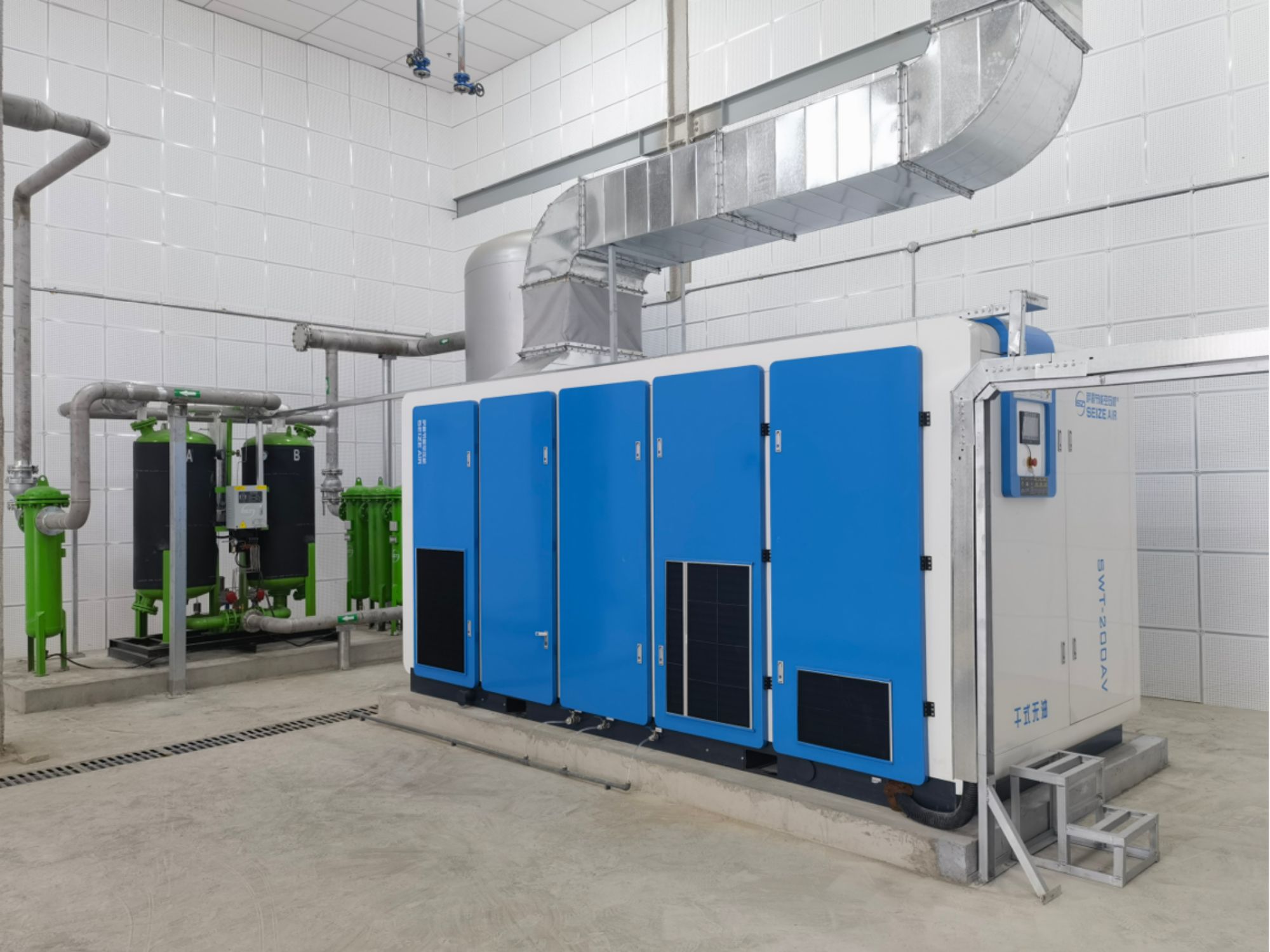
The compressor needs clean, dry intake air away from exhaust fumes, dust, and high humidity. Avoid placing it near loading docks or bake ovens. It also needs adequate ventilation to dissipate heat. Many food plants place the unit in a separate utility room with ducted intake and discharge. Noise levels matter too; some models are quiet enough for indoor use.
Expect to pay more upfront than a comparable lubricated compressor, often 30 to 50 percent more for the oil-free pump technology. But factor in lower oil disposal costs, fewer contamination risks, and meeting audit requirements. For a small bakery, a rotary screw oil-free unit might start around $5,000 to $8,000; larger systems can exceed $30,000. Get quotes that include dryer and filtration.
Ask for ISO 8573-1 test reports, FDA-compliant materials documentation for any air contact parts, and a written statement that the compressor is oil-free by design. Some suppliers offer HACCP support documentation. If your facility follows SQF or BRC standards, ensure the compressor can help you meet those air quality monitoring requirements.
If your air demand fluctuates significantly during shifts, a variable speed drive can cut energy costs by matching output to demand. In constant-demand operations, fixed speed is fine. Many food plants see 20 to 40 percent energy savings with VSD on part-load cycles, but the upfront cost is higher and the electronics require clean, cool air.
Conclusion
Choosing a food-grade oil-free air compressor goes far beyond eliminating lubricant from the compression chamber. The phrase “food grade” covers every surface, seal, coating, and condensate pathway that compressed air touches before it reaches your product. A unit may be oil-free in the pump, yet still shed particles from internal coatings, trap moisture that breeds microbes, or draw in contaminated ambient air from a poorly chosen intake. That is why certifications such as ISO 8573-1 Class 0 or relevant FDA-compliant materials matter: they shift the conversation from marketing language to measured, audited performance. Ask for test reports that cover particulate, water, and oil content across the full operating range—not just a single clean-room snapshot. Since the air stream directly impacts every product through blow-off, conveying, drying, or packaging, any weakness in air treatment becomes a contamination risk you cannot afford to overlook.
Sizing should follow your actual demand curve—peak CFM, duty cycle, and pressure stability during shift changes—rather than a catalog number chosen from a rough guess. An oversized compressor short-cycles, creates extra condensate, and makes filtration work harder; an undersized one starves your lines and pulls in unfiltered air during pressure drops. Upkeep also differs from industrial units: desiccant dryers, coalescing filters, automatic drains, and internal surfaces need scheduled inspection and replacement. Oil-free does not mean maintenance-free. Finally, placement has an outsized effect on reliability. A hot, humid, dust-heavy mechanical room forces the intake filter and dryer to fight conditions that could have been avoided with a cleaner, cooler location. The right compressor is not a single component but a system chosen around your process, your air quality target, and the room it lives in.
Contact Us
Contact Person: Mia
Email: [email protected]
Tel/WhatsApp: +86 19821985894
Website: https://www.seize-air.com