

Feeding System Supplier Insights: Smart Automation for Modern Farms
2026-11-16
Every farmer knows the 4 a.m. silence before the feeders kick on—that nervous pause between pressing 'start' and hoping everything runs smooth. But what if your feeding system didn't just obey commands, but actually thought ahead? As precision livestock farming becomes less sci-fi and more daily reality, the conversation is shifting from simple mechanization to genuine automation that reads the barn like a living organism. In this new landscape, Fanchang Machinery isn't just another supplier—they're quietly redefining what 'smart' actually means on the ground, where dusty sensors and curious cattle test every promise. Stick around, because the insights ahead might change how you listen to that morning silence.
Why Traditional Feeding Methods Are Quietly Draining Your Farm’s Profit Margins
The quietest drain, however, comes from the illusion of control. Manual feeding feels tangible and responsive—you see the feed disappearing, so you add more. But this reactive cycle masks underlying problems like subclinical acidosis or inconsistent dry matter intake. You chase symptoms with more feed or supplements, pushing costs higher while performance stays flat. The real margin killer isn’t the price of grain; it’s the steady, unseen drift away from precision that turns a potentially profitable herd into a pile of broken budgets.
The Sensor Revolution That’s Turning Feed Data Into Actionable Herd Insights
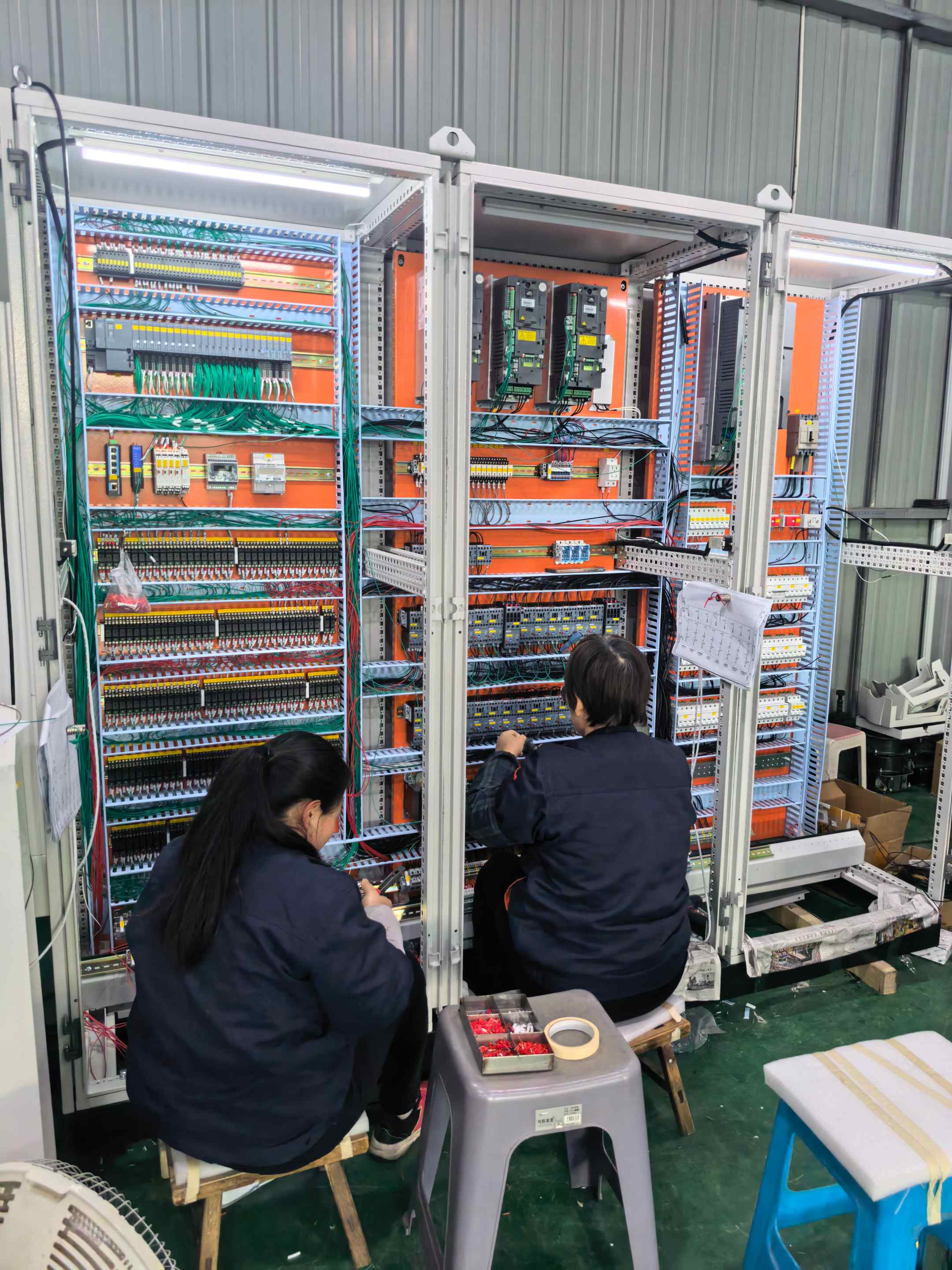
On modern dairies, feed represents the single largest operational cost, yet for decades the data behind it remained frustratingly crude. We measured what went into the mixer wagon but had almost no visibility into what each cow actually consumed, how she responded, or whether that expensive ration ever translated into milk. That gap is closing fast. In-barn sensors now track individual feeding behavior minute by minute—time spent at the bunk, chewing activity, swallowing patterns, and even the subtle shifts in rumination that hint at trouble long before a drop in production appears. The same feed that once vanished into a group average is now being decoded as a stream of per-cow signals.
What makes this sensor revolution genuinely useful is not the hardware but the way it transforms raw data into a decision-making rhythm. When a cow’s rumination dips below her own baseline six hours after the fresh TMR is delivered, it’s no longer just an alert—it’s an invitation to check feed push-ups, particle sorting, or a brewing metabolic shift. Over time, patterns emerge that rewrite ration formulation: we see exactly how a change in forage dry matter alters eating time, how a slight bump in starch influences lying behavior, and how group mixing disrupts intake stability. The feed data stops being historical report card filler and becomes a daily management tool that ties nutrition directly to cow behavior and health.
The most overlooked advantage sits in the hands of the feeder. Armed with real-time feedback, the person operating the mixer wagon can adjust on the fly rather than waiting for a nutritionist’s weekly visit. If sensors flag a drop in intake across a pen within hours of a new batch of haylage, the feeder can check loading accuracy, mix order, or dry matter drift immediately. This tight loop between feed delivery and cow response cranks up feed efficiency in a way that lab assays alone never could. The technology isn’t replacing good stockmanship; it’s giving the people closest to the animals a sharper lens, turning the bunk into a live conversation about what the herd is truly telling us.
Inside the Supply Chain: What Top-Tier Feeding System Providers Won’t Tell You
Behind every polished product demo, there’s a logistics reality most providers prefer to keep quiet. The components that make up a high-end automated feeding system often travel through a tangled web of third-party fabricators, offshore metal shops, and regional assemblers. What no catalog shows you is how a single delayed shipment of custom-machined troughs can freeze an entire installation timeline, or how inconsistent steel sourcing leads to premature wear that maintenance agreements conveniently classify as “standard usage.” It’s not about negligence—it’s about a supply chain that prizes cost efficiency over resilience, and as a buyer, you inherit every hidden compromise that comes with it.
The software side of the equation gets even murkier. Providers tout real-time monitoring and adaptive feeding algorithms, yet seldom mention that the sensor arrays collecting this data often ship from one country, the control logic is coded by a contracted firm in another, and the final integration happens remotely via software patches applied days before startup. When the system struggles to parse inconsistent feed quality, the default fix is not a hardware rework but a logic adjustment that quietly narrows performance bandwidth. In effect, you’re running a finely tuned setup that has been gradually scaled back to mask hardware limitations—and the only way to discover this is to dig deep into version update logs or press a veteran field technician after hours.
Then there’s the issue of spares and proprietary parts. Top-tier feeding systems often use hybrid components—not strictly off-the-shelf, not fully custom—that lock you into a single-source replacement channel. What they don’t advertise is that many of these parts are batch-produced overseas only twice a year, under long lead times, and if a sudden failure falls outside a quarterly order window, the promised “rapid response” turns into a waiting game. Some distributors quietly stock essential items independently, but they’re reluctant to share that information because it weakens the aftermarket revenue stream. Knowing how to trace secondary vendors, or how to identify functionally identical alternatives, is knowledge gained only through frustration—and it’s exactly the kind of practical insight you rarely get during a sales presentation.
From Guesswork to Precision: How Algorithms Are Redefining Ration Formulation
For decades, building animal feed rations leaned heavily on experience, rule-of-thumb tables, and time-consuming manual calculations. Nutritionists would juggle fixed ingredient matrices, often relying on average values that masked the true variability in raw materials. A batch of soybean meal might arrive with protein content higher or lower than expected, yet the formulation stayed static, leading to either costly overfeeding or performance gaps. The shift toward algorithmic methods changed that—turning what was once an art of approximation into a science of exactness, where each nutrient is modeled not as a static number but as a dynamic range with probabilities.
Modern formulation engines ingest real-time data from near-infrared spectroscopy, feed intake monitoring, and even weather patterns that affect forage quality. Instead of solving a simple linear problem for the least cost, these algorithms run thousands of simulations in seconds, balancing dozens of constraints simultaneously. They account for ingredient interactions, environmental footprint targets, and the animal’s changing nutritional demands across growth stages. The result is a continuously adaptive recipe that fine-tunes itself daily—sometimes even by individual farm or pen—ensuring that precision doesn’t just exist on paper but at the feed bunk.
What truly sets algorithmic rationing apart is its ability to learn. Systems no longer wait for a nutritionist to spot a trend; they detect subtle patterns in milk yield, weight gain, or feed efficiency and proactively adjust amino acid profiles or energy densities. This closed-loop feedback means that yesterday’s outcomes directly shape tomorrow’s formula, closing the gap between intended and actual performance. It’s a move from reactive troubleshooting to predictive optimization, where the question isn’t “what should we have done” but “what will work best starting now.”
The Overlooked Link Between Feeding Automation and Animal Welfare Outcomes
When we talk about animal welfare, nutrition usually dominates the conversation—balanced diets, clean water, the right supplements. But how feed actually reaches the animal often slips under the radar. Automated feeding systems promise consistency and labor savings, yet their influence on welfare stretches much deeper. A poorly calibrated sensor, a timing error, or a dispenser that delivers uneven portions doesn’t just waste feed; it can trigger stress, aggression, or social instability in groups. The machine’s reliability becomes a silent partner in welfare, shaping eating patterns and social dynamics without anyone noticing until something goes wrong.
Consider the subtle chain reaction: a feeder that clogs intermittently creates unpredictability. Animals no longer trust the resource, so they either camp at the trough or fight for access during the brief moments feed appears. This isn’t just a nutrition problem—it’s a behavioral crisis. In automated systems, design choices like meal frequency, dispenser spacing, and fail-safes often get decided by engineers focusing on efficiency, not ethology. The gap between technical specs and an animal’s experience is where welfare quietly breaks down, without obvious signs like injuries or weight loss until chronic stress has already set in.
What’s needed is a shift in how we evaluate automation: not just uptime and throughput, but the animal’s interaction with the machine. Step into a poultry house or a dairy barn and you can spot the tension—birds avoiding a particular feeder line, cows hesitating before entering a milking station. These subtle behaviors are feedback the tech itself can capture if we design for it. Integrating welfare metrics like displacement behaviors, vocalizations, or resting patterns into automation dashboards could turn feeding equipment from a hidden stressor into a real-time welfare monitor. The link is overlooked because it spans two different disciplines, but connecting them might be the cheapest and fastest way to improve outcomes on a large scale.
Future-Proofing Your Operation Without Ripping Out Existing Infrastructure
What does it actually mean to future-proof an operation when the floor is already full of machinery that’s supposedly “good enough”? It rarely starts with a massive overhaul. More often, it’s about weaving new capabilities into what you already have—bolt-on sensors that talk to decades-old PLCs, edge devices that translate proprietary protocols into something your modern analytics layer can digest, or simple middleware that makes one machine’s output legible to another’s input. The key is treating your current setup not as an anchor but as a backbone you can gradually augment, one interface at a time.
You don’t need to tear out a perfectly functional conveyor system just because it doesn’t natively speak MQTT. A small industrial gateway mounted inside a cabinet can bridge that gap in an afternoon, giving you real-time data you didn’t have access to last week. From there, the next logical step often emerges on its own—maybe that data reveals a recurring bottleneck you can ease with a slight logic tweak, or perhaps it highlights a maintenance pattern worth automating. Each incremental addition lowers the risk of the next, because you’re proving value against the running cost of the existing line, not some hypothetical ROI projection.
The real guard against obsolescence isn’t found in a single vendor’s roadmap; it lives in the loose coupling between components and the way you document those connections. When each machine, sensor, or software service communicates through well-defined, non-proprietary handshakes, swapping out one piece five years from now becomes a weekend task rather than a capital project. That’s where the “future-proof” part gets practical—not in chasing the latest label, but in building an operation that can absorb change so quietly you barely notice a new generation has already arrived.
FAQ
It goes beyond basic timers. A smart system continuously analyzes real-time data—like animal weight, feed consumption patterns, and environmental conditions—and adjusts rations instantly. This precision reduces waste and supports uniform growth without constant manual intervention.
The best setups use modular dispensing units with recipe-driven controls. You can program multiple formulations and the system switches between them based on shed location, age group, or even individual animal IDs. Hydration lines, mineral dispensers, and liquid feed add-ons integrate into the same workflow.
Feed cost savings hit first—usually within two to three full cycles. But equally quick wins come from labor redistribution. Instead of spending hours filling troughs, staff can focus on health checks and herd analysis. Improved feed conversion then compounds those savings over time.
Yes, industrial-grade suppliers design for that. Onboard memory stores recent feeding schedules, and battery backups or ultracapacitors support seamless failover. When offline, the equipment continues the last known good protocol and syncs data once connectivity is restored, preventing gaps in nutrition.
It’s central. Farmers should retain full rights to their operational data—from feed intake curves to machine logs—without being locked into proprietary dashboards. Exportable reports, API access, and local storage options let you combine feeding intelligence with other farm management software on your terms.
Many advanced feeders now include Clean-In-Place (CIP) cycles, antimicrobial material blends, and removable trough sections. Automated flush sequences run between batches, while sensors detect moisture buildup to prevent mold. This reduces downtime and keeps compliance hassle-free.
Retrofit kits are surprisingly adaptable. Suppliers offer frame-mounted tracks, overhead rail adapters, and narrow-bin designs that work in existing aisles. The key is a site survey that maps clearance, power supply, and ventilation so the system augments what’s already there instead of forcing rebuilds.
Edge AI that predicts appetite shifts before they happen, dynamic pricing integration that optimizes ingredient costs on-the-fly, and multi-species platforms capable of switching between poultry, swine, or cattle setups with quick changeovers. These aren’t distant concepts—early versions are already in field trials.
Conclusion
Many farm operators don’t notice how traditional feeding quietly bleeds margins—manual mixing errors, inconsistent delivery, and spoilage nibble away at profits long before they hit the balance sheet. Smart automation changes that by embedding sensors directly into the feed line, capturing real-time intake, refusal, and even chewing activity. Translating that data into actionable insights lets nutritionists spot divergences between formulated rations and what each pen actually consumes. Behind the scenes, few suppliers openly discuss the supply chain lag that keeps dairies stuck with generic hardware; top-tier partners instead offer modular upgrades and transparent sourcing that avoid vendor lock-in. Combine this with algorithm-driven ration formulation that adjusts energy and protein levels on the fly, and you move from guesswork to precision in a matter of days.
Feeding automation’s quiet but profound impact on animal welfare rarely gets the spotlight it deserves. Consistent feed delivery reduces stress and competition at the bunk, while tailored rations support rumen health and lower lameness rates—outcomes that directly lift milk yield and longevity. These gains don’t require a complete barn overhaul. Forward-thinking suppliers now design retrofit kits that overlay existing conveyors, bins, and stalls, future-proofing operations without a capital-gutting rip-out. By layering hardware-agnostic sensors and cloud-based analytics onto decades-old infrastructure, farms start capturing the same advantages as new builds. The result is a feeding system that learns, adapts, and steadily recovers those hidden margins while building a herd that stays productive longer.
Contact Us
Contact Person: Darye WANG
Email: [email protected]
Tel/WhatsApp: 86-13501017897
Website: https://www.fcntd.com/