

EV Charging Station Manufacturer Shares How to Build a Reliable Fast Charging Network
2026-11-21
Most fast-charging networks fail before they ever charge a single car. The culprit is rarely the hardware itself, but the invisible engineering choices behind it: grid constraints, cable cooling, load balancing, and the unglamorous work of keeping uptime above 99%. In this conversation with a manufacturer who has spent years inside those failures, we get a rare, practical breakdown of what actually makes a public fast-charging site reliable. If you're planning a network, this is the terrain map you need before you pour concrete. And when you're ready to compare hardware built for these realities, BEILIN offers a range of DC fast chargers designed around field reliability rather than lab specs.
The Grid Comes First, Not the Charger
When most people think about charging an electric vehicle, they picture the hardware in the driveway or the stall at a rest stop. That focus misses the real constraint. The charger is just the final handshake. The actual work happens upstream, in transformers, switchgear, buried cable runs, and the local distribution network that has to absorb a sudden, sustained draw of power without blinking. If that part of the grid is fragile or undersized, even the most advanced charger becomes a very expensive paperweight.
This is why a site evaluation that begins with the charger usually gets the sequencing wrong. You can pick a cabinet with impressive peak output, but if the feeder serving the property has no spare capacity, or if the nearest substation is already running hot on summer afternoons, the project stalls. In many cases the smarter move is to start from the grid side: map available capacity, check voltage drop over distance, identify seasonal load patterns, and only then decide what kind of charging hardware actually makes sense. A more modest charger on a stable circuit often delivers better real-world uptime than a flagship unit on an overloaded one.
Long term, the same principle holds for fleets and depots. Adding fifty chargers at once can force a utility upgrade that takes months or years, while phasing the rollout around existing headroom gets vehicles on the road sooner. The grid does not care about your timeline. Treat it as the foundation rather than an afterthought, and the chargers themselves become a much simpler problem.
Why Redundancy Matters More Than Peak Kilowatts
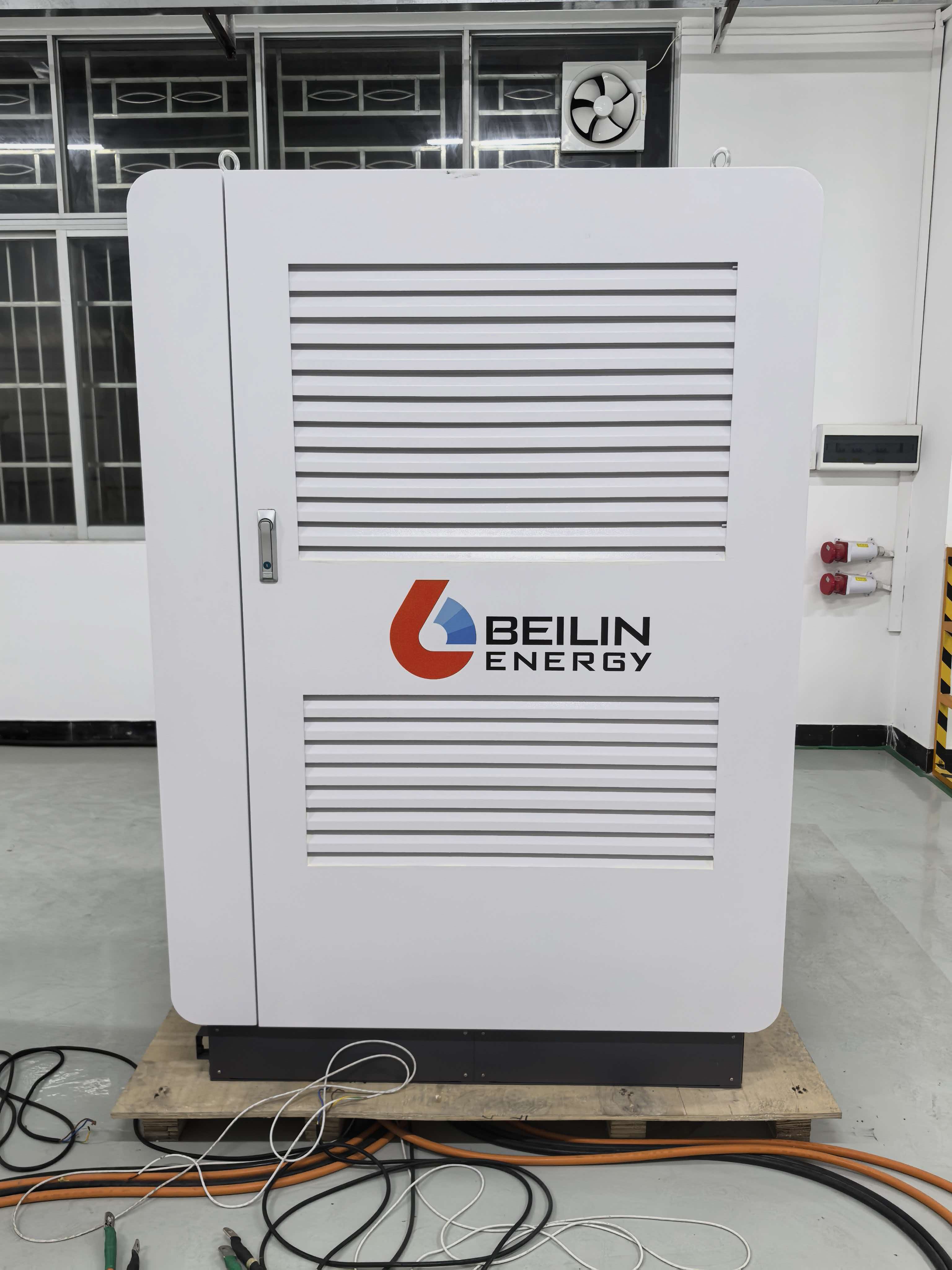
Peak kilowatt ratings look impressive on a spec sheet, but they rarely reflect what happens at 2 a.m. when a breaker trips or a utility feed drops. A system built for maximum output can still have a single point of failure that brings every load down. Redundancy spreads that risk across independent paths, so one fault becomes an inconvenience instead of an outage.
Two smaller units running in parallel often outperform one large unit with a higher kilowatt badge. Losing one of the smaller units leaves the site alive; losing the large unit leaves it dark. That difference matters far more than a higher number on paper, especially in facilities where downtime costs more than extra capacity ever will.
Redundancy also buys something peak kilowatts cannot: room to maintain equipment without shutting anything off. A single high-capacity system needs a full stop for major repairs, while a redundant setup lets teams rotate pieces out safely. That operational headroom is usually what separates a resilient site from a fragile one.
Location Patterns That Decide Whether a Station Survives
A station's long-term survival has less to do with platform design or service frequency than with how its surrounding blocks are stitched together. Some locations look central on a map but behave like dead zones because the walking routes toward them are broken by parking lots, wide arterials, or gated parcels. If the realistic five-minute catchment contains few homes, no daily errands, and no reason to linger, ridership stays thin no matter how new the facility is.
Density alone also misleads. Two stations spaced closely can support each other when the interval between them is filled with short blocks, storefronts, and crossable streets, forming a continuous pedestrian band. But when a stop sits inside a superblock or behind a buffer of landscaping and setback towers, even high-rise residents may drive or choose another line. Mixed activities that spread trips across morning, midday, and evening matter more than raw population counts.
The stations that persist usually sit where daily routines already overlap, near schools, clinics, grocery shops, and bus interchanges, not necessarily at the geographic center. A ten-minute walk is acceptable if it feels safe and direct; a five-minute walk can fail if it forces people through an underpass or around a blind wall. Over time, these micro-level location patterns accumulate, separating stations that become permanent anchors from those that quietly lose service.
Heat, Wear, and the Real Cost of Downtime
Most maintenance logs treat heat as a footnote. But in a running motor or gearbox, heat is not an inconvenience—it is a slow chisel. Every sustained temperature spike softens winding insulation, thins lubricant film, and quietly shifts metal into a state where microscopic cracks start to matter. The issue is rarely the single hot afternoon. It is the accumulated effect of running a few degrees above rating, shift after shift, until the failure shows up somewhere expensive.
Wear follows the same pattern. Components rarely fail because they were asked to do something impossible. More often, small misalignments, contaminated oil, or minor imbalance shave away surface material at a rate that looks trivial on a weekly inspection. By the time the clearance or vibration readings finally trip an alarm, the damage has been propagating for months. The repair is no longer a bearing swap; it becomes a rotor, a shaft, or an entire assembly.
Then there is the downtime itself. The invoice for parts and labor is the smallest line item. Lost production, idle crews, missed shipment windows, and emergency freight often far exceed the mechanical repair. That is why the real cost of downtime is not measured in replacement components. It is measured in the hours where nothing is making money, and in the rushed decisions that follow.
Software That Flags a Fault Before Drivers Notice
Most drivers only learn something is wrong when a warning light flickers on or the car starts making a sound that wasn't there yesterday. The software shifts that moment much earlier. It watches data from sensors that already exist in the vehicle—engine timing, battery draw, brake pressure, even subtle changes in how the suspension reacts—and compares it against patterns of failure gathered from thousands of other vehicles. A tiny misfire that a human would never feel becomes a signal, not a mystery.
What makes the approach useful is that it does not wait for a threshold to be crossed. Instead of triggering when a value is already out of range, the software recognizes the shape of a problem before it fully develops. For example, a fuel pump may draw slightly more current for weeks before it fails. A battery may show a small voltage dip under load long before it leaves someone stranded. The system flags those quiet shifts and gives the driver or the workshop a chance to act while the fix is still minor.
Behind the scenes, the hard part is filtering out noise. Normal driving produces plenty of odd readings, and not every deviation means a part is about to fail. The software has to learn what is normal for a specific model, a specific climate, even a specific driving style, so that when it does raise a flag, the warning carries weight. That balance between early detection and false alarms is what separates a genuinely helpful system from one that drivers learn to ignore.
Planning for a Decade of Service, Not a Launch Day
A launch day is easy to plan because it has a date, a guest list, and a burst of adrenaline. A decade of service has none of that. It asks whether the project still works when the original contributors have moved on, when the hosting bill arrives in a different currency, and when a dependency quietly breaks at 3 a.m. We plan for those unglamorous moments by keeping setup boring, recording decisions instead of just code, and writing runbooks that assume the reader is tired.
Long-term trust is built through restraint. We turn down features that would speed up adoption but complicate the maintenance surface. We fix the slow parts before adding new ones, and we protect time for documentation even when nobody is asking for it. That trade-off rarely gets applause, but it is what keeps a service honest past the first anniversary.
The practical side is less poetic: budget for maintenance hours, limit the number of tools one team depends on, and make sure at least two people understand every system. If the plan only sounds exciting for the launch week, it is probably not a ten-year plan.
FAQ
We look at the grid connection before anything else. A site can look perfect on a map, but if the local utility cannot deliver enough power without a long feeder upgrade, the project timeline and budget fall apart quickly.
Most outages are not from the power modules. We see broken connectors, damaged cables, and software handshake failures more often than anything else, which is why we design those parts to be replaceable in minutes rather than hours.
Dynamic load balancing is essential. Instead of splitting power evenly, the system watches what each vehicle is actually requesting and shifts capacity to the car that can accept it, so you waste less energy and keep queues moving.
Weekly visual inspections catch most problems before they cause a failure. Checking cable insulation, cleaning debris from connectors, and reviewing error logs takes less than ten minutes per station but prevents a large share of emergency calls.
Higher power means more heat, heavier cables, and more stress on components. If the typical vehicle on that route peaks at 120 kW, installing 350 kW units may not improve real throughput and can actually reduce long-term reliability.
We recommend temporary load limits and pre-event parts stocking. You can lower peak output slightly to reduce thermal stress, keep spare cables and charge controllers on site, and schedule a full diagnostic pass two weeks before the rush.
Drivers remember the failed session more than the successful one. Clear screen instructions, fast payment approval, and a plug-in sequence that starts charging on the first attempt matter as much as the kilowatt rating on the cabinet.
Most issues now can be diagnosed before a technician leaves the depot. Remote monitoring tells us whether the fault is in the cable, the vehicle, or the cabinet, so we send the right person with the right parts on the first trip.
Conclusion
Reliability in fast charging rarely starts with the charger itself. The local grid connection sets the practical ceiling, and the best deployments treat that capacity as the foundation before choosing hardware. From there, redundancy does more for uptime than chasing the highest peak kilowatt figure; a pair of lower-output units that share load can keep drivers moving when one fails, while a single high-power cabinet creates a single point of failure. Site selection follows the same logic. Stations survive where drivers already pause for food, restrooms, or errands, not where land is cheapest. A visible, well-lit corner near a grocery store tends to outperform a hidden lot behind a warehouse, even if the latter offered better electrical access.
Operators also need to plan for what happens after opening day. Heat, dust, and repeated plug cycles wear down cables and connectors, and those small failures create downtime costs that quickly erase early savings from cheaper components. Monitoring software helps by flagging temperature drift or communication errors before a driver notices, so maintenance becomes a scheduled visit rather than an emergency call. The longer horizon matters most: a station designed for ten years of heavy use needs accessible parts, serviceable modules, and enough spare capacity to absorb growth in battery sizes. Launching with headline power numbers may attract attention, but the networks that last are built around uptime, serviceability, and locations where charging fits naturally into a trip.
Contact Us
Contact Person: Jason
Email: [email protected]
Tel/WhatsApp: 8615876017548
Website: https://www.bei-lin.com/