

Dual Channel Tissue Cutter Solutions for Precision Histology Workflows
2026-10-27
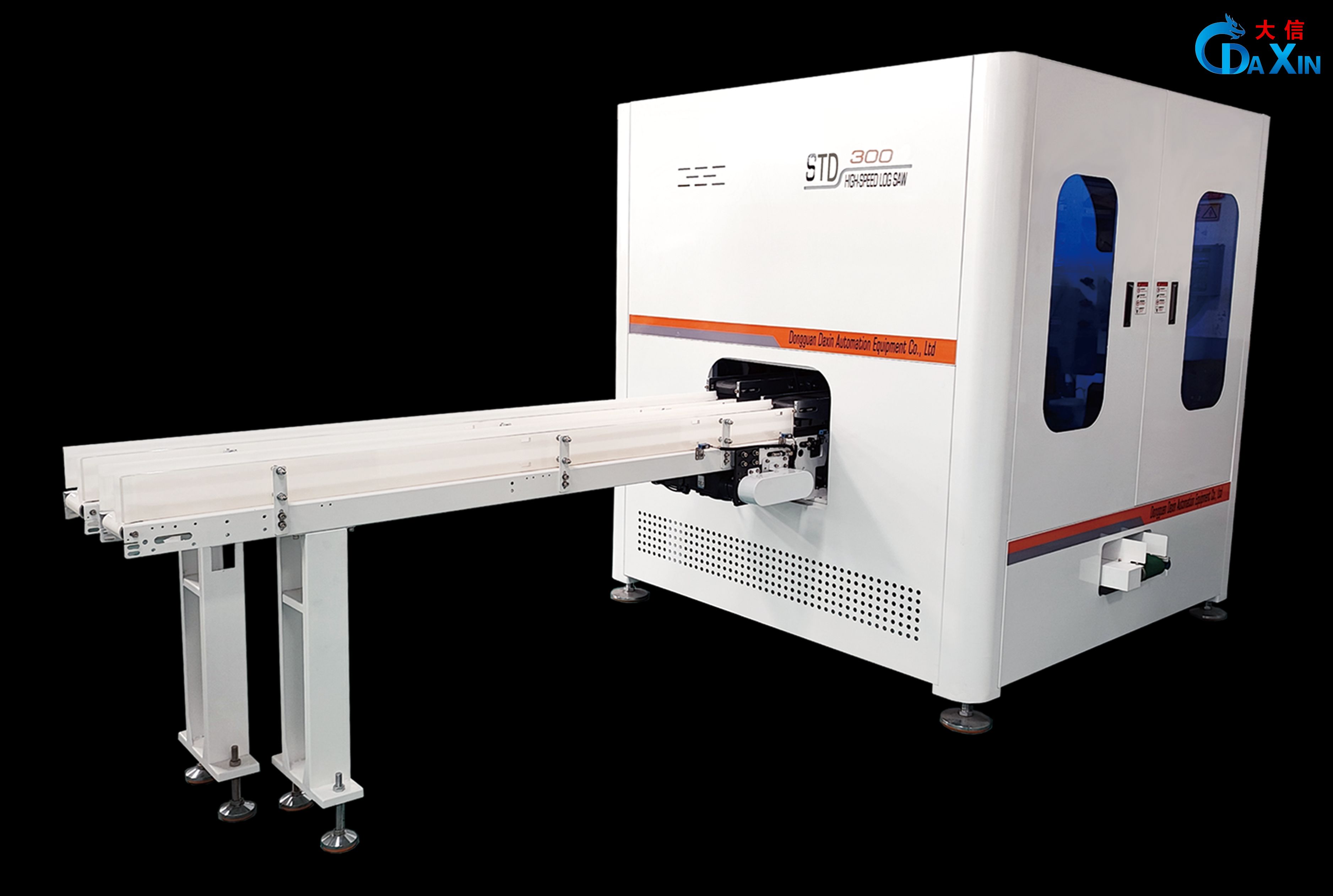
Precision in histology isn't just about the microtome—it starts with how tissue is divided before embedding. When samples are tough, fibrous, or simply too numerous, a standard single-channel cutter often forces a trade-off between speed and clean margins. DAXIN's dual channel tissue cutter solutions take a different approach, giving you parallel processing without sacrificing the control that precision histology workflows demand. Here's what that means for your daily sectioning results.
Two Channels, One Seamless Sectioning Process
Two distinct channels used to fragment a task into isolated, often conflicting slices. By weaving them into a single thread, the sectioning process becomes frictionless—no handoffs, no gaps, just one continuous flow from input to output.
Think of it as two rivers merging into one current. Each channel brings its own momentum: one handles the coarse splitting, the other refines the edges. But the transition between them is so smooth that you never notice where one ends and the other begins.
The result is a process that feels organic rather than mechanical. Redundancies vanish, timing aligns, and what once required constant oversight now runs itself. Two channels stop being separate entities—they become a single, seamless sectioning mechanism.
Avoiding Carryover When Handling Multiple Specimens
Carryover between specimens can easily distort results, especially when residues linger on reusable tools or workstation surfaces. A practical first step is to establish a strict one-direction workflow: handle each specimen over a dedicated, disposable absorbent pad, and change gloves whenever visible moisture, powder, or tissue fragments appear. Keep specimen containers closed until the moment of sampling, and avoid hovering an opened tube over another sample or shared reagent rack.
For instruments with reusable probes, tips, or blades, routine cleaning alone is often not enough. Use a two-stage decontamination sequence: first remove gross material with a lint-free wipe moistened with an appropriate cleaning solution, then apply a disinfectant or nuclease deactivator with the contact time specified for your material type. Where possible, dedicate low-cost consumables such as forceps, spatulas, or pipette tips to a single specimen, and mark any shared tool that must be reused so it can be inspected before the next contact.
Finally, consider physical separation as a barrier against subtle transfer. Arrange specimens in single rows rather than clusters, and avoid placing open caps or lids face-up on the bench. If you must centrifuge or vortex multiple tubes, wipe the exterior of each tube before opening and after closing, since invisible films on the outside are a common source of cross-contamination. A brief visual check of gloves, tube rims, and pipette shafts between samples adds only seconds but prevents most carryover events.
Blade Geometry Changes Everything
The moment you alter the angle at the cutting edge, the entire character of the blade shifts. A shallow grind slices cleanly but demands more from the steel's edge retention. Steepen that angle and you trade finesse for brute durability. It's not a minor tweak; it's a different tool altogether.
Thickness behind the edge is another quiet dictator. Two knives can share the same overall profile, yet the one with a thinner cross-section glides through dense material while the thicker sibling wedges and splits. This is why comparing blades by length or steel alone misses the point. Geometry determines how force travels from your hand into the material, and that changes every cut you make.
And then there's the belly, the tip, the distal taper. A blade with a pronounced curve rocks through herbs, but that same curve makes detailed tip work clumsy. A straight, spear-like profile excels at piercing yet feels awkward on a cutting board. These aren't flaws; they're trade-offs baked into the shape. After a few frustrating sessions with a badly ground blade, you start looking at the bevel instead of the brand name.
How Dual Cutting Shortens Grossing to Embedding
Dual cutting reworks the flow from specimen receipt to cassette by letting two technicians section the same tissue block at once. Instead of waiting for a single grosser to orient, ink, and slice each margin before moving to the next case, the paired approach splits standard and complex areas: one person handles the straightforward sections while the other tackles tricky fatty or calcified regions in parallel. This overlap removes the bottleneck where a difficult specimen held up the entire embedding queue, so cassettes fill faster without rushing the actual dissection.
The real time saving comes from eliminating the back-and-forth between grossing and embedding stations. With two sets of hands cutting in sync, the first cassettes can be loaded into the processor while the remaining tissue is still being trimmed—no more waiting for the whole case to be finished before starting fixation. Technicians also develop a rhythm where one reads out measurements and the other lays down sections, which cuts the mental load of switching between tasks. Labs that adopt this often see grossing-to-embedding turnarounds drop by a third, simply because the manual work overlaps instead of running in a single file.
Pairing also forces cleaner communication about cassette priority. Rather than both cutters guessing which blocks matter most, a quick handoff note or verbal cue keeps urgent biopsies moving ahead of routine excisions. This shared awareness means embedding staff receive a steady stream rather than a sudden pile at the end of a shift. The result is less idle time at the embedding center and fewer re-cuts from rushed placement, so the distance between grossing bench and paraffin block shrinks in practice, not just on paper.
Ergonomics That Don’t Quit Before You Do
Most ergonomic gear feels great for the first month, then quietly gives up. The lumbar support softens, the armrests wobble, and the mesh starts to sag right where you need it most. That kind of failure isn't just annoying—it forces your body back into the same awkward postures the product was supposed to fix.
The real test isn't in the showroom. It's in month eight, after hundreds of hours of daily use, when a chair still holds its adjustments and the seat cushion hasn't flattened into a pancake. Products that last are built around high-resilience foam, reinforced frames, and tension controls that don't slip after repeated tweaking. Those small details separate a one-season wonder from a tool that works as hard as you do.
Longevity also shows up in the small fixes. Instead of replacing the whole chair when a wheel breaks or a lever cracks, you should be able to swap out a single part and keep going. That kind of design respect for the user means less waste and fewer interruptions to your workflow. When ergonomics don't quit before you do, the payoff isn't just comfort—it's staying focused on the task instead of on your aching back.
Fine-Tuning Your Cutter for Delicate Biopsies
When you shift from routine excisions to delicate biopsy work, the same blade that served you well on dense tissue can suddenly feel heavy-handed. The trick lies in rethinking your angle of attack and your pressure map. Instead of driving the cutter straight through, roll the edge along a shallower bevel, letting the tissue's own resilience guide the depth. Take a few practice passes on a non-critical area first, listening for the subtle change in resistance that tells you where the plane of least harm sits.
Hand fatigue often masquerades as tool bluntness. Before reaching for a fresh edge, reset your grip and shorten your stroke. A pinch grip with the middle finger braced against the guard gives you finer modulation than a full fist, especially when the target is only a few millimeters wide. Work in three short, controlled segments rather than one long pull, pausing between each to verify you haven't drifted off the intended path. This rhythm alone can reduce crushing artifacts by half.
Finally, match the cutter's geometry to the biopsy's specific fragility. A needle-tip with a slight curve outperforms a straight taper when you need to skirt around a vessel or nerve. If you're dealing with encapsulated lesions, switch to a side-cutting edge that shaves rather than cores. And don't overlook the value of a quick strop mid-procedure: two or three passes on a leather hone restores that whisper-keen edge at the exact moment the tissue starts to deflect rather than part cleanly.
FAQ
The two parallel cutting lanes let technicians load a fresh block while the other side is still sectioning. That overlap removes most of the idle time you would normally see with a single-channel unit, so throughput stays high even when the queue is mixed with urgent biopsies and routine specimens.
It is built for paraffin-embedded blocks as its primary workload, but the blade stage and specimen holder can be swapped quickly for frozen sectioning if your lab handles intraoperative consults. The dual channel design does not force you to dedicate the whole machine to a single temperature protocol.
A closed-loop feedback system monitors blade deflection and feed rate every few milliseconds. When it detects drift from the set thickness, it micro-adjusts the advancing mechanism before the error builds into visible variation, which keeps ribbons uniform even during back-to-back sessions.
Both channels use a retractable blade guard that drops into place the moment the specimen holder moves away from the cutting zone. There is also a two-hand activation requirement for manual mode, and an emergency stop bar that cuts power to the feed motor without locking the blade in mid-stroke.
Most techs are comfortable after about half a day of supervised runs. The interface uses plain language for section thickness and trim depth, and the dual channel workflow follows the same basic sequence on both sides, so there is no separate learning curve for the second lane.
It is continuous in the sense that one lane can keep cutting while the other is cleared or reloaded. Blade changes still require a pause on the affected side, but debris removal is largely automated with a gentle air puff and a small vacuum port after each block, so intervals between blocks are only a few seconds.
Standard cassettes up to 40 by 28 millimeters fit without extra preparation, and the clamp can hold smaller biopsies as well. For unusually large whole-organ sections, you can remove the standard cassette adapter and use the open platform, which accepts blocks up to 75 by 52 millimeters.
Each channel has its own blade path, debris tray, and cleaning port. The blade surface is wiped with a disposable film between blocks, and the vacuum line empties into separate catch chambers, so a small fragment from one sample is not carried into the next section ribbon.
Conclusion
A dual channel tissue cutter changes the rhythm of histology work because it lets two specimens travel through sectioning without forcing the technician to stop, swap tools, or worry about cross-contamination. Each channel has its own blade path and collection area, so a small endoscopic biopsy and a larger resection can be processed side by side while keeping their identities fully separate. The blade geometry plays an underrated role here: bevel angles and edge profiles are shaped to reduce tissue compression and folding, which means fewer touch-ups and less chance of losing fragile material at the trim stage. When this geometry is paired with parallel channels, the workflow from grossing to embedding tightens noticeably—what used to require multiple stations or repeated handling becomes a continuous motion that preserves orientation and reduces transfer steps.
Ergonomics matter just as much as cutting performance. The grip, weight distribution, and lever travel are designed so a technician can work through long batches without the hand fatigue that leads to inconsistent section thickness. For delicate biopsies, the cutter allows fine adjustment of blade clearance and feed pressure, making it possible to slice through cores or tiny mucosal fragments without crushing artifact. That flexibility means one instrument adapts to dense breast tissue, fatty lymph nodes, and friable GI specimens without swapping out hardware. Instead of forcing the lab to choose between speed and sample integrity, the dual channel design keeps both in play, which is why it fits naturally into precision histology workflows where every block has to count.
Contact Us
Contact Person: Sam Xie
Email: [email protected]
Tel/WhatsApp: 86-18938538530
Website: https://www.daxin321.com/