

CPP Film Masterbatch: How to Choose the Right One for Your Packaging
2026-11-16
Getting the right cast polypropylene (CPP) film masterbatch isn’t just about ticking a technical box—it’s what separates packaging that consistently performs from the kind that quietly disappoints. Chances are you’ve already dealt with haze issues, uneven dispersion, or a seal that just won’t hold when it matters. That’s where a tailored masterbatch changes the game. At Xinwancai, we’ve seen how the right additive combination can sharpen clarity, lock in barrier performance, and keep production lines humming with fewer stoppages. In this guide, we’ll cut through the noise and walk you through the few factors that actually make the difference, so your next packaging run looks and performs exactly the way you intend it to.
Matching Melt Flow to Your Process Without the Guesswork
Every machine, mold, and material combination has its own rhythm. Instead of chasing ideal data sheets, focus on how the melt actually behaves inside your specific setup. A slight shift in barrel temperature profile or screw speed can reveal whether the material flows too fast, causing flash and dimensional drift, or too sluggish, leading to short shots and knit line weakness. The most reliable feedback comes from observing the part itself—fill pattern, surface finish, and consistent weight tell you more than a single lab-generated number ever will.
Many operators inherit a fixed melt temperature range from a generic processing guide and never question it, but small adjustments within that range often unlock stability. If you are fighting inconsistent cavity pressure, try lowering the back pressure a bit while increasing the screw recovery speed—this can keep the melt uniformity high without overheating sensitive additives. Document your changes not as abstract parameters but as “part response notes,” linking each adjustment to a visible change in the molded product. Over time, you build a processing fingerprint that is far more useful than any standard melt flow index.
The guesswork fades when you treat melt flow as a dynamic variable rather than a constant. Run a simple viscosity sensitivity test by stepping melt temperature down in five-degree increments and logging cycle time and part performance. Within a few runs, you can pinpoint the narrow sweet spot where the material fills smoothly and packs tightly without degrading. That sweet spot is your process’s true melt flow requirement—no guesswork, no irrelevant comparisons to someone else’s lab results, just a clear, repeatable map to better margins and fewer rejects.
Why Optical Clarity Demands More Than Just a Clear Pellet
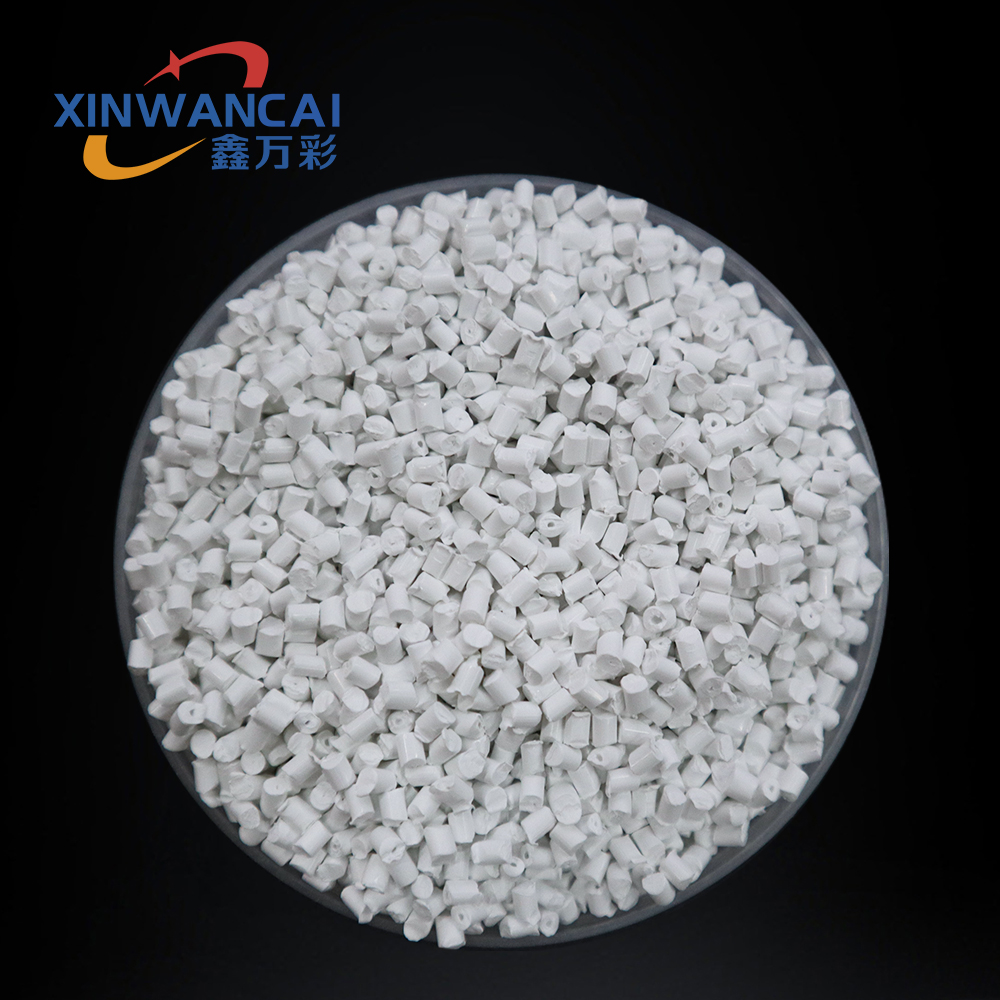
A pellet that looks crystal clear in your hand can turn into a hazy mess the moment it goes through a processing cycle. This happens because true optical clarity isn't just about the raw material's initial transparency. It depends heavily on how the polymer chains behave when they're heated, sheared, and cooled. Even slight thermal degradation or inconsistent melting can create microscopic density variations that scatter light. Often, the pellet itself is clear because it was formed under ideal, slow-cooling conditions that mask these problems. Once you inject it at speed, those hidden weaknesses in the molecular architecture reveal themselves as fog, yellowing, or a ghostly glow at the gate.
You also have to contend with additives that were never designed to be invisible. Anti-oxidants, mold-release agents, and impact modifiers can phase-separate under the high pressures of molding, forming nano-scale droplets that act like countless tiny prisms inside the part. They won't ruin the mechanical properties, but they'll destroy the aesthetic. The clarity you actually need comes from a holistic material formulation, one where every component is selected not just to survive processing but to maintain a single, stable refractive index across the entire part. It's the difference between a window and a warped lens.
Ultimately, the demand for optical clarity exposes how the pellet is just the starting point. The real test lies in the melt's stability, the absence of volatile byproducts that nucleate bubbles, and the control of contamination down to the parts-per-billion level. Without that, you're not really engineering a clear component; you're just hoping the hazy one looks better than the last batch.
Sealing Performance Secrets Most Spec Sheets Won’t Tell You
Real sealing reliability often hinges on factors that never appear in a glossy datasheet. Surface finish compatibility, for instance, is routinely glossed over—yet a seal that performs flawlessly against a polished rod can fail prematurely on a slightly rougher counterface simply because the microasperities shred the elastomer over time. It’s not about absolute roughness numbers; it’s the mismatch between the seal material’s resilience and the texture of the mating surface that quietly determines life span.
Another overlooked variable is installation trauma. Even a perfectly designed seal loses integrity if it’s nicked during assembly or twisted inside a gland that wasn’t deburred properly. These tiny installation flaws don’t show up on a spec sheet, but they create leak paths that no pressure rating can compensate for. The damage is often invisible until the system is already in service, making it one of the most insidious failure modes in the field.
Finally, what’s rarely disclosed is how much a seal’s performance shrinks under thermal cycling that falls within its “rated” range. A compound might handle 200°C on paper, yet repeated swings between room temperature and that upper limit can permanently alter its compression set, quietly eroding sealing force long before any obvious cracking appears. The true test isn’t a one-time peak temperature excursion—it’s the cumulative effect of mundane thermal breathing that eats away at the seal’s ability to recover.
The Role of Anti-Block and Slip in Keeping Your Line Humming
Any production line lives and dies by the steady flow of materials. When things start sticking, jamming, or sliding out of sync, you’re not just losing minutes — you’re bleeding consistency and quality. The right anti-block and slip measures aren’t just band-aids; they actively reshape the way surfaces interact under pressure, vibration, and heat, keeping your feed exactly where it needs to be without that nagging hesitation that turns into downtime.
Think about the last time a conveyor belt stuttered or a chute built up a stubborn layer of fines. That’s the hidden tax of poor surface control. Modern anti-block solutions work at a microscopic level to prevent cold welding and particle adhesion, while targeted slip treatments give you just enough movement without letting things slide into freefall chaos. Together they create a window of predictability that maintenance teams actually appreciate — fewer emergency stops, less midnight wrenching, and a line that just hums along shift after shift.
What often gets overlooked is how deeply this touches product integrity. Every hang-up leaves a mark — scratched packaging, scuffed product faces, or that subtle misalignment that only shows up in the returns pile. By treating block and slip as a single design conversation instead of separate problem patches, you end up with a system that protects both throughput and the finished item. And when your line finally runs quiet enough to hear the next opportunity for improvement, you know you’ve got it right.
Bridging the Print and Lamination Gap Without Extra Steps
Imagine a workflow where the ink never fully dries alone, and the protective layer isn't an afterthought. Traditional setups force you to nurse a print through curing, only to wake it up again with a separate film and a heat press. The smarter approach embeds the bond directly into the printing cycle — the color and the shield become one continuous stream. You're not saving a step; you're erasing the pause that invites inconsistency.
The real trick is chemistry that doesn't wait. Instead of a post-print adhesive bridge, the laminate film and ink meet while both are still reactive. The surface tension aligns, the polymers interlock, and the result isn't just stuck together — it's grown into a single skin. No fingers lifting a corner, no air bubbles born in the space between stations. The process feels less like assembly and more like a controlled finish that happens the moment the artwork leaves the belt.
Shops that get this right stop thinking about a "print job" and a "lamination job" as two different headaches. The substrates move straight from vivid to rugged in the same breath. That means the gloss or matte texture isn't applying a costume; it's surfacing naturally on the still-living ink. For anyone who's fought with registration, silvering, or a time-gap that killed the vibe, the difference is immediate — the gap closed itself while you weren't looking.
Real-World Contamination Risks That Generic Grades Overlook
Many grading systems lean heavily on lab purity metrics, but those numbers rarely tell the full story once your product sits on a shelf, travels across climates, or gets handled in bulk. A material that passes a clean-room spec with flying colors can still leach unexpected compounds when exposed to common packaging adhesives, fluctuating humidity, or UV light during transit. These secondary interactions aren't part of the standard checklist, yet they routinely degrade performance in ways that a certificate of analysis will never flag.
Another blind spot shows up in particulate behavior under dynamic stress. A fine powder graded as "low dust" in a static test might generate a cloud of respirable fines the moment it's conveyed pneumatically or poured repeatedly. That airborne fraction isn't just a nuisance; it can carry adhered trace residues that settle onto adjacent production lines, creating cross-contact that generic grades dismiss because they only measure bulk composition, not real-world fragmentation tendencies.
Then there's the slow creep of contamination that aggregate specs treat as negligible. Trace metals or plasticizers present at fractions of a percent aren't considered a fail, but over months of storage in metal drums or polymer totes, those fractions can migrate and concentrate at the container surface. When the contents are finally discharged, that first kilogram of product carries a loading spike that no typical grade accounts for—and it lands straight into sensitive downstream formulas without warning.
FAQ
CPP film masterbatch is a concentrated blend of pigments or functional additives dispersed in a carrier resin, designed to be diluted into raw polypropylene to produce cast polypropylene film with specific color, opacity, or surface functionality. It’s indispensable because simply extruding pure CPP yields a film that is too uniform in behavior — it may have poor slip, static buildup, or inadequate sealing properties. A masterbatch tailors the film’s performance: modifying friction to keep bags from sticking together on a packaging line, improving heat-seal strength for leak-proof seals, or adding UV protection for goods exposed to light. Without it, packaging would fail in high-speed filling operations, look inconsistent on the shelf, and might not adequately protect the contents.
For food packaging, you need to look beyond just cost. Start with migratory behavior: additives must not migrate into the food, especially with fatty or acidic products, so ask for compliance documentation against food contact regulations like FDA 21 CFR or EU 10/2011. Then focus on seal integrity — the masterbatch should not interfere with the CPP film’s inherent heat-sealing range; some poorly designed batches widen the sealing window while lowering overall bond strength. Coefficient of friction (COF) is also key: you need a controlled slip, usually achieved with non-blooming slip additives that don’t transfer to the food surface. Finally, check for organoleptic neutrality — no off-taste or odor transmitted to sensitive items like chocolate or coffee.
The choice directly determines whether a film looks crystal-clear or slightly milky. High-quality masterbatches use refractive-index-matched carriers and well-dispersed particles to minimize light scattering. But there’s a trade-off when you add anti-block or slip agents: conventional silica-based anti-blocks create micro-roughness that diffuses light, raising haze. Specialized transparent anti-block masterbatches use spherical beads with a polymer grounding that mimics the CPP’s refractive index, preserving low haze even at high dosage. If your packaging needs to showcase the product inside, always request haze and clarity measurements at the specific masterbatch loading you’ll use, not just general datasheet values.
One frequent mistake is assuming that a fixed let-down ratio works universally. The optimal ratio depends on the masterbatch formulation, the film gauge, and the required final additive level. Overdosing an anti-block masterbatch makes the film feel excessively rough and reduces gloss, while underdosing means the film coils, blocks, and jams on the winding reel. Another error is neglecting the carrier resin’s melt flow index. If the masterbatch has a much higher MFI than the base CPP polymer, it can lead to streaks or thickness variations because the two materials flow differently in the die. Always run a trial on your own extrusion line before committing to large-scale production, even with a matched carrier.
Usually no, and attempting it will lead to failures. Retortable CPP goes through high-temperature steam sterilization (typically 121°C or higher), which puts extra stress on the film and accelerates additive migration and degradation. A general-purpose masterbatch might lose its slip efficiency during retort because slip agents bloom to the surface too quickly under heat, or anti-block particles may dislodge, causing haze. For retort applications, you need thermal-stable additives and a carrier resin that withstands repeated heat cycles without discoloring. Also, the masterbatch must not cause the film to shrink or distort during the retort process, so carrier selection and dispersion quality are both critical.
A knowledgeable supplier will start by asking about your packaging line’s speed, sealing method, product type, and shelf life requirements, rather than just quoting a price. They’ll discuss things like the type of VFFS (vertical form fill seal) machine you use, whether the film needs to be printable or laminated, and what coefficient of friction range your bag-making equipment tolerates. Good signs are when they provide technical data that refers to real-world testing on a cast line, offer to adjust particle size distribution for your film thickness, and can explain how their masterbatch behaves during corona treatment or secondary processes. They should also be transparent about the carrier resin’s original source and how it interacts with your base polymer.
Anti-static masterbatch is essential when packaging fine powders, electronic components, or dried food items that generate static charge during high-speed form-fill-seal operations. Static electricity causes powder to cling to seal areas, leading to weak seals or contamination, and it can make stacked bags repel or attract each other, jamming the packaging line. A truly effective masterbatch uses migratory or non-migratory conductive agents to dissipate charges without leaving a greasy feel that could affect print quality. It’s not always necessary — for packaging non-sensitive solid items like textiles or stationery, static is rarely a problem. But if you see product clinging to film or inconsistent bag opening, a properly chosen anti-static masterbatch resolves it without over-engineering the film.
Conclusion
Choosing a CPP film masterbatch isn’t just about grabbing a generic grade off the shelf. The first thing to get right is melt flow matching—a slip-up here can quietly sabotage your extrusion, causing uneven gauge or surging that you’ll chase in circles. Overlook how the carrier resin interacts with your specific polypropylene grade, and you’ll burn hours tuning when a better-matched masterbatch would have run smoothly from the start. Optical clarity is another place where cutting corners backfires. A pellet that looks transparent in the bag can still introduce micro-haze or faint yellowing once it’s dispersed, especially with multi-layer structures that magnify any inconsistency. The real test is how the concentrate holds up through repeated heat cycles and shear, not a quick visual check. Sealing performance is equally deceptive; spec sheets rarely capture how minor additive interactions shift the heat-seal window, leaving you with weak seals or leakers that only surface in the field.
On the production floor, anti-block and slip packages need to be dialed in for your exact line speed, slitting setup, and winding tension, otherwise reel changes turn into a constant battle against blocking. That fine-tuning also impacts downstream processing: if the surface isn’t prepped right for printing or lamination, you’ll start seeing ink transfer issues or adhesive dry spots that force extra priming steps nobody planned for. And while it’s less discussed, contamination risks lurk in lower-tier masterbatches—residual catalysts, cross-contamination from shared production lines, or stabilizer systems that break down earlier than expected, all of which cause gels, specks, or yellowing that generic grades simply aren’t designed to prevent. Making the right choice means looking past the data sheet and digging into the additive blend’s real-world performance across your full process, from extruder to final reel. That attention is what separates a packaging line that runs predictably from one that’s constantly firefighting.”
Contact Us
Contact Person: JACK
Email: [email protected]
Tel/WhatsApp: 86 18650130917
Website: https://www.xinwancai.com/