

China Sand Blasting Room Exporter: Leading Custom Solutions for Surface Preparation
2026-05-30
Stepping into the world of industrial surface preparation, one name quietly stands out: PuHua. As a premier China sand blasting room exporter, they don’t just ship equipment—they craft custom solutions that reshape how manufacturers think about efficiency and finish quality. Whether you're tackling stubborn corrosion or prepping for a flawless coating, the right blast room makes all the difference. Let's explore why tailored designs are rewriting the rulebook for surface prep across industries.
Tailored Blasting Rooms for Every Industry Need
A blast room built for restoring delicate vintage motorcycle frames shouldn’t share the same blueprint as one stripping thick corrosion from ship hulls. The process starts with what you’re finishing—thin sheet metal warps under aggressive media, while cast iron engine blocks practically demand it. Airflow design shifts too: cross-draft works for flat parts, but oddly shaped fabrications need down-draft to pull dust away from the operator’s breathing zone. Even lighting placement gets rethought when you’re blasting deep cavities versus broad exterior surfaces.
Beyond size and power, industries force very different material and recovery choices. Aerospace composites need plastic media that won’t etch critical fibers, while a foundry cleaning ferrous castings might run steel grit through a magnetic separator for quick reuse. Food and pharmaceutical sectors add wash-down smoothness and stainless internals to prevent contamination, and automotive remanufacturers often pair booths with thermal stripping units for faster turnaround. Optional sound-dampening panels or full enclosure systems keep neighbors happy when the work runs around the clock.
Why Global Manufacturers Choose Our Surface Prep Systems
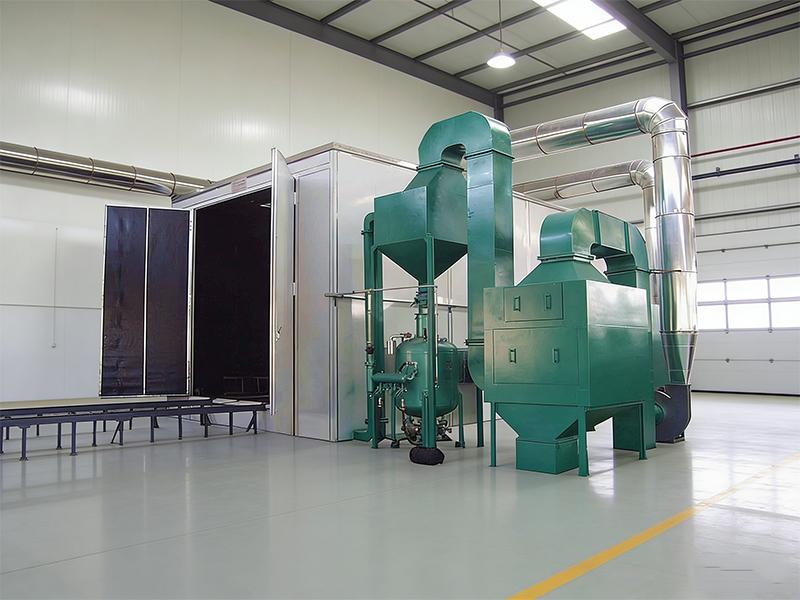
Manufacturers across the globe rely on our surface preparation systems because they deliver consistent, high-quality results that directly impact product performance and longevity. Built with advanced engineering and durable components, our equipment minimizes downtime and scrap rates, helping factories maintain lean operations without sacrificing output speed or finish quality. The precision control over abrasive flow, speed, and media selection ensures that every part meets exact specifications, even under demanding production schedules.
Another key factor is our focus on adaptability—machines are designed to handle a wide range of materials, from delicate composites to heavy-gauge steel, without extensive reconfiguration. This flexibility allows manufacturers to accommodate diverse client needs without investing in multiple specialized stations. Additionally, our systems feature smart automation that learns and adjusts to operator patterns, reducing the learning curve and fostering a safer, more intuitive work environment.
Beyond performance, we back every installation with local support teams who understand regional compliance standards and production challenges. From initial setup to ongoing maintenance, our technicians work side by side with factory crews, ensuring minimal disruption and rapid issue resolution. This partnership approach—combined with modular designs that simplify future upgrades—has turned first-time buyers into long-term collaborators who trust our systems to evolve with their businesses.
Inside the Engineering: Precision-Controlled Abrasive Recovery
Traditional abrasive blasting systems dump a staggering amount of reusable media straight into the waste stream. The culprit is often crude mechanical screening that can’t distinguish between slightly worn particles and true fines. Engineers tackled this by embedding real-time particle characterization directly into the recovery loop. Instead of a one-size-fits-all sieve, high-speed cameras and laser diffraction sensors measure shape, diameter, and velocity of every grain as it returns to the hopper. A control algorithm then splits the flow: viable abrasive gets rerouted to the blast pot, while dust and fractured media are ejected. This selective triage happens without human intervention, cutting new-media consumption by over 60 percent in large-scale surface preparation jobs.
The heart of the system is a multi-stage cyclone array tuned by variable-frequency drives. Airflow, pressure drop, and rotational velocity are dynamically adjusted based on the incoming grain size distribution. If the sensor data shows a spike in angular, oversized particles—common when blasting thick mill scale—the cyclone spins faster to sling those heavier grains into the salvage stream before they can be pulverized. Conversely, when processing delicate substrates, the vortex weakens to gently coax lightweight contaminants upward while preserving fragile media like walnut shells. Every parameter set is captured and fed back into a self-learning model that refines separation thresholds with each cycle, essentially creating a recovery profile unique to the abrasive type and work piece.
Maintenance crews rarely need to touch the internals thanks to the self-purging design. Abrasion-resistant ceramic liners in the cyclones and transfer ducts prevent the very wear that defeats traditional recovery units. A network of acoustic sensors detects the distinct hum of a developing thin spot, signaling for localized ceramic patch injection before air leaks sap efficiency. The entire enclosure operates under slight negative pressure, pulling dust to a cartridge filtration bank where pulse-jet cleaning recycles the filter elements without downtime. Facilities running 24-hour shot blasting operations have reported more than 10,000 hours of continuous service between major overhauls, a benchmark that redefines abrasive recovery as a closed-loop science rather than an afterthought.
Dust-Free Operations: Advanced Filtration and Safety
Maintaining a genuinely dust-free workspace goes far beyond basic housekeeping. It demands a layered approach to air filtration that captures particulates at every stage—from source capture systems that trap contaminants the moment they're generated to high-efficiency final filters that polish the air. This kind of rigorous control isn't just about cleanliness; it's a frontline defense against respiratory hazards and combustible dust risks that can escalate without warning.
Modern filtration setups often pair nanofiber media with intelligent monitoring, offering both exceptional arrestance and real-time feedback. Sensors track differential pressure across filters and air quality metrics, pinpoint when maintenance is needed, and stop inefficiencies before they turn into liabilities. Safety gets hardwired into the process: automated shutoffs, anti-static media, and spark detection systems work together to neutralise explosion threats in environments where fine powders are handled.
The payoff is a facility where workers breathe easier and equipment suffers less abrasive wear. Compliance with ever-tightening occupational exposure limits becomes less of a scramble when filtration systems are designed with headroom to spare. In sectors ranging from pharmaceutical manufacturing to metalworking, investing in advanced dust management translates directly into steadier production, fewer interruptions, and a culture of proactive safety.
From Automotive to Aerospace: Real-World Application Stories
When McLaren started experimenting with carbon fiber monocoques in Formula 1, few imagined the same approach would one day protect spacecraft. The need for crashworthy, lightweight structures pushed automotive engineers to refine carbon composite layups and bonding techniques that were later directly applied to satellite buses and launch vehicle fairings. It’s not just about strength-to-weight ratios—aerospace adopted the entire validation methodology, from dynamic crash simulations to ultrasonic inspection protocols originally developed for racing chassis.
Over in Stuttgart, a quiet collaboration between Porsche engineers and a drone manufacturer yielded an unexpected crossover: high-voltage battery management algorithms tuned for rapid charge-discharge cycles on the track turned out to be ideal for electric vertical takeoff and landing (eVTOL) aircraft. The code that prevented thermal runaway during aggressive regenerative braking now monitors lithium-silicon packs at altitude, with only minor tweaks to account for lower air pressure and vibration profiles.
Even the humble automotive CAN bus found a second life in avionics. Initially designed to reduce wiring harness weight in cars, the protocol’s deterministic latency and fault tolerance made it a natural fit for distributed flight control systems on smaller unmanned aerial vehicles. Engineers who cut their teeth debugging ECU communication glitches in cold-weather testing later repurposed the same tools to ensure reliable data links between wing-mounted actuators and autopilots.
Streamlining Your Export Process: Support and Logistics
When you’re sending goods across borders, the smallest snag can ripple into delays that disappoint customers. A hands-on support team that picks up the phone or answers emails quickly makes a world of difference. They don’t just fire off generic replies—they know your shipment’s history, understand destination quirks, and can smooth things over with customs before you even realize there’s a hitch. It’s the kind of backup that turns a stressful export into a routine run.
Logistics should feel more like a well-oiled conveyor belt than a jigsaw puzzle. By leaning on a network that spans major ports and inland hubs, you sidestep the scramble of piecing together routes yourself. Real-time updates on your cargo’s movements, paired with flexible choices between air, ocean, or a blend of both, let you adjust on the fly. The goal isn’t just to move a box from A to B—it’s to do it without drama, keeping your shelves stocked and your buyers happy.
A streamlined export process hinges on having someone who treats your deadlines like their own. When that partner handles the paperwork, coordinates pickups, and even knows how to reroute during a port strike, you reclaim hours of your day. Less chasing, more doing—that’s the gift of logistics that works behind the scenes. In the end, you’re not just shipping products; you’re delivering reliability, and that’s what keeps orders flowing back.
FAQ
We build everything from compact manual blast rooms for small workshops to fully automated systems with multiple recovery units. Our lineup includes pressure blast rooms, suction-fed cabinets, and custom walk-in rooms designed around your part size and production volume.
By fitting the room's dimensions, abrasive type, and dust collection to your specific workflow, you cut down on rework and idle time. We can add features like ergonomic grate floors or programmable cycles that let operators move steadily without repetitive strain.
Absolutely. Whether you're stripping heavy rust from ship hull sections, etching glass for decorative panels, or prepping aerospace components for coating, we tailor blast pressure, nozzle placement, and media recovery to meet that exact need.
Every room includes proper ventilation, explosion-proof lighting, emergency stop circuits, and interlocks on doors. We also offer optional CO2 monitoring and full-body protective gear packages to meet different regional safety standards.
We typically break down the room into skid-mounted modules that fit in standard containers. A supervisor travels with the first shipment to guide local crews through assembly and initial operation. We also provide detailed 3D assembly drawings and remote video support.
Steel, aluminum, concrete, glass, and even composite materials can be processed. The key is matching the abrasive—like garnet for a fine profile on aluminum or steel grit for aggressive surface profiling on structural steel—and tweaking the reclaim system accordingly.
Yes, we stock critical components like nozzles, blast hose, and dust filters in regional warehouses and ship directly within days. Our engineers often resolve issues remotely, but we also partner with local service companies for on-site repairs when needed.
It’s the depth of customization before the order and the continuity after. We don’t just sell a prefabricated box—we run samples in our test facility, document every step of fabrication for traceability, and often stay in touch for years as your production evolves.
Conclusion
When surface preparation demands both precision and adaptability, many international manufacturers now turn to a specialized China-based sand blasting room exporter that has quietly reshaped expectations. Rather than offering one-size-fits-all setups, the approach here centers on tailoring every enclosure, airflow pattern, and abrasive handling method to the actual production line—whether that means delicate aerospace components or rugged automotive frames. The engineering emphasis lands squarely on controlled recovery: a closed-loop system that automatically classifies and recycles media keeps consumption low and consistency high, eliminating the guesswork that often plagues conventional blast environments. Coupled with multi-stage cartridge filtration and negative-pressure containment, operators work in visibly cleaner air without the usual haze, making compliance with tightening occupational safety rules more straightforward. Clients note that what sets the process apart isn’t just the hardware, but a grasp of local regulations and end-to-end project support—from initial layout sketches done remotely to on-site commissioning and spare parts readiness—cutting the typical lead-time friction that cross-border equipment purchases can carry.
The breadth of applications tells a deeper story: a railcar refurbishment facility reduced its blasting cycle by a third after a customized downdraft room replaced an outdated cross-draft design, while a composite part manufacturer serving wind energy scaled from prototype to full production using a temperature-controlled enclosure that prevented moisture intrusion during abrasive impact. These aren’t abstract case studies but routine outcomes when dust collection is engineered to match the exact dust load and particle size distribution of the process. Behind the scenes, logistics are built around knock-down containerized shipment that isn’t afraid of tight factory access, and installation supervisory teams who speak the buyer’s operational language. By folding technical adaptability, rigorous safety margins, and export experience into a single responsive package, this supplier is steadily becoming the behind-the-scenes backbone for surface treatment lines that cannot tolerate downtime or uneven results. The result is a partnership model where the blasting room evolves with the manufacturer’s changing product mix, rather than becoming a limiting bottleneck.
Contact Us
Contact Person: Bruce
Email: [email protected]
Tel/WhatsApp: +86 15166629468
Website: https://www.povalchina.com/