

China's Top Ground Mount Solar System Manufacturers Revealed
2026-06-10
China’s solar industry is booming, but finding truly reliable ground mount system manufacturers can be a challenge. In this post, we pull back the curtain on the country’s leading suppliers, spotlighting the innovation and quality that set them apart. Among them, Topfencesolar has been making waves with solutions engineered for durability and ease of installation. Whether you’re planning a utility-scale project or a commercial installation, our curated list will help you cut through the noise and connect with the best in the business.
The Powerhouses Driving Utility-Scale Solar
Utility-scale solar has moved from niche to mainstream largely because of a handful of aggressive developers and vertically integrated manufacturers. Firms like NextEra Energy and Enel Green Power have dominated the landscape by locking in massive pipelines and financing packages that smaller players cannot match. Their ability to navigate permitting hurdles, secure interconnection queues, and deploy capital at scale gives them an edge that keeps the gigawatt-level projects moving.
On the manufacturing side, the story revolves around a relentless drive to cut costs and boost module efficiency. Chinese giants such as LONGi and JinkoSolar continue to refine monocrystalline PERC and n-type TOPCon technologies, driving down the dollars-per-watt figure year after year. Their production scale, coupled with wafer-slicing innovations and supply chain control, makes it nearly impossible for newcomers to compete on price alone. This manufacturing muscle is what turns ambitious renewable targets into steel-and-glass reality across sun-rich regions.
Then there are the financial architects and engineering firms that stitch everything together. Pension funds, infrastructure investors, and development banks have flooded the sector with patient capital, while EPC specialists like Mortenson and BLM Construction turn blueprints into functioning plants on rocky desert terrain. This behind-the-scenes coordination of cash, engineering, and logistics is where the real horsepower lives—far from the flashy ribbon-cutting ceremonies.
Beyond the Panel: What Makes a Ground Mount System Truly Stand Out
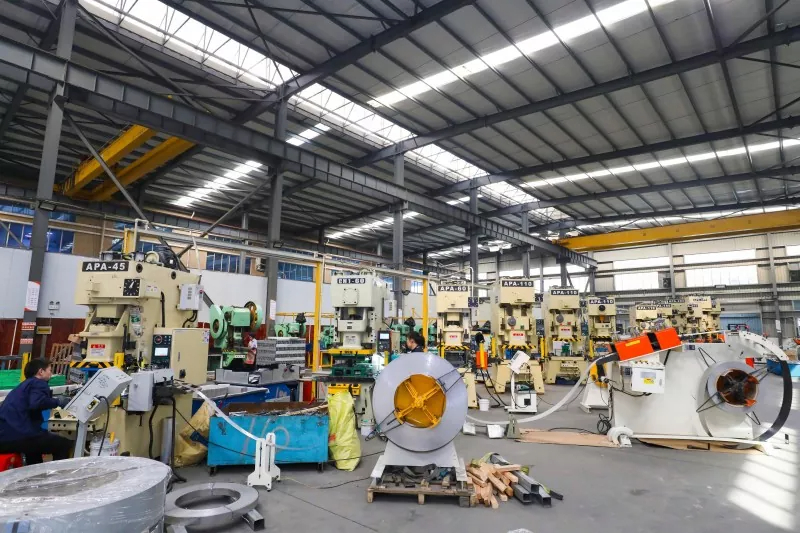
When people imagine a solar installation, their attention leaps to the sleek blue modules lined up under the sun. But anyone who has managed a large-scale project knows that the real art lies beneath. A ground mount system isn't just a rack; it's a customized foundation that must wrestle with soil chemistry, wind loads, and frost heave. The choice between driven piles, helical anchors, or concrete ballasts isn't a matter of copy-pasting a spec sheet—it's a conversation with the land itself. One site's sandy loam swallows a pile with ease, while another's hidden bedrock demands a completely different engineering approach. The system that truly stands out is the one that adapts, not the one that forces a standardized solution into mismatched terrain.
Beyond the foundations, there's a quiet sophistication in how a mount handles the modules. Sharp edges that can scratch frames, tedious clamp adjustments that drain installation hours, and rails that trap moisture against the glass—these are the small tragedies of a poorly thought-out design. A standout system pays attention to the details: anodized coatings that resist long-term corrosion without relying on greased fasteners, grounding paths integrated into the hardware instead of tacked on with copper wire, and tilt angles that can be adjusted with a simple lever instead of dismantling a dozen bolts. It's the difference between a structure that merely holds panels and one that actively protects the investment buried inside every module.
Then there's the quality that separates the forgettable from the memorable: serviceability over the decades. A ground mount might be sunk into the earth for 25 or 30 years, during which bush will grow, wildlife will explore, and maintenance crews will need to reach every cable and connector. Thoughtful cable management channels that deter curious rodents, wire routing that doesn't dangle like a vine, and access panels placed where a technician can actually crouch—these aren't luxury features; they're the difference between a system that ages gracefully and one that becomes a costly headache. When the panels are all that the casual observer sees, the genius of the mount is in what it hides and how well it lasts.
A Closer Look at Innovation Hubs Across China
The geography of innovation in China rarely sits still. While Beijing and Shanghai grab the headlines, an intricate web of smaller, highly specialized hubs has quietly reshaped the country’s tech landscape. Chengdu not only fuels the gaming industry but also serves as a testing ground for unmanned aerial vehicles, its airspace dotted with delivery drones long before many western cities saw their first. Further south, Hefei has turned its obscure reputation into a strength, leveraging decades of optics research to dominate the quantum computing supply chain. These pockets of expertise have grown organically, often anchored to a single university or state lab, yet they now attract global talent in ways that defy traditional cluster theory.
Take Hangzhou, a city that transformed from a scenic tea-growing region into a digital commerce powerhouse. Alibaba may be its most famous son, but the real story lies in the layers beneath: thousands of livestreaming studios, fashion-tech crossovers, and nimble logistics firms that re-engineered just-in-time manufacturing for social media trends. Walk through the Yuhang district on any weekday, and you’ll stumble upon product managers hashing out next-season strategies in converted warehouses, flanked by tea merchants who still ply their ancient trade. It’s this coexistence of the ultra-modern and the deeply traditional that gives Hangzhou its peculiar energy — a reminder that innovation here isn’t about building from scratch, but about rewiring existing social fabrics.
For all their dynamism, these hubs face a mismatch between ambition and infrastructure. The rocket-like rise of battery tech in Changzhou, for instance, has strained local housing markets and created a two-tier workforce where line engineers earn multiples of what university administrators make. Meanwhile, rivalries between cities — each vying for the same subsidies and talent — sometimes lead to redundancy rather than synergy. Yet the resilience keeps surprising outsiders. When a semiconductor cluster in Wuxi lost a key export channel last year, its firms rapidly pivoted to serving domestic EV makers, shortening design cycles by 30%. That kind of adaptive muscle, built over decades of navigating policy shifts, might just be China’s most underappreciated innovation export.
Real-World Wins: Projects That Showcase Engineering Excellence
When the first turbines of the Hornsea offshore wind farm began spinning 120 kilometers off the Yorkshire coast, they weren't just generating electricity—they were validating years of brutal problem-solving. Engineers had to design foundations that could withstand North Sea storm surges, invent modular installation methods to cut vessel time in half, and reimagine cable-laying techniques to avoid ancient seabed obstacles. The project didn't just meet its power targets; it rewrote the playbook for what's possible in hostile marine environments.
A thousand miles away, in the dense neighborhoods of Tokyo, the Shibuya Station redevelopment tells a different kind of engineering story. Here, the challenge wasn't wind or waves but humans—over two million passengers daily moving through a tangled 1920s layout. The solution wasn't a single flashy innovation but a relentless series of micro-adjustments: updated flow algorithms, platform widening measured in centimeters, and a groundbreaking "soft path" signage system that reduced transfer chaos by 18 percent. Great engineering often hides in plain sight, making complexity feel effortless.
Cost vs. Longevity: How Leading Brands Balance the Equation
When people buy premium appliances, they often wonder if a higher price really means a longer life. The truth is, the relationship between cost and longevity isn't linear. Some brands charge more for sleek design or smart features that don't necessarily add years to the product's life. Others invest heavily in durable components and rigorous testing, which drives up the price but also extends usability. It's all about where a company puts its money—marketing and aesthetics versus engineering and materials.
Leading brands take different approaches to balance the equation. For instance, a few focus on modular builds that let you replace a worn-out motor or seal without scrapping the whole machine, effectively stretching the lifespan without hiking the initial cost too much. Others offer extended warranties or service plans baked into the price, betting that their products won't fail. The smartest strategies target the weak points—like seals, hinges, or electronic boards—and reinforce them, so you're not paying for a brand name but for actual resilience.
In the end, the “cost vs. longevity” balance often comes down to transparency. Brands that openly share their testing standards, material choices, and repair networks make it easier for shoppers to judge whether the premium is justified. While no product lasts forever, those that prioritize mechanical simplicity and serviceability tend to age more gracefully—and that’s where the real value lies.
Choosing the Right Partner for Your Next Mega-Project
A mega-project isn’t just a bigger version of what you’ve done before—it’s a different beast entirely. The partner you pick needs more than a solid track record; they need a mindset wired for complexity, where adaptability and calm under pressure are second nature. Look for genuine curiosity about your vision, not just a list of past wins. When they start asking the tough, uncomfortable questions early, that’s often a sign of someone who’s already mentally building alongside you.
It’s tempting to get wowed by glossy portfolios and big-name references, but chemistry matters in ways spreadsheets can’t capture. A great partner won’t just nod along—they’ll push back when your assumptions need pressure-testing, bringing a blend of technical depth and honest dialogue that keeps the project grounded. Pay attention to how they handle moments of ambiguity during early conversations; those interactions are a preview of how they’ll behave when real money and millions of details are on the line.
Finally, look beyond the pitch deck and see how the team actually functions day-to-day. Quick, informal check-ins with a few of their long-term clients can reveal more than any orchestrated presentation. You want a group that treats your objectives like their own, where decision-makers stay accessible even as the project scales. The right partner doesn’t just execute—they internalize what success means to you, so every choice feels like a mutual instinct rather than a contractual obligation.
FAQ
Several companies stand out, including LONGi Green Energy for its high-efficiency modules, and Arctech Solar, a specialist in tracking and fixed-tilt structures. Trina Solar is also a key player, offering integrated solutions from panels to mounting systems.
Their ability to deliver high performance at competitive costs, backed by extensive R&D, robust supply chains, and a track record of large-scale installations. For example, Arctech's tracking systems significantly boost energy yield, while LONGi's bifacial panels maximize land use.
Look beyond price—consider after-sales support, warranty terms, and the manufacturer's experience in your region's climate. A strong local presence or partnership can simplify logistics and service.
Yes, smart tracking algorithms that adapt to terrain and weather, corrosion-resistant materials for coastal areas, and floating ground mount hybrids are some innovations. Manufacturers are also integrating AI for predictive maintenance.
Absolutely. Chinese manufacturers have supplied some of the world's largest solar parks, from the Middle East to Latin America. They understand international standards and often provide dedicated overseas support teams.
Reputable manufacturers adhere to rigorous testing like TÜV, UL, and IEC certifications. They use high-grade steel, advanced coatings, and wind tunnel testing to ensure durability in extreme conditions.
Scale of production, vertical integration, and continuous innovation drive down costs without compromising quality. Combined with supportive government policies, this allows them to offer compelling solutions worldwide.
Conclusion
China's dominance in utility-scale solar owes much to a group of leading ground mount system manufacturers whose engineering prowess and relentless innovation have reshaped the global renewable landscape. These companies go far beyond simply supplying panels; they design integrated mounting structures that withstand extreme weather, maximize land use efficiency, and streamline installation at colossal scale. Across innovation hubs in Jiangsu, Zhejiang, and Guangdong, research teams are continuously refining materials, from high-strength steel alloys to corrosion-resistant coatings, ensuring systems remain maintenance-free for decades even in harsh desert or coastal environments. This focus on the entire balance-of-system componentry—trackers, foundations, and structural frames—has become a hallmark of China's manufacturing ascendancy, turning complex megawatt-scale deployments into routine, cost-effective exercises.
Real-world case studies underscore this engineering edge: sprawling solar farms in Xining's plateaus or floating arrays on flooded coal mines in Anhui demonstrate how manufacturers tailor solutions to demanding geographies without compromising on energy output. Leading brands have quietly solved the perennial cost-versus-longevity puzzle by vertically integrating production, leveraging automated factories that drive down per-unit costs while maintaining exacting quality control. For developers planning their next gigawatt-level project, the choice of partner now hinges on more than price alone. It's about proven bankability, the ability to deliver custom foundations on short timelines, and a track record of weathering typhoons or sub-zero winters without structural fatigue. In this maturing industry, China's top ground mount manufacturers have earned their position not through marketing, but through a decade of field-proven reliability. This hard-won reputation means that for any serious solar initiative, the conversation almost inevitably starts in Shanghai, Suzhou, or Wuxi.
Contact Us
Contact Person: Nancy
Email: [email protected]
Tel/WhatsApp: +86-13365923720
Website: https://www.topfencesolar.com/