

China Rotary Joints: The Ultimate Guide to Performance and Reliability
2026-07-20
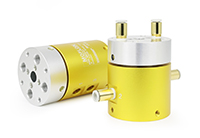
When it comes to industrial machinery, rotary joints are often the unsung heroes keeping operations smooth and leak-free. China has emerged as a global powerhouse in manufacturing these critical components, but not all rotary joints are created equal. If you're seeking a balance of top-tier performance and rock-solid reliability, understanding what sets the best apart is essential. In this guide, we’ll explore key factors that define excellence in China-made rotary joints, with insights from MOFLON, a trusted name pushing the boundaries of engineering innovation. Get ready to discover what truly makes a rotary joint perform under pressure.
Why Material Science Defines Rotary Joint Longevity
The longevity of a rotary joint hinges on the materials that make up its critical sealing surfaces and structural components. For example, the combination of a carbon graphite ring running against a tungsten carbide or silicon carbide face provides a self-lubricating, low-wear interface that can endure millions of rotations without significant degradation. Without careful material pairing, premature galling or excessive seal wear would drastically shorten service life.
Corrosion resistance is equally vital, as rotary joints often transfer aggressive media—from superheated water to chemical solvents. Stainless steels such as 316L or duplex grades ward off pitting and crevice corrosion, while engineered ceramics and specialized polymers resist acid attack. Choosing a material that cannot withstand the process fluid leads to seal face etching, loss of flatness, and eventual leakage.
Thermal and mechanical stability further define how long a rotary joint performs reliably. Materials must maintain dimensional integrity across wide temperature swings and pressure spikes; mismatched thermal expansion coefficients can cause seal faces to separate or warp, breaking the fluid-tight film. High-strength alloys and reinforced composites thus ensure the joint tolerates thermal cycling and sustained mechanical loads without failing.
The Hidden Engineering Behind Leak-Free Operation
At first glance, a sealed container seems straightforward—just clamp two surfaces together. But preventing even microscopic leaks requires a deep understanding of material behavior under pressure changes, temperature swings, and constant vibration. The real magic lies in how engineers design connections that stay tight despite these relentless forces, often using methods invisible from the outside.
One often-overlooked technique is the strategic use of elastic deformation. Gaskets and seals aren't simply squashed flat; they're compressed just enough to flow into surface imperfections while maintaining a residual spring-back force that counteracts bolt relaxation over time. This delicate balance, calculated to a specific compression percentage, means the joint actually becomes stronger as it settles—a counterintuitive result of precise mechanical design rather than brute tightening.
Beyond static seals, dynamic systems like pump shafts or hydraulic cylinders face an even tougher challenge. Here, a micro-thin fluid film is deliberately created and controlled, acting as both lubricant and barrier. This hydrodynamic sealing principle transforms potential leakage paths into a carefully managed flow that recirculates back into the system. It's a silent dance between pressure differentials and surface finishes, refined over decades so seamlessly that we never notice it working.
Pressure Spikes and Temperature Swings: Designing for Real Conditions
In the trenches of industrial operations, pressure spikes and temperature swings aren't anomalies—they're everyday realities. A fluid system might be idle at 20°C one hour, then hammered with a 150°C shock the next, while pressure surges ripple through lines like unseen punches. These extremes don't just stress components; they expose flaws that lab tests overlook, from micro-cracks in seals to sudden fatigue fractures. Successful design means accepting that steady-state assumptions are fragile fiction, and building in margins that absorb chaos without complaint.
The key lies in material selection and intelligent geometry. A seal that performs flawlessly under steady pressure can extrude or blow out when a spike hits, so choosing compounds with high resilience and low compression set becomes non-negotiable. Likewise, designing flow paths that dampen water hammer, or integrating expansion loops to accommodate thermal growth, can mean the difference between a system that lasts decades and one that fails catastrophically in weeks. It's not about over-engineering everything—it's about identifying the brutal truth of the load spectrum and letting that dictate the shape of the solution.
Validation isn't complete until the prototype faces the real world. Accelerated life testing with deliberately savage cycles—rapid temperature shifts from -40°C to 180°C, pressure spikes to 150% of rated load—reveals where the weak points truly lie. Field data often teaches humility: a seemingly robust housing might crack after three months of morning frost followed by afternoon scorch. The best designs emerge from a feedback loop where simulation meets reality, and every failure is a lesson etched into the next iteration.
Rotation Speed vs. Seal Wear: Finding the Sweet Spot
Every rotating shaft relies on its seal to keep lubricant in and contaminants out, but the speed of rotation directly shapes how long that seal lasts. At first glance, pushing RPMs higher might seem harmless, yet the friction at the sealing lip accelerates wear exponentially once a critical threshold is crossed. What often gets overlooked is that slower speeds aren't always forgiving either—insufficient rotation can fail to generate the hydrodynamic film that keeps the lip from grinding against the shaft.
The sweet spot sits between these extremes, balancing centrifugal forces with lubricant viscosity to maintain a stable film without dragging excess debris into the contact zone. Field data from pump and gearbox rebuilds shows that seals in systems humming at 1,200 to 1,800 RPM consistently outlast those pushed beyond 2,500, all while dodging the dry-start issues plaguing low-speed operations. A smooth, polished shaft surface and the right elastomer compound can widen this optimal range, but ignoring the speed-to-wear relationship still shortens service life.
Finding the ideal rotation rate for a given seal arrangement demands more than a rule of thumb—it calls for monitoring temperature rise at the lip and analyzing wear particles. Operators who fine-tune speed based on actual seal performance, rather than default equipment settings, routinely cut maintenance costs. In the end, matching rotation speed to the seal’s design limits transforms a recurring headache into a predictable, controllable variable.
Installation Mistakes That Sabotage Performance
Even the most sophisticated equipment becomes ineffective when installed incorrectly. A common oversight is neglecting proper alignment, which forces components to work against each other rather than in harmony. Imagine a perfectly balanced fan blade mounted slightly off-axis: the resulting wobble not only wastes energy but also accelerates wear on bearings and joints. Similarly, insufficient clearance around heat-generating parts can trap warmth, causing thermal throttling that silently cripples output. These aren't theoretical risks—they're the everyday reality behind countless underperforming systems.
Another subtle but devastating mistake is ignoring environmental factors right from the start. Placing sensitive hardware near vibration sources, like heavy machinery or even foot traffic, introduces micro-oscillations that degrade precision over time. Moisture intrusion, often overlooked during rushed installations, corrodes connections and invites erratic behavior that's hard to trace later. It's not just about following the manual; it's about reading the space where the equipment lives and adapting accordingly.
Perhaps the most frustrating errors stem from overlooked basics: loose fasteners, kinked cables, or using the wrong type of lubricant. These might seem minor, but they compound into major failures. A slightly loose terminal connection, for instance, creates resistance that generates heat, which expands the metal and loosens the connection further—a self-reinforcing cycle that ends in meltdown. The fix is usually simple, but only if you catch it before the damage is done. Regular post-installation checks, with a critical eye and the right tools, can catch these hidden time bombs before they sabotage your investment.
When to Repair vs. Replace: A Data-Driven Approach
Deciding whether to fix a piece of equipment or swap it out entirely can be a real head-scratcher. Gut feelings and old habits often lead to wasted money or premature replacements. That’s where a data-driven mindset changes the game. By tracking actual performance metrics—like repair frequency, downtime costs, and energy efficiency over time—you can map out the true total cost of keeping an asset alive versus starting fresh. Numbers don’t lie, and they often reveal that a machine you thought was a lost cause still has profitable years left, or that a seemingly minor issue is actually a money pit in disguise.
One practical approach is to set clear thresholds based on historical data. For instance, if repair costs exceed 50% of a new unit’s price within a single year, it’s probably time to cut ties. But context matters: a specialized piece with a long lead time might warrant more generous repair budgets. Data also helps you spot patterns—like a recurring failure that eats up maintenance hours every few months. Without hard numbers, these patterns get lost in the noise. When you calculate the cumulative impact of lost production and labor, “just one more fix” suddenly looks less appealing.
Ultimately, the sweet spot between repair and replace comes down to analyzing your own operational data, not industry averages or gut instincts. Build a simple model that weighs repair costs, expected remaining life, and replacement costs—both financial and operational. Regularly refresh it with real data from your logs. This turns a stressful guess into a confident, evidence-based call. Plus, it gives you a clear story to tell stakeholders when they ask why you’re replacing something that “still works.” Because sometimes, the most economical machine is the one you’ve already replaced.
FAQ
Rotary joints, often called swivel joints or rotating unions, are precision components that transfer fluids—like water, oil, or air—from a stationary pipe into rotating equipment. They’re essential because they maintain a leak-free connection under constant rotation, which keeps production lines moving without interruptions in industries like manufacturing, packaging, or metal cutting.
Many Chinese manufacturers now use advanced CNC machining, high-grade sealing materials, and rigorous testing to match or exceed global standards. The result is joints that handle high speeds and pressures with minimal friction and wear, offering a compelling mix of efficiency and long service life at a competitive price point.
Focus on seal technology and material quality. Joints with hardened ceramic or tungsten carbide seals, robust bearing designs, and certifications like ISO 9001 are a good bet. Also, check whether the supplier provides detailed performance data and real-world case studies—not just sales brochures—to back up their claims.
In continuous steel casting, a rotary joint feeds cooling water into the rolls. A reliable joint prevents sudden downtime and cools evenly, reducing surface defects. This directly impacts yield and product quality, which is why mills invest heavily in top-tier units that won’t fail under thermal stress.
Maintenance isn’t overly complex if you pick a well-designed joint. Regardless of origin, look for features like easy seal replacement without disassembling the whole unit and clear service manuals. Many Chinese suppliers now offer modular designs that simplify upkeep, and they often provide remote technical support to guide your team.
Start by nailing down all parameters: media type, pressure, temperature, speed, and mounting orientation. Then, don’t just shop by price—request a seal compatibility chart and check if the supplier has experience in your specific field. A cheap joint that fails early will cost far more in lost production than any initial saving.
Yes, smart monitoring is gaining traction. Some manufacturers now integrate sensors that track vibration, temperature, and leakage in real time, feeding data to a central system. This helps predict failures before they happen and schedule maintenance proactively, pushing overall equipment effectiveness to new levels.
Conclusion
When you break down what makes a rotary joint truly reliable in demanding Chinese industrial environments, it always comes back to the materials. Chinese manufacturers have learned that longevity isn’t just about choosing the hardest metals or the most exotic ceramics—it’s about pairing seal faces and bearing steels that can handle aggressive media and thermal cycling without galling or cracking. A joint that thrives in a clean paper mill will disintegrate in a steel caster unless the metallurgy and polymer science behind the seals are dialed in for that exact cocktail of heat, pressure, and fluid chemistry. The real art is in the hidden engineering that keeps joints leak‑free, where precise lapping, balanced spring loading, and micro‑groove geometries work together so that a thin hydrodynamic film stays intact even as pipe strain or vibration tries to break it.
Field conditions rarely match the lab, which is why good designs absorb pressure spikes and rapid temperature swings without popping face contact. Chinese joint builders increasingly optimize rotation speed against seal wear, aiming for a sweet spot where the face runs cool enough to avoid blistering yet fast enough to prevent stick‑slip. Even the best joint will fail early if it’s misaligned at the mounting flange, plumbed with rigid piping that hammers under pressure, or starved of clean lubricant—mistakes that show up in maintenance logs over and over. When a joint finally degrades, the decision to repair or replace comes down to data: tracking wear curves, leak rates, and downtime costs often reveals that a timely rebuild with upgraded seals costs far less than running to catastrophic failure. That data‑driven mindset, combined with robust local manufacturing and shorter supply chains, is what puts Chinese rotary joints on par with anyone’s in performance and reliability.
Contact Us
Contact Person: Xiangpin Li
Email: [email protected]
Tel/WhatsApp: 86 186 1706 8578
Website: https://www.moflon.com