

China Reach Truck Features That Boost Warehouse Productivity
2026-09-12
When every pallet move is measured in seconds, the difference between a good shift and a great one often comes down to reach truck design. China-built reach trucks have quietly raised the bar, packing features that cut cycle times and reduce operator fatigue. Leading the charge is HANGCHA, whose latest models combine precision hydraulics, intuitive controls, and smart energy management. Here’s a look at the specific capabilities that turn narrow-aisle handling into a productivity driver.
Tight-Turn Steering Geometry Built for Dense Warehouse Aisles
Navigating a dense warehouse isn't about brute force—it's about how sharply your equipment can turn without losing stability or speed. Our tight-turn steering geometry reworks the front axle and wheel cut angles so the inside wheel tracks a dramatically tighter arc. That means a full turn happens in roughly half the space of a standard setup, letting operators thread through racks spaced just inches wider than the chassis.
The real payoff shows up in aisle planning. Because the equipment can pivot within its own footprint, you can reclaim storage rows that were previously sacrificed to wide turning lanes. Forklifts and order pickers move in and out of slots with fewer back-and-forth corrections, which reduces tire scrub, cuts cycle times, and lowers the chance of clipping rack uprights during high-volume shifts.
We tuned the steering response to stay predictable at low creep speeds where precise positioning matters most. There's no wandering or delayed feedback—just a direct, controlled pivot that keeps the load stable and the operator confident when maneuvering alongside tightly packed pallets.
High-Visibility Mast Channels That Remove the Blind Spot at Height
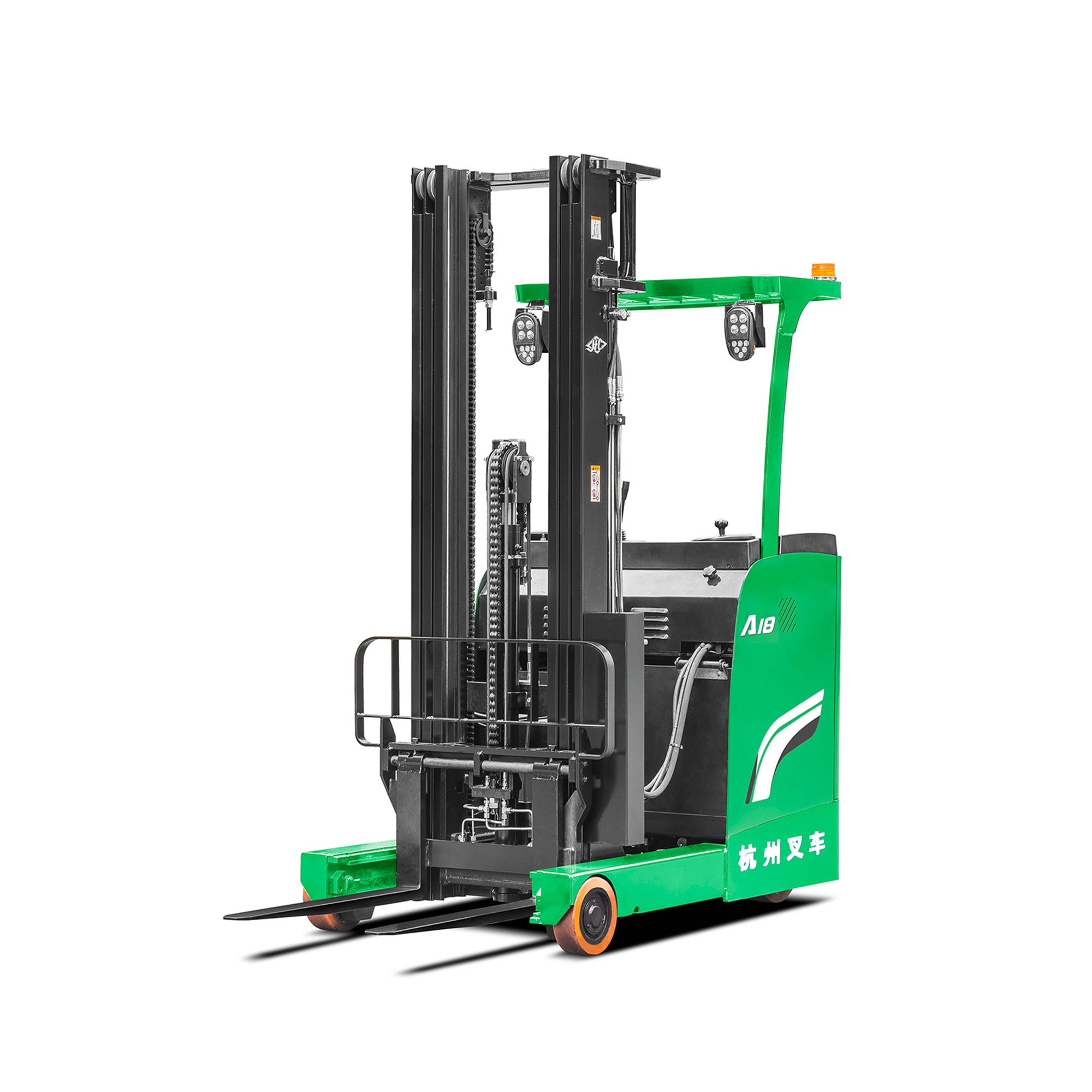
Working at height comes with a persistent blind spot: the mast itself. Traditional channel designs leave operators guessing about the exact position of the carriage, guides, or cable slack once the platform climbs beyond direct line of sight. High-visibility mast channels solve this by integrating high-contrast marking strips, reflective bands, or embedded LED indicators directly into the channel profile. These visual cues stay readable even against bright sky or cluttered industrial backdrops, giving ground crews and operators a reliable reference point without relying on cameras or remote sensors.
The real difference is in how the channel communicates during movement. Instead of a uniform grey or galvanized finish, these channels use alternating color segments that visually break the vertical run into measurable increments. When the load shifts or the mast extends, the eye can track the passing marks instantly, catching drift, hesitation, or uneven travel before it becomes a safety issue. This passive feedback works in any lighting condition, requires no power, and never lags behind the actual mechanical state of the lift.
For retrofit or new installations, the high-visibility channel becomes a permanent safety layer rather than an add-on. Operators stop craning their necks or walking around the base to guess alignment. The channel itself turns into a readable instrument, eliminating the height blind spot at the source. That shift from guesswork to direct visual confirmation changes how quickly teams can react—and how confidently they can work with the mast fully extended.
Regenerative Lowering That Returns Energy on Every Drop
Most suspension systems treat downward motion as waste—heat, friction, noise. This design flips that assumption. Every compression stroke feeds a compact recovery circuit that captures kinetic energy and converts it into usable electrical charge. The result isn't just smoother travel; it's a system that actively pays back what the terrain takes away.
The magic sits in the damping path itself. Instead of a fixed valve stack burning off energy, a set of micro-generators and a rectifying drive engage only on the compression phase. Rebound stays tuned for control, while the compression side harvests. On a long descent or rough fire road, the recovered charge trickles into a buffer that can power lights, sensors, or even a small onboard compressor.
What makes it feel different isn't the spec sheet—it's the subtle lack of harshness at the bottom of the stroke. Because energy is being pulled out as electricity rather than pushed into heat, the fork or shock runs cooler, fades less, and maintains consistent damping lap after lap. You notice it most when you stop checking the setup and just trust the front end to keep its composure.
Ergonomic Operator Compartment With Adjustable Everything
Step into the operator compartment and you'll notice it immediately—every contact point moves to match you, not the other way around. The seat slides fore and aft, tilts, and even adjusts lumbar support with a simple twist. Armrests follow your reach, and the steering column telescopes and tilts so your hands fall naturally on the wheel. Foot pedals sit on a sliding track too, letting shorter or taller operators find a comfortable bend in the knee without stretching or cramping.
But it goes beyond the seat and wheel. The entire console angle shifts, the display screen pivots on a dual-axis mount, and even the cup holder slides left or right depending on your dominant hand. Climate vents rotate a full 360 degrees, so air hits your face in summer or your feet in winter without blasting the wrong spot. There's no single “correct” posture here—just quick levers and knobs that let you fine-tune the space in under thirty seconds.
For long shifts, this adjustability means less fatigue and fewer repetitive-strain complaints. A 5'2" operator doesn't have to perch on the edge of the seat to reach the pedals, and a 6'4" operator can drop the seat low enough to keep knees below hip level. Because everything moves, the compartment feels less like a fixed cockpit and more like a tailored workstation—one that bends around the person inside it, shift after shift.
Lithium-Ion Ready Design That Ends Battery Watering Chores
If you've ever spent a weekend afternoon topping off flooded lead-acid cells with distilled water, you know it's messy, tedious, and easy to forget. This design sidesteps that routine entirely. The system is built around lithium-ion chemistry from the ground up, so there are no caps to open, no electrolyte levels to monitor, and no corrosive residue creeping across the terminals. Once installed, the battery simply does its job while you focus on everything else.
The shift isn't just about skipping a chore; it changes how the battery behaves under real-world loads. Lithium-ion cells accept charge faster, hold voltage steadier during discharge, and won't sulfate if left partially full. That means fewer surprise dead mornings and less anxiety about short trips or seasonal downtime. You can park it, forget it, and expect it to start when you come back.
For anyone moving away from traditional flooded batteries, the transition feels less like an upgrade and more like a different category of ownership. No watering kits, no hydrometers, no acid stains on the garage floor. Just a sealed unit that takes care of itself while delivering consistent power, cycle after cycle.
Telematics Hookups That Let You Track Fleet Health Remotely
Plugging a telematics module into a truck’s OBD-II or J1939 port gives you direct access to fault codes, coolant temperature, battery voltage, and fuel burn without ever lifting the hood. Most units latch onto the diagnostic connector in under ten minutes and start streaming data through a mobile app or web dashboard. That means a worn alternator or a misfiring cylinder shows up as an alert, not as a roadside breakdown.
The real payoff shows up when you watch trends over time—idle ratios creeping up, oil life dropping faster than expected, or one vehicle in the fleet repeatedly throwing the same emissions code. You can schedule maintenance around actual conditions instead of fixed intervals. A driver in another state might not notice a subtle loss of tire pressure, but the telematics hookup pings you before it becomes a blowout risk.
Installation doesn’t require cutting into factory wiring. Most aftermarket kits plug directly into the diagnostic port and tuck away under the dash, drawing power from the vehicle itself. Some add GPS tracking, accelerometer data for harsh braking, and even remote starter disable for security. Choose a unit that works with your mix of light-duty pickups and heavy trucks, since a J1939 connector on a Class 8 tractor isn’t the same as an OBD-II port on a cargo van.
FAQ
Many models are built with compact chassis and tight turning radii, so operators can maneuver through aisles under 2.8 meters without sacrificing lift capacity.
Lithium iron phosphate packs have become standard on newer units. They charge faster, hold voltage longer, and eliminate the acid-watering routine that eats into shift time.
Yes, several Chinese manufacturers offer cold-store variants with heated cabins, sealed connectors, and low-temperature hydraulic oil. They keep moving at -20°C without derating the motor.
Look for regenerative braking, adjustable mast tilt, camera-assisted fork views, and programmable travel speeds. These reduce operator fatigue and speed up put-away and retrieval cycles.
Most major factories sell through regional distributors with local parts stock. Common wear items like rollers, hoses, and controllers usually ship within a few days, not weeks.
High-mast versions reach 10 meters or more, which lets facilities expand upward instead of outward. That increases pallet positions per square meter without adding floor space.
The controls are designed around familiar ISO patterns, so certified operators typically adapt in one shift. Many distributors include on-site orientation and load-handling refreshers.
Conclusion
Warehouse managers across China are finding that the latest reach trucks pack precise steering geometry, letting operators swing through narrow aisles without losing momentum. Combined with mast channels engineered for clear sightlines even at maximum lift height, these machines remove the guesswork from high-level pallet placement. A practical bonus comes from regenerative lowering, which captures energy on every fork descent and feeds it back into the battery, trimming power costs during long shifts.
Inside the cab, the operator compartment is built around adjustability—seat, armrest, and controls move to fit different body sizes, cutting fatigue and picking errors. The shift to lithium-ion ready architecture means no more topping up water or dealing with acid spills; batteries charge faster and hold steady voltage through the day. Fleet managers also gain from built-in telematics ports that stream real-time health data, so maintenance gets scheduled before a breakdown slows the warehouse floor.
Contact Us
Contact Person: Liuxue
Email: [email protected]
Tel/WhatsApp: +86-19084200370
Website: https://www.hf-ec.com/