
China Mining Air Compressor Technologies Driving Safer Underground Operations
2026-10-21
Underground mining has always pushed machinery to its limits, but a new wave of air compressor technology from China is rewriting the safety playbook. Seize Air is among the manufacturers driving this shift, with systems designed to handle extreme conditions while reducing risks like overheating and pressure failures. Here’s a closer look at the innovations making underground operations safer and what they mean for mine operators.
Real-Time Airflow Monitoring Prevents Hazardous Gas Buildup
Real-time airflow monitoring works by continuously tracking the movement and volume of air through enclosed or semi-enclosed spaces. When airflow drops below a critical threshold, hazardous gases such as methane, carbon monoxide, or volatile organic compounds can start to accumulate. By catching these changes instantly, facilities can respond before concentrations reach dangerous levels.
In practice, this approach relies on distributed sensors placed near potential leak points or ventilation outlets. These sensors feed data to a central system that compares current readings against baseline profiles. For example, in underground mining or chemical storage, a sudden reduction in airflow might signal a blocked vent or failing fan. Operators receive alerts immediately, allowing them to adjust ventilation or shut down equipment before gas levels rise.
The key advantage is prevention rather than reaction. Instead of waiting for gas detectors to sound an alarm after buildup has already occurred, airflow monitoring stops the buildup from happening in the first place. This reduces exposure risks, lowers the chance of explosions, and helps maintain compliance with safety regulations in a more proactive, less disruptive way.
Explosion-Proof Compressor Designs Built for Gassy Mine Environments
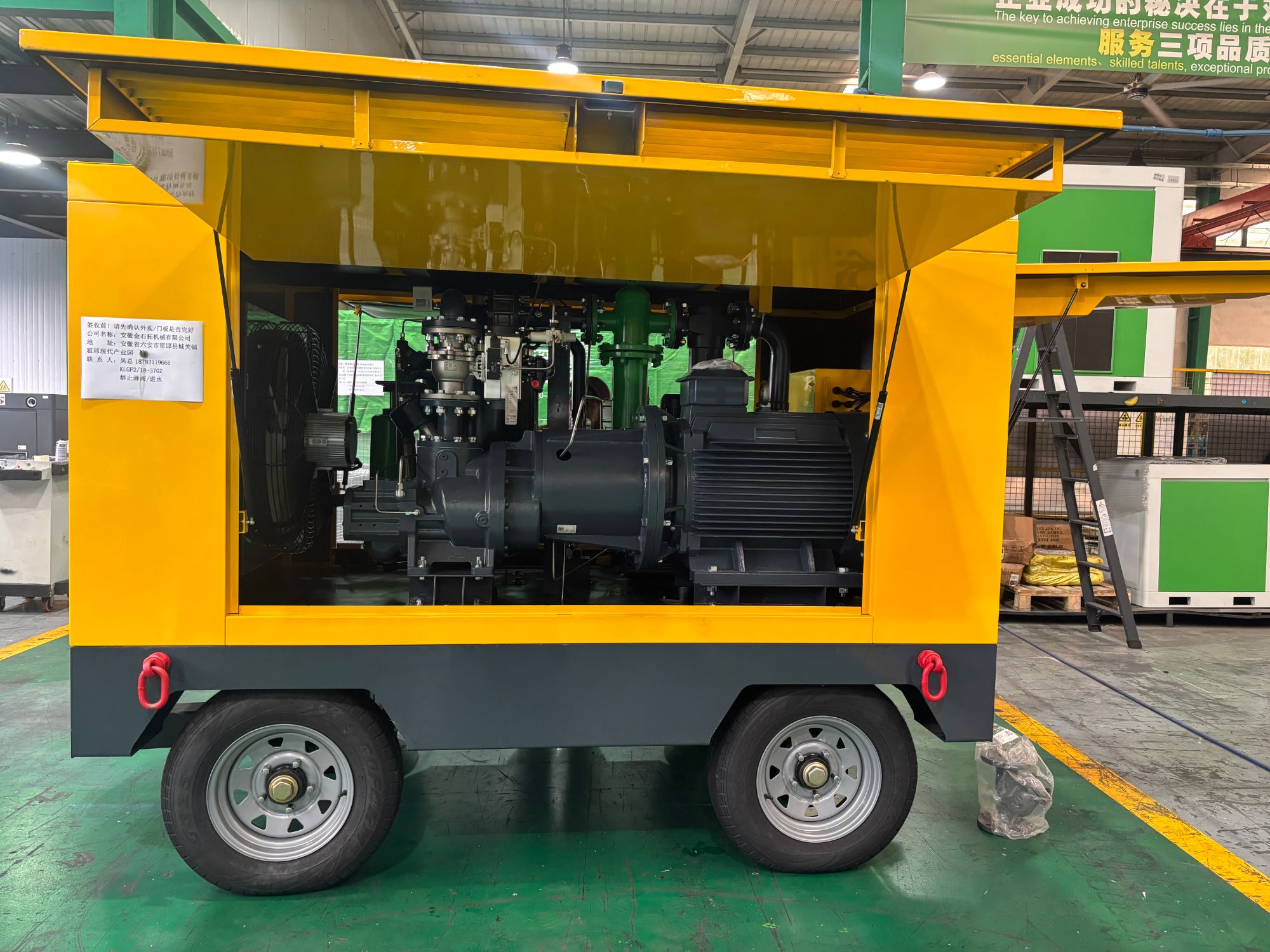
In underground coal mines, methane and coal dust can turn a routine compression task into a flash fire. The compressors that survive here are not simply standard machines with heavier housings; their entire architecture is rethought around ignition prevention. Flameproof enclosures with carefully machined flange gaps force any internal explosion to cool below the ignition temperature of the surrounding atmosphere before it can escape. That gap tolerance is often kept within a few tenths of a millimeter, which demands precision casting and assembly far beyond general industrial practice.
Beyond the enclosure, every surface that could generate friction or static is addressed. Non-sparking materials such as bronze alloys or stainless steel replace conventional steel on rotating and sliding parts. Shaft seals use double mechanical barriers with buffer gas, so methane cannot migrate into bearing housings. Cooling systems are designed with low surface temperatures in mind—oil jackets and water-cooled cylinders keep hot spots below the autoignition threshold even when the compressor runs at full load for an entire shift.
The control and monitoring package is also tailored for gassy conditions. Intrinsically safe sensors monitor vibration, temperature, and pressure without carrying enough energy to ignite an atmosphere. Automatic shutdown logic reacts to rising methane levels or abnormal bearing heat before a small fault becomes an ignition source. These machines are typically certified to standards like ATEX or MSHA, but the real test is years of continuous service in longwall and room-and-pillar operations where a single spark is unacceptable.
Smart Pressure Controls Reduce Equipment Failures Underground
Pressure spikes and water hammer are common culprits behind cracked pump housings and leaking seals in underground operations. Mechanical relief valves often open too late or cycle erratically, letting damaging transients reach sensitive equipment. Smart pressure controls close that gap by sampling line pressure hundreds of times per second and adjusting variable-speed drives or control valves before a spike can build.
Beyond fast reaction, these controllers build a baseline of normal pressure behavior for each pump, valve, and pipe segment. When patterns shift—say, a slight oscillation at a specific frequency—the system eases flow or alters setpoints to avoid cavitation and harmonic wear. Technicians get alerts that point to the likely failing component, not just a generic high-pressure alarm.
One underground mine in Nevada retrofitted three booster stations with smart pressure units and saw valve replacement drop by forty percent over eight months. The system also held discharge pressure to the minimum required for adequate flow, cutting energy use by roughly eleven percent without reducing delivered water volume. Failures became less frequent and easier to predict.
Remote Operations Move Workers Away from Danger Zones
Mining crews in Western Australia now sit in air-conditioned control rooms hundreds of kilometers from the pit, guiding autonomous haul trucks with a joystick and three monitors. The shift began quietly when a haul truck hit a light vehicle in 2018, prompting one operator to pull every worker out of the blast radius and run the dig from a converted shipping container. Today, that container has become a control center where a single supervisor can oversee twelve trucks at once, and the closest human to an active bench is a survey drone.
The real change isn't the technology, it's the removal of lunchbox-level risk. Underground miners used to spend entire shifts within earshot of unsupported roof sections; now they operate longwall systems from a surface trailer, watching camera feeds and seismic monitors that warn of pressure buildups before rock falls. A coal operation in Queensland cut reportable injuries by sixty percent in one year after moving continuous miners to remote stations, not because the machines got safer, but because people stopped being in the wrong spot at the wrong time.
There's a quiet shift in how safety metrics are counted. Instead of measuring how quickly a worker can escape a hazard, companies now measure how far the worker is from the hazard at any given moment. That distance grows with every leak detector, drone, or teleoperated dozer. It's not about making danger zones safer to enter—it's about making the decision to enter them optional.
Energy Recovery Systems Lower Heat and Improve Ventilation
A well-designed energy recovery unit works almost invisibly between the exhaust and supply airstreams. Rather than letting conditioned air leave the building with its heat or coolness intact, it pulls that thermal energy across a heat exchanger and gives it to the incoming outdoor air. On a cold morning, the fresh air might arrive at 55°F instead of 20°F, so the furnace has far less to do. In humid summer months, some systems also transfer moisture, keeping the indoor climate stable without overworking the compressor.
This approach sidesteps the usual conflict between fresh air and energy bills. Buildings need ventilation to flush out CO₂, odors, and chemical off-gassing, but opening dampers often means paying to heat or cool a stream of outdoor air. Energy recovery changes that by pre-treating the air before it reaches the main HVAC equipment. The drop in load shows up as shorter runtimes, lower peak demand, and a less stressed system overall. It's one of the few retrofits that improves both air quality and operating cost at the same time.
Predictive Maintenance Flags Compressor Issues Before They Escalate
Compressors often run in the background until a failure forces attention. Predictive maintenance changes that by monitoring vibration, temperature, pressure, and lubricant condition continuously. When a bearing starts to wear or a valve leaks slightly, the system detects the deviation from normal operating patterns long before it crosses an alarm threshold. Maintenance teams receive a notification that something is shifting, even if the machine still appears to be functioning normally.
These early flags give plant personnel room to plan. Instead of reacting to a sudden breakdown on a weekend shift, they can schedule a repair during a planned outage, order the right parts ahead of time, and assign the technician who knows the machine best. The goal is not just to prevent a compressor from stopping, but to avoid the collateral damage that often follows, such as moisture entering downstream lines or process temperatures drifting out of spec.
A well-tuned predictive system also learns the unique behavior of each compressor. It accounts for normal load swings, seasonal temperature changes, and routine cycling, so a flag represents a real anomaly rather than a routine fluctuation. When an alert does appear, it typically includes diagnostic clues, such as a growing imbalance in a specific bearing or a slow decay in discharge pressure, which helps the team focus their inspection and resolve the issue before it spreads.
FAQ
Real-time vibration and temperature monitoring paired with automatic shutdown algorithms has become standard. Explosion-proof motor casings and spark-resistant materials address methane risks directly, while adaptive pressure control keeps pneumatic tools running without pressure spikes that could damage equipment or injure workers.
They use intrinsically safe circuit designs and flameproof enclosures that isolate any potential ignition source. Several models also integrate with the mine's gas detection network, automatically reducing load or cutting power if methane concentrations approach dangerous thresholds.
A steady, uninterrupted compressed air supply supports critical functions like ventilation doors, refuge chambers, and rescue tools. Remote diagnostic capabilities allow technicians to identify faults before entering hazardous zones, which cuts down on unnecessary exposure.
Yes, several domestic producers have moved beyond copying imported designs. They now develop compressors tailored to high-humidity, high-dust underground environments, often with modular components that can be swapped out without taking the entire unit offline.
IoT sensors track pressure, oil quality, and bearing wear in real time. Predictive maintenance algorithms flag anomalies weeks before a failure, and some mines use digital twin simulations to test how the compressor will behave under different emergency scenarios.
Beyond normal operations, the compressors can feed breathable air lines to refuge stations and power pneumatic lifting bags for collapsed areas. Backup power connections and low-pressure safety modes ensure they keep running even during partial power loss.
The focus is on surviving harsh geological conditions like high temperatures and corrosive water seepage. Rather than chasing maximum output, engineers prioritize reliability under sudden load changes and ease of repair by local crews with limited specialized tools.
Conclusion
Underground mining in China has long wrestled with the twin threats of volatile gas pockets and equipment breakdowns in cramped, poorly ventilated spaces. Recent advances in air compressor technology are reshaping how operators tackle these hazards head-on. Real-time airflow monitoring now feeds live data from sensors directly into compressor control loops, automatically adjusting output to prevent methane or carbon monoxide from reaching explosive thresholds. Paired with explosion-proof housings and spark-resistant materials, these machines can run safely even in gassy seams where a single ignition source once spelled disaster. Smart pressure regulation further reduces strain on hoses, valves, and pneumatic tools, cutting the unexpected failures that force crews to work in unstable conditions. The result is fewer emergency stops and a steadier, safer rhythm of work far below the surface.
Equally transformative is the shift toward keeping people away from the most dangerous zones. Remote operation interfaces allow compressors and their auxiliary systems to be monitored and adjusted from surface control rooms or safe underground stations, so workers no longer need to stand beside a vibrating unit in a high-risk heading. Energy recovery systems capture waste heat from compression and redirect it to improve ventilation airflow, lowering ambient temperatures and thinning out stale air that contributes to fatigue and accidents. Behind the scenes, predictive maintenance algorithms analyze pressure, temperature, and vibration trends to flag worn bearings or failing seals days before a breakdown, enabling planned interventions instead of frantic repairs in a hazardous environment. Together, these China-driven innovations are not just boosting productivity—they are fundamentally redefining what it means to work safely underground.
Contact Us
Contact Person: Mia
Email: [email protected]
Tel/WhatsApp: +86 19821985894
Website: https://www.seize-air.com