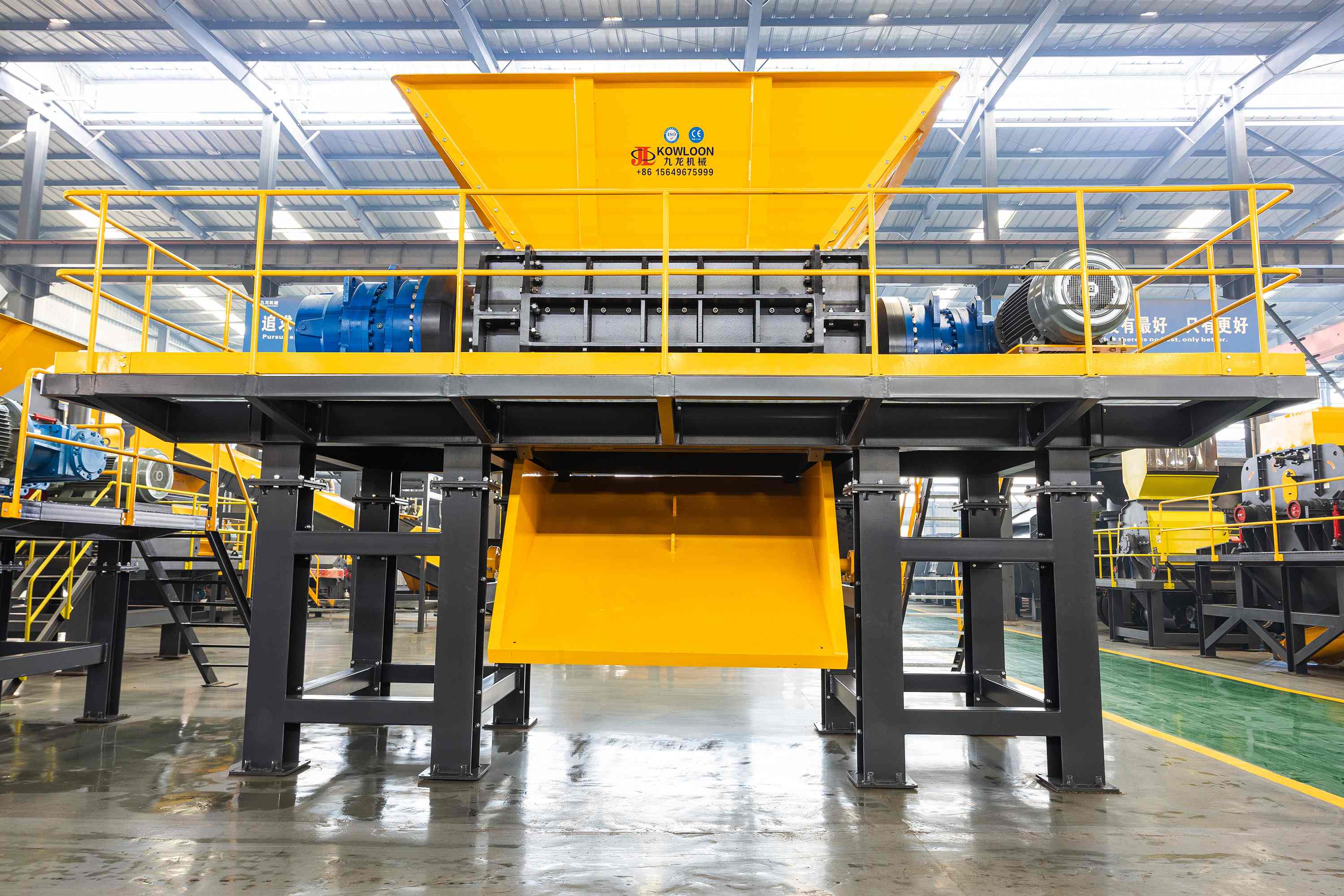

China Double Shaft Shredder: Key Features and Buying Tips
2026-10-06
When shopping for a double shaft shredder, most buyers focus solely on horsepower and blade count—but that's like judging a car by its paint job. China has become the global hub for these machines, yet quality varies wildly between factories. Whether you're processing e-waste, tires, or industrial plastics, understanding the real key features (from rotor design to drive system) can save you thousands in downtime. And if you're tired of vague promises, Kowloon Machinery stands out by engineering shredders that actually survive the toughest jobs. In this guide, we'll break down what matters—and what to avoid—so you can buy with confidence.
Where Chinese Double Shaft Shredders Genuinely Beat the Competition
Walk through any modern recycling plant in Southeast Asia or Eastern Europe and you'll notice a shift that rarely makes it into trade headlines: the new double shaft shredders humming on the floor are just as likely to have a Shenzhen or Changzhou nameplate as a German or Italian one. The real story isn't just lower purchase prices—it's the total cost of ownership over five years. Chinese manufacturers have quietly mastered the art of building shredders with replaceable, hardened blade inserts and modular drive systems that can be swapped in under an hour. That means a plant in Vietnam can keep a production line running with a $200 spare part kit instead of waiting three weeks for a European OEM technician and a $4,000 service call. In heavy-duty waste processing, uptime is the only metric that pays the bills, and this is where Chinese engineering has closed the gap dramatically.
Another edge comes from how these machines handle mixed, contaminated feedstocks. European designs often assume relatively clean, sorted input—a luxury many fast-growing markets simply don't have. Chinese double shaft shredders, by contrast, are built from the ground up for brutal, unpredictable loads: tangled metal strapping, wet organic waste, construction debris, even the occasional engine block. The gearboxes are oversized, the shafts are forged rather than cast, and the control systems use aggressive auto-reversing logic that prevents jams without delicate sensors. Operators in India, Nigeria, or Brazil routinely mention that a Chinese shredder will chew through material that would stall a premium European unit running on the same power rating. That robustness isn't accidental—it reflects decades of domestic demand from China's own massive waste processing sector, where downtime for fine-tuning simply isn't tolerated.
Finally, the responsiveness of Chinese suppliers creates a genuine competitive advantage. Need a custom hopper opening to fit an existing conveyor? Want the control panel in Spanish with local voltage ratings? A Chinese manufacturer will typically turn around a design revision in days, not months, and often include the modification at little or no extra cost for a first order. This agility extends to spare parts as well: because so many Chinese shredder models share standardized components across factories, a replacement blade or seal can be sourced from multiple vendors online and shipped by air in under a week. Western competitors still lead in ultra-precise, high-speed applications, but for the vast middle of the market—processing 5 to 30 tons per hour of tough, dirty waste—Chinese double shaft shredders aren't just cheaper, they're frequently the more reliable and practical choice.
The Blade and Bearing Choices That Decide Whether You Get 5 or 15 Years
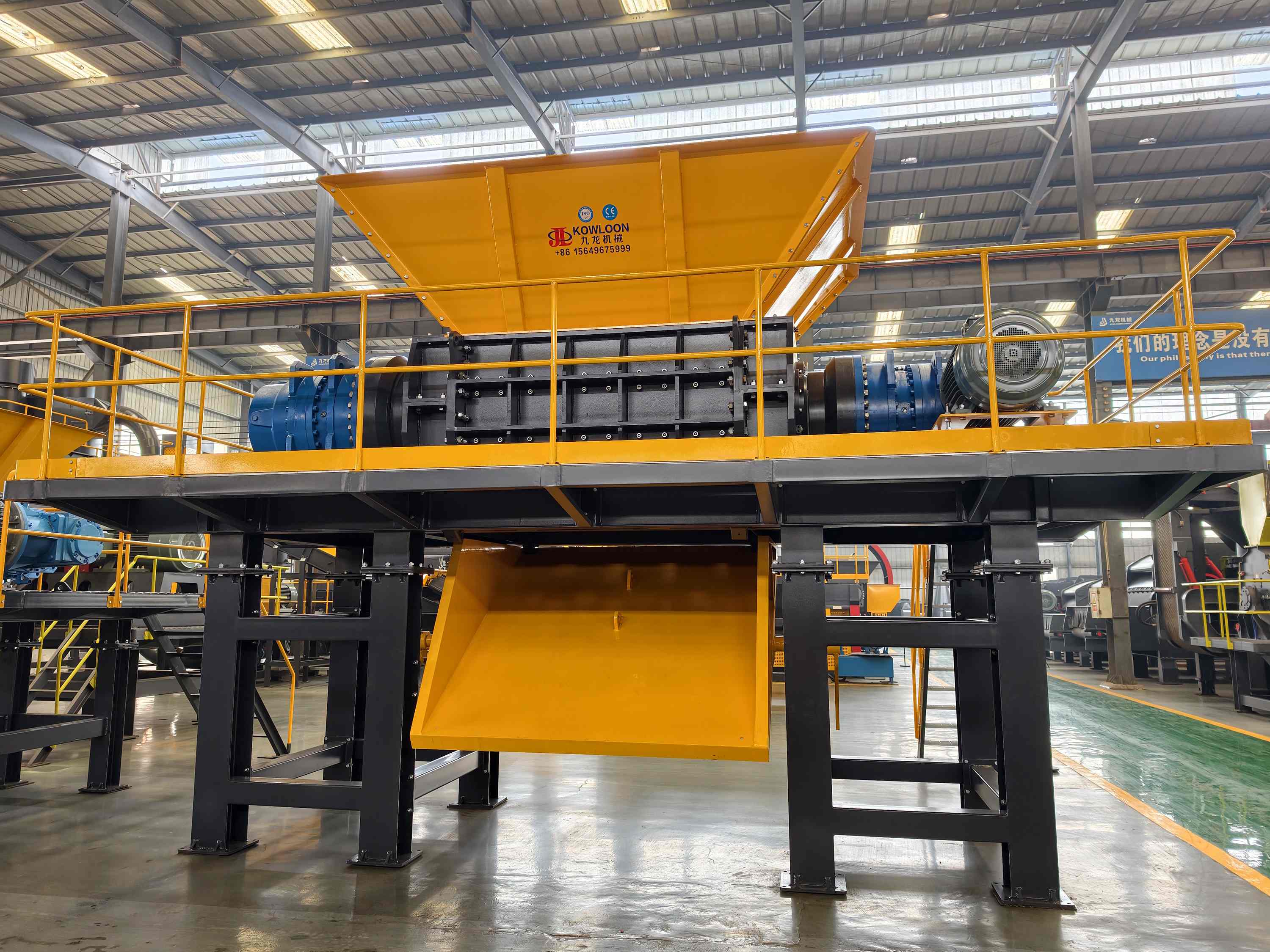
Here's the thing about blades and bearings: they don't fail loudly, they fail slowly. A blade that's a few grams off balance feels fine on day one, but every rotation nudges the shaft just enough to wear a tiny groove in the bearing. Over a few summers that groove becomes a wobble, and the wobble becomes a hum that drives you crazy at night.
Bearings split the five-year and fifteen-year camps more than any other part. A double-shielded ball bearing with a proper grease fill will shrug off that minor imbalance for years. A sintered bronze bushing won't. It relies on a thin oil film that breaks down, then the metal touches metal and the whole assembly starts to eat itself. If you want the quiet kind of old age, matched blade weights and a sealed bearing matter more than a fancy remote.
Why Your Waste Stream Should Dictate the Specs, Not the Sales Brochure
A glossy cut sheet might promise throughput in tons per hour, but those numbers mean little if they were calculated using clean, homogenous material that never touches your loading dock. Start by pulling a representative sample from the actual waste stream—run it through a sieve analysis, check bulk density, note moisture content, and identify the most abrasive or stringy components. That data set, not the manufacturer’s idealized test run, should anchor every sizing decision.
When you let the waste stream lead, the spec sheet often changes shape. A high fraction of film plastic or textile scraps may require a different rotor geometry or cutter clearance than the brochure’s “general purpose” configuration. Similarly, wet organics or grit can demand upgraded wear materials and torque margins that a salesman’s baseline quote will not include. Ignoring these inputs leads to chronic bridging, premature wear, or motors that trip long before the advertised capacity is reached.
The practical approach is to write the request for quote around the waste’s measured characteristics—particle size distribution after pre-shredding, peak contamination events, and required output consistency for downstream recycling. Then treat the brochure as a conversation starter, not a contract. Equipment that survives your material on a bad day will almost always outperform a machine that only shines on the vendor’s best-case number.
Red Flags in Quotes: Hidden Costs of Cheap Shredders from Any Factory
Lowball shredder quotes rarely name a specific blade steel grade. “Alloy steel” or “premium steel” on paper often means recycled or low-grade stock in reality, so cutting edges dull within weeks. Buyers fixate on the upfront price and miss that a replacement blade set can cost more than the entire machine.
Another trap hides in motor specs. A quoted “1.5kW” may only be peak output, while continuous duty is half that. Machines overheat, stall, or burn out during long runs, and the cheap cooling design makes it worse. Downtime from frequent repairs never appears in the initial quote, yet it eats into productivity fast.
Compliance and safety costs also stay invisible. Many factories skip real CE or UL testing, or attach copied certificates. If a worker gets injured or a fire starts, the buyer shoulders full liability. Flimsy packaging leads to transit damage, and return shipping plus reorder delays are quietly absorbed by the customer. These unlisted line items are what truly drive up total cost of ownership.
The Maintenance Routine That Keeps a Twin-Shaft Shredder Running Without Surprises
Twin-shaft shredders earn a reputation for brute force, but the real secret to years of trouble-free operation is a borderline obsessive lubrication schedule. Every operator should know the sound of a starved bearing before the temperature gun confirms it. A weekly grease pass on the drive-end pillow blocks and a quick check of the automatic lube system's reservoir level takes less than fifteen minutes, yet it stops the kind of wear that turns a $30 seal into a $3,000 gearbox rebuild.
Blade inspection matters just as much, and it's not about waiting for visible chunks to fly off. Keep a log of cut quality and amp draw per material batch. When the motor starts pulling more current to make the same reduction, or when output pieces grow ragged instead of cubed, the edges are dull enough to flip. Flipping cutters before they're fully rounded preserves the bed knives and keeps the shaft deflection within spec.
Finally, treat the hydraulic and electrical interlocks as part of the routine, not as annoying fault codes. Cycle the ram and verify pressure readings match the last baseline, then clear fines from the photo eye and the emergency stop circuit test points. Most unplanned downtime isn't caused by catastrophic failure; it's a sensor that got ignored for three weeks until it triggered a false jam. A short daily walk-around with a clipboard beats a midnight call to the OEM.
What to Ask Before You Pay: Testing, Spare Parts, and Realistic Lead Times
Before you hand over a deposit, ask how the manufacturer verifies its machines. Request a copy of the actual test report from the factory floor—not a brochure spec sheet. If they hesitate to share vibration data, temperature readings, or load-test results for your specific configuration, that's a red flag. Also confirm whether you can witness a live test via video call before shipment. The answers often reveal more about quality control than any marketing claim.
Spare parts are where hidden costs pile up. Get a written list of recommended spare parts for the first two years of operation, with exact prices and lead times. Ask which parts are proprietary and which are standard off-the-shelf items. If the manufacturer insists you only buy from them and can't provide a local alternative for common bearings or seals, factor that into your total cost of ownership. A good supplier will tell you what to stock locally and what truly needs to come from the factory.
Lead times are usually optimistic until money changes hands. Ask for a detailed production schedule with milestone dates: welding complete, assembly start, testing date, packing date. Then ask what happens if they miss the final date—will they cover air freight instead of sea freight? Will you get a partial refund? Get the penalty clause in writing, not just a verbal promise. Realistic suppliers will mention current factory backlog, material availability, and even holiday shutdowns. If the lead time sounds too short compared to other quotes, it probably is.
FAQ
Chinese manufacturers have gotten very good at producing heavy-duty shredders with thick steel frames and oversized gearboxes. Many models run on independent drive systems for each shaft, which helps prevent jams when processing uneven materials like tires or scrap metal. You also see a lot of flexibility in rotor design—blades can be swapped or stacked differently depending on whether you need to shear, tear, or crush. The real advantage is value: you get a machine built with European-style engineering principles but at a substantially lower price point.
Blade selection depends on what you're shredding most often. For general plastics and wood, D2 tool steel works fine and resists wear reasonably well. For tougher materials like rubber, aluminum, or light-gauge steel, you'll want Cr12MoV or SKD-11 equivalents. If you're processing highly abrasive waste such as glass-filled plastics or e-scrap, ask the manufacturer about hard-facing or carbide-tipped blades. Always ask for the actual hardness rating—anything below 55 HRC will dull quickly, while 60-62 HRC is a good sweet spot for balance between toughness and edge retention.
A big one is focusing only on the motor power and ignoring the gearbox torque rating. Horsepower doesn't mean much if the shafts can't maintain slow, high-torque rotation under load. Another mistake is buying a machine without confirming the blade thickness and shaft diameter for the specific material density. Some buyers also skip asking about chamber dimensions in relation to their feed size, then realize the hopper is too small for bulky items. Finally, overlooking the manufacturer's track record with similar waste streams leads to poor blade geometry choices.
Yes, but not automatically. You need a shredder with a sufficient shaft center distance and blade overlap so that hard metal pieces can be crushed or pushed through without stalling. Look for models with a hydraulic or mechanical overload protection system, which reverses the shafts when torque spikes. Also, the hopper and chamber should be made of wear-resistant steel plates rather than standard carbon steel. For heavy metal contamination, you might need a pre-sorting magnet or an eddy current separator upstream, since no shredder can separate materials—it only reduces size.
Daily checks should include clearing any material wrapped around the shaft ends and inspecting blade bolts for tightness. Lubricate the main bearings and gearbox according to the manufacturer's schedule—usually every 200-500 operating hours. Check the hydraulic oil level and filter if the machine has a hydraulic drive. After every 1,000 hours or so, rotate or replace blades based on wear, and measure the gap between counter-blades and rotor blades. Keeping the electrical cabinet clean and dry prevents most control failures. A well-kept shredder can easily run eight to ten years without major overhauls.
That depends on how specialized your feedstock is. Standard models are cheaper, faster to deliver, and often have proven reliability because they've been tested across many industries. Customization makes sense when you have an unusual material size, a specific output particle size, or a need for special wear protection. Good manufacturers will offer modular options—like different hopper sizes, blade counts, or drive systems—without charging a full custom engineering fee. If your material is common (plastic lumps, wood pallets, tires), a standard machine with the right blade profile usually does the job.
At minimum, the machine should have an emergency stop button within reach of the operator, plus a safety interlock on the hopper or access door that cuts power when opened. Look for an automatic reverse function that prevents overload damage—this also protects workers from flying debris if the machine jams. A PLC control panel with fault diagnostics helps operators avoid unsafe manual troubleshooting. If the shredder will run unattended or in a dusty environment, ask about temperature sensors on bearings and gearbox, and confirm that all electrical components meet IP54 or higher standards.
Most manufacturers ship the shredder in a 20-foot or 40-foot container, with the machine bolted to a wooden or steel pallet. You'll need to handle customs clearance and local transport on your end, but the supplier usually provides all the necessary documents. For installation, reputable companies offer remote video guidance, and some will send an engineer for an additional fee. Spare parts are generally shipped by air courier if urgent. Before ordering, ask about the warranty period—usually 12 to 18 months—and whether it covers wear parts or only major components.
Conclusion
Chinese double shaft shredders have earned a reputation for delivering heavy-duty performance at a price Western buyers often find hard to match, but the real advantage lies in how factories handle customization. Rather than forcing a standard model, the better manufacturers listen to what you actually feed the machine—whether it's municipal solid waste, scrap tires, or electronic scrap—and adjust rotor speed, cutter thickness, and chamber geometry accordingly. That's why your waste stream should dictate the specs, not a glossy sales brochure. Blade material and bearing selection get less attention than motor power but matter far more for lifespan. A machine with cheap cast blades and open bearings might run fine for five years under light loads, while upgraded alloy steel blades and heavy-duty spherical roller bearings can stretch that to fifteen. The difference shows up in total cost of ownership, not the initial quote.
When comparing quotes, watch for red flags that hide true costs. Some factories quote a low base price but leave out essential items like control panels, hydraulic screens, or spare blade sets, then charge extra later. Ask directly whether the quote includes a test run with your material, a complete spare parts list, and realistic lead times—not just the production time but shipping and installation support as well. A reliable supplier will invite you to visit their workshop or at least provide video of a shredder processing similar waste. Maintenance should be simple: check blade clearance monthly, grease bearings on schedule, and keep the gearbox oil clean. If the manual is vague or the factory can't answer specific questions about wear parts, that's a signal to keep looking. The best Chinese shredder buys come from suppliers who treat the purchase as the start of a long relationship, not a one-time transaction.
Contact Us
Contact Person: Ray
Email: [email protected]
Tel/WhatsApp: +86 13733817580
Website: https://www.zzkowloon.com/