

China Conveyor Roller Supplier Selection Tips for Global Industrial Buyers
2026-11-20
Sourcing conveyor rollers from China can feel like navigating a maze of lookalike suppliers and conflicting quality claims. For global industrial buyers, one wrong choice leads to downtime, hidden costs, and constant maintenance. This guide cuts through the noise with practical selection criteria, and shows why XAN has become a trusted reference for buyers who need more than a low unit price.
What to check before you compare conveyor roller quotes
Put the unit price aside until each supplier is quoting the same physical roller. Tube diameter, wall thickness, shaft diameter, bearing type, seal arrangement, and housing material all need to be pinned down. A quote that looks cheap often changes once you add the bearing upgrade or the heavier tube that the other supplier already included.
Load and speed assumptions cause more confusion than most people expect. One vendor may quote for a lightly loaded roller at 60 meters per minute, while another may assume impact loading and continuous high-speed running. Ask for the static load rating, dynamic load rating, maximum speed, and operating temperature range in writing, and make sure the frame width and shaft end machining match your actual conveyor.
Look beyond the roller body itself. Confirm whether end caps, bearings, seals, shaft machining, and surface finish are included as standard or listed as extras. Delivery time, packaging, warranty terms, and how easily replacement bearings or seals can be sourced will affect the real cost after the order is placed.
Why bearing selection changes roller life more than shell thickness
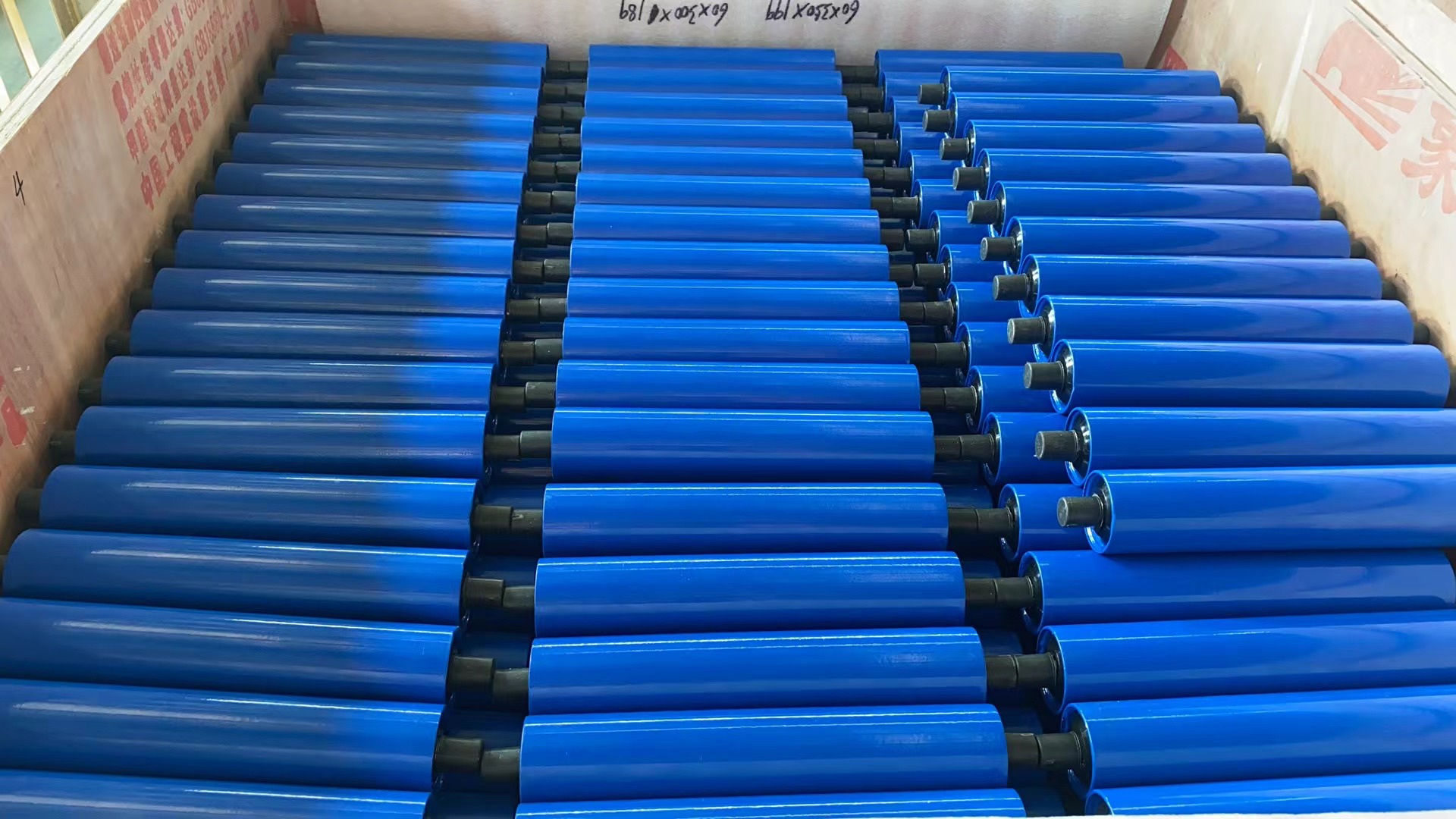
On most rollers, the shell is the most visible component, so it gets more attention than it deserves. A thicker wall can certainly resist denting and abrasive wear, but that only helps until the shell is stiff enough to keep the bearing seats aligned. Beyond that point, adding shell thickness does little for fatigue life. Bearing selection, by contrast, directly sets the load capacity, internal clearance, seal arrangement, and lubricant retention. Those four factors control how quickly the rolling elements begin to spall or how well the bearing tolerates shaft deflection and contamination.
The reason bearing choice outweighs shell thickness becomes clear when a roller fails in service. Shells rarely wear through or collapse before the bearing has already lost its running accuracy. A bearing that is undersized or poorly sealed will generate heat, push out grease, and let dirt reach the raceways. Once pitting starts, vibration increases and the shell may show signs of uneven wear, but the root cause is inside the bearing. Changing to a bearing with better sealing, higher dynamic load rating, or a different internal clearance can multiply service life several times over, while a thicker shell usually just makes the roller heavier without addressing the limiting failure mode.
That does not mean shell thickness is irrelevant. A shell that is too thin can flex under load and create edge loading in the bearing, so there is a minimum stiffness requirement. But after that structural floor is met, the return on additional shell steel drops off sharply. The higher-leverage decision is almost always in the bearing spec: choosing the right size, sealing, cage, and lubrication for the actual speed, load, and misalignment conditions. That is what moves the replacement interval, and it is why rebuilders often keep the same shell and upgrade only the bearings.
When a cheap unit price hides higher downtime and replacement costs
A low sticker price can quietly mask a much heavier bill down the road. The component itself may look like a bargain on paper, but once it starts failing more often or needs to be swapped out sooner than expected, the real cost shifts toward lost production time and extra labor. In many plants, downtime carries a price tag far beyond the part itself, and frequent replacements mean the initial savings evaporate long before the equipment reaches the end of its intended life.
What often gets overlooked is how those interruptions ripple through the rest of the operation. A single unreliable unit can stall an entire line, force overtime to catch up, or leave technicians chasing the same problem instead of handling preventive work. The labor cost of repeated installs and the idle time during each failure can easily outpace the difference between a cheap part and a more durable alternative.
Wise buyers tend to look past the invoice price and ask what a component will cost per hour of actual use. That number includes not just the purchase, but the frequency of replacement, the time spent waiting for spares, and the wages burned while machinery sits still. Those hidden figures often reveal that the low-cost option was never really cheap at all.
How to verify a factory’s claimed quality without visiting China
The most useful remote check is a live video call that you control, not a pre-recorded factory tour. Ask the contact to walk through the production floor with a phone or tablet and follow your instructions in real time: zoom in on the control panel of a running machine, point the camera at a wall clock, show the raw material storage area, and count the workers on a specific line. If they hesitate, lose connection, or show only a tidy conference room, treat that as useful information. Record the call and later compare machine placement, ceiling height, and floor markings with photos the factory has already sent.
A third-party inspector can close part of the distance, but only if you move past the default final random inspection. Send your own inspector for an in-process check or loading supervision, and require a report with geotagged photos and time stamps taken inside the workshop, not outside the gate. Also ask the factory to courier a production sample that the inspector pulls from the actual line, not a sample the sales team has pre-approved. Small mismatches in weight, edge finishing, or packaging can tell you more than a certificate.
Paper claims need to be pulled from primary sources, not from a PDF the sales team sends. For a Chinese supplier, ask for the full business license with the unified social credit code, then search the National Enterprise Credit Information Publicity System to confirm the legal name, registered address, and any enforcement history. If ISO 9001 or similar credentials are part of the pitch, verify the certificate number on the issuing body's database. Another practical step is to request a redacted bill of lading from an earlier shipment; the port of loading and consignee country can confirm the factory actually ships goods, while the redaction protects the buyer's identity.
What a small trial order reveals that a catalog cannot
A catalog shows you the best side of a product, but it rarely tells you how the material feels after ten minutes in your hands. A small trial order changes that. You notice whether the stitching pulls, whether the color shifts under indoor light, whether the weight feels substantial or cheap. These details don't photograph well, and suppliers know it. When you place a modest order, you're not buying inventory—you're buying the chance to hold the product to the same standard your customers will.
Beyond the item itself, a trial run exposes how a supplier actually works. Boxes arrive on time or they don't. Packaging protects the contents or it doesn't. Quantities match the invoice or they don't. A catalog can promise reliability, but only a real transaction shows whether the warehouse crew tapes corners properly, whether labels are straight, whether someone double-checks the order before it leaves the dock. Those quiet signals matter more than polished product pages.
Cost is often the reason buyers skip this step, but a small order is cheaper than a failed large one. It turns guesswork into a measured decision. Instead of trusting a photo, you can check the product on your own table, compare it against alternatives, and make a call based on evidence rather than presentation. That is the gap a catalog simply cannot close.
Which supplier communication habits predict smoother logistics
The clearest early signal is not how fast a supplier replies, but whether they surface potential friction before it reaches the dock. A supplier worth keeping will confirm delivery windows, pallet dimensions, and label details a few days before the truck is loaded. When a port starts slowing down or a component runs late, they mention it in the same update where they offer a revised date. That kind of pre-emptive habit removes most of the surprise from logistics.
Another habit that separates smooth freight from chaotic firefighting is the quality of exception messages. A weak update says delay in transit and leaves your team chasing details. A useful one names the new pickup time, the reason for the slip, and what has already been done with the carrier. The difference matters because a clear exception note lets warehouse staff replan in minutes instead of trading emails for a day.
Consistency of contact also plays a larger role than it seems. When the same person owns the update from booking confirmation through proof of delivery, fewer details get lost between handoffs. That single thread of communication tends to produce cleaner documentation, fewer last-minute corrections, and a rhythm that feels less like negotiation and more like coordination.
FAQ
Ask for a live video of the production floor, not just product photos. Pay attention to whether they show raw steel tube, bearing inventory, and welding stations. A supplier that hesitates to show these details often relies on trading companies rather than its own workshop.
Request samples with material certificates and have an independent inspection agency perform a pre-shipment check. A live video call that follows the actual production line, including raw material storage and bearing assembly, usually reveals more than staged photos or a polished showroom.
The usual issues are thin tube walls that dent under load, unbranded bearings that wear out early, poor weld consistency causing wobble, and coating that chips quickly. Always confirm the exact steel grade, wall thickness, bearing model and seal type instead of accepting broad terms like heavy duty.
Shell thickness, concentricity, bearing type, sealing method, shaft straightness and weld quality make the biggest difference. For abrasive environments such as mining, specify a suitable bearing clearance and thicker end discs rather than relying on a general industrial standard.
Start with a smaller trial order and avoid full payment upfront. A common approach is 30 percent deposit with the balance released after inspection and before loading. If the supplier pushes hard for full advance payment, that is often a stronger warning sign than a slightly higher unit price.
No. Heavy-duty roller production tends to cluster in provinces like Hebei, Shandong and Jiangsu, but the province alone means little. A factory with proper tube cutting, automated bearing pressing and balancing equipment can outperform a poorly equipped plant in a well-known industrial area.
Ask about their tube cutting and welding equipment, whether bearing pressing is automated, how they check concentricity and what daily capacity they can sustain. A factory that gives clear answers about tolerances and recent repeat orders is usually more trustworthy than one that only quotes price and delivery time.
Confirm the certificate directly with the issuing body and check that the scope and address match the supplier. Ask for a live video walk-through that starts at the factory entrance and moves through the workshop. Small mismatches in names, dates or locations often expose borrowed or outdated audit documents.
Conclusion
Most sourcing mistakes happen long before a purchase order is signed. Instead of jumping at the lowest quote, ask for the exact bearing series, seal type, shaft tolerance, and coating thickness behind each price. A marginally thicker shell rarely compensates for a poorly matched bearing or loose C3 clearance, because that is what actually decides how many hours the roller runs under dust and moisture. When a unit price looks unusually cheap, treat it as a warning: unplanned downtime, frequent replacements, and line stoppages usually cost far more than the savings on the invoice. If you cannot visit the factory, require batch inspection records, clear photos of the production line, bearing sourcing documents, and a small paid sample before committing to volume.
A trial order is the fastest way to see what a catalog cannot show—whether the welding is clean, the shafts are concentric, the tolerances hold across one hundred pieces, and the packaging survives a long sea freight journey. Pay attention to how the supplier communicates before the order as well. If the sales contact gives vague lead times, sends incomplete packing lists, or goes quiet after payment, the logistics are likely to be just as messy. The suppliers worth keeping are the ones who raise problems early, confirm specifications in writing, and treat a twenty-piece trial with the same care as a container order. That behavior tells you more about future reliability than any polished brochure.
Contact Us
Contact Person: Anna Lu
Email: [email protected]
Tel/WhatsApp: 8618561668850
Website: https://www.x-conveyor.com