

Cast Parts Manufacturer Selection Tips for Durable Industrial Components
2026-09-28
Every maintenance manager knows the sinking feeling of a cast component failing mid-production. Yet many still choose suppliers based on price alone, overlooking the metallurgical and process details that determine whether a part lasts five years or five months. In this guide, we break down the selection criteria that actually matter for durable industrial castings—from material grades to quality certifications—so you can avoid costly replacements and unexpected downtime. For insights drawn from real foundry experience, Zhaoyuqi offers a practical starting point.
Match the Metal to the Stress It Will Face
Choosing the right metal isn't just about strength—it's about understanding the exact nature of the stress your component will endure. A beam that flexes constantly under load needs different properties than a shaft subjected to sudden, high-impact forces. Ignoring these nuances leads to premature failure, even when using a nominally "strong" alloy. Start by mapping the stress type: tensile, compressive, shear, or cyclic. Each metal family responds differently, and matching them demands more than a glance at a datasheet.
Consider fatigue as a slow, silent enemy. Steels like 4140 or 4340 handle repeated bending well, but they can still crack if micro-stresses concentrate at sharp corners or surface flaws. Aluminum alloys, lightweight and corrosion-resistant, excel in steady compressive loads but often struggle under sustained high-cycle fatigue without careful heat treatment. For dynamic, oscillating stresses, titanium or high-nickel alloys may justify their cost—they resist crack propagation in ways that simpler steels cannot. The key is to match not just the metal's yield strength, but its endurance limit and fracture toughness to the actual load spectrum.
Temperature and environment add another layer. A stainless steel that shrugs off saltwater may creep or lose toughness at elevated temperatures, while a carbon steel that performs perfectly in dry, room-temperature conditions could embrittle in subzero weather or corrode under chemical exposure. Always evaluate the metal in its working environment, not in isolation. Practical matching means running small-scale tests or consulting failure case histories for similar applications—then choosing the alloy whose known weaknesses don't align with your stress conditions.
Inspect the Casting Process Controls Up Close
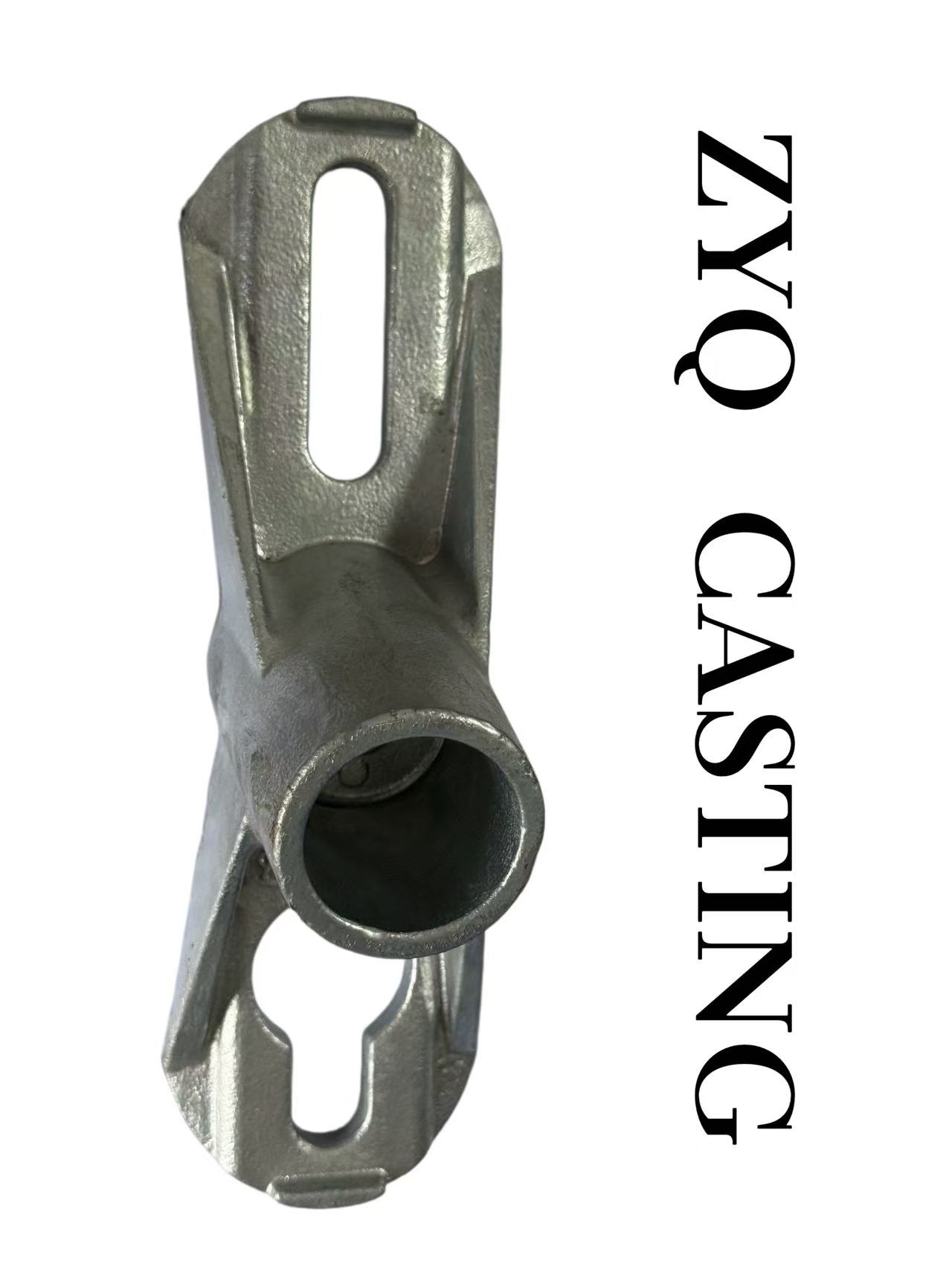
Walk the foundry floor and watch how molten metal temperatures are logged at multiple points before a single pour. Technicians cross-check thermocouple readings against alloy-specific curves, adjusting furnace settings in real time when the numbers drift even a few degrees. Those small corrections keep grain structure uniform and porosity low, which matters more than most catalog descriptions let on.
Pay attention to the mold handling between shots. Operators inspect coating thickness under UV light and replace cracked or worn sections on the spot rather than waiting for a batch failure. Vibration tables, cooling racks, and sand compaction are all tuned to the part's wall thickness, not left at last week's settings. It is that granular record-keeping that separates reliable runs from lucky ones.
Before any casting moves to finishing, samples get sectioned and etched for a quick microstructure check. If dendrite spacing or chill depth falls outside the reference range, the whole heat gets quarantined until the cause is found. Watching this process up close shows why two foundries with the same equipment can deliver very different parts.
Demand Traceability from Raw Material to Final Part
In discrete manufacturing, the chain from incoming coil stock or bar stock to a finished bracket or housing often crosses multiple work centers, outside processors, and hand-offs between shifts. Without a deliberate traceability path, a single material substitution or unrecorded machine offset can remain hidden until a customer reports a dimensional failure weeks later. Establishing traceability here means tying each raw material lot to the exact serial numbers it fed, then linking those serial numbers to the specific revision of the CNC program, the cutting tool lot, and the operator sign-off at each step. This is less about generating paperwork and more about narrowing the search radius when something drifts out of tolerance.
Practical systems often start with a simple rule: no material moves to the next operation unless its lot code has been scanned or keyed against the work order. In high-mix shops, that can feel heavy, so many teams apply graded traceability, where parts with safety-critical or customer-mandated requirements get full serial-level capture, while commodity parts only need batch-level links back to the mill certificate. The point is to make the link survivable across subcontract operations like plating or heat treating, where the original lot identity can easily be lost if the purchase order does not force the supplier to return traceability data with the parts. When that link survives, an engineer can go from a failure on a finished part back to the specific heat of aluminum, the exact anodize bath parameters, and the inspector who released the lot, without having to reconstruct the story from memory.
Demanding traceability from raw material to final part also changes how you buy and store material. Instead of issuing whatever bar is closest to the saw, the shop must reserve material against a job, record the lot number at the point of cut, and keep the remnant labeled so it can be traced if it is returned to stock. This discipline tends to expose weak spots in receiving inspection, because a missing or illegible heat number at intake breaks the chain before any value is added. Over time, the real benefit is not just recall readiness; it is that a well-maintained trace path lets you compare performance across suppliers, heats, and process settings, turning traceability from a compliance chore into usable process knowledge.
Check Their Capacity for Prototypes and Short Runs
A shop that handles production runs of thousands may not be the right fit when you only need twenty enclosures machined and finished next month. Ask directly how they schedule prototype jobs and whether short-run work gets pushed aside whenever a larger order lands. You want someone who can walk you through their current workload, give realistic lead times, and show examples of similar low-volume projects they have shipped recently.
Pay attention to their tooling and setup costs as well. For prototypes, a manufacturer that relies on expensive hard tooling will either turn you away or bury the quote in one-time fees. Look for flexibility: modular fixturing, quick-change setups, in-house finishing, or a willingness to run a few extra pieces for testing without charging for a full production setup. It often helps to ask what minimum order quantity they consider worth their time, then compare that to your actual needs.
Account for Machining and Finishing in the Quote
Machining costs rarely come down to a single number. A realistic quote starts by mapping each feature that needs cutting, drilling, or turning against the machine hours it actually consumes. Tolerances play an outsized role here—holding ±0.005 inches on a milled pocket might require slower feeds, extra finishing passes, and more frequent tool changes compared to a looser ±0.02 inch spec. Instead of applying a flat hourly rate, break the work into roughing and finishing stages, then assign separate rates for setup time, cycle time, and any secondary operations like deburring or thread chasing.
Finishing deserves its own line item because it can easily double the cost of a raw machined part. Anodizing, powder coating, electropolishing, or bead blasting each have distinct pre-treatment requirements, masking needs, and rejection risks. For instance, a sharp internal corner that machines fine may cause anodizing to build unevenly, forcing a redesign or hand touch-up. Include the cost of masking threaded holes or bearing seats when quoting surface treatments, and specify whether dimensional inspection happens before or after finishing—this changes scrap rates and final pricing.
Finally, factor in tooling wear and consumables per batch rather than treating them as overhead. A high-silicon aluminum alloy will chew through carbide end mills faster than 6061, and a mirror finish on stainless steel burns through polishing belts at a predictable rate. Build a small contingency into the quote for rework on the first article, especially if the finishing spec calls for a uniform Ra below 0.4 µm. Buyers respect a quote that names these variables plainly instead of hiding them inside a vague “processing fee.”
Review Past Projects in Harsh Environments
We pulled field reports from three offshore wind installations and two desert solar sites that ran continuously for over five years. The salt spray had crept past sealant joints on junction boxes in every offshore case, causing slow ground faults that didn't trip breakers until the corrosion had spread to nearby cable trays. In the desert, fine dust mixed with morning dew formed a paste that clogged cooling fans and raised inverter internal temperatures by nearly 20°C during peak summer months.
Those failures rarely showed up in lab testing because the failure modes needed two or three environmental stressors working together. Once we saw that pattern, we started pairing thermal cycling with salt fog exposure in pre-production validation, and added a simple quarterly inspection checklist for field teams to catch early sealant cracking. The review also pushed us toward stainless steel hardware with nylon washers, which eliminated the galvanic corrosion we had been seeing at aluminum-to-steel mounting points.
Perhaps the most useful takeaway was that components often failed right after maintenance, when crews replaced covers without re-torquing gaskets to specification. That led to a redesign of the gasket compression indicators and a training module focused on torque verification. Retrospectives from harsh environment projects now feed directly into our design freeze checklist, so new products ship with fixes already in place rather than waiting for the first field failure.
FAQ
Ask about their pattern-making and simulation capabilities. A shop that runs solidification modeling can often catch shrinkage or gas porosity before the first pour, which saves you from latent failures after machining.
Request dimensional inspection reports from the last three similar jobs, not just a sample. Look for CMM or laser scanning data taken after heat treatment, since dimensions shift during cooling and normalizing.
Look for ISO 4990 or ASTM A148 grades with full traceability. If the part sees impact or abrasive wear, ask about heat treatment records and hardness mapping rather than relying only on a mill certificate.
Ask where they cut test bars and whether they do ultrasonic or radiographic testing on production castings. A foundry that only checks chemistry on a separately poured sample may be hiding center-line shrinkage or inclusions.
Visit their finishing and grinding area. Consistent grinding depths, clean riser contacts, and organized rework stations tell you more about process discipline than a polished sales deck.
Expect 6 to 10 weeks for patterns plus first article, assuming no major design changes. Suppliers quoting under four weeks may be skipping stress relief, straightening, or final dimensional checks.
Check tooling ownership and storage policies. If they can't show pattern maintenance logs or insist on owning your tooling without a clear buyout clause, you may face rising costs or delays later.
At minimum, they should handle shot blasting, grinding, heat treatment, and primer application in-house. Outsourcing too many steps usually means longer lead times and weaker accountability for surface defects.
Conclusion
Selecting a cast parts manufacturer for industrial components that must hold up over time goes far beyond checking price lists. Start by asking whether the foundry truly matches the metal to the stress it will face—not just picking a generic stainless or carbon steel, but considering fatigue loads, temperature swings, and chemical exposure. A walk through their casting process controls tells you a lot: watch how they manage pouring temperatures, cooling rates, and mold preparation, because these small details decide whether you get a part with hidden porosity or one that lasts. Equally important is demanding full traceability from raw material to final part. If a batch fails in the field, you need to know exactly which heat of metal and which shift produced it, not just a vague certificate.
Don't overlook a manufacturer's ability to handle prototypes and short runs. Many foundries only want high-volume orders, but durable industrial components often require iterative testing and small batches before full production. Ask directly about their minimum order quantities and how they charge for pattern changes. Also, make sure the quote includes machining and finishing, not just the raw casting. A cheap casting that needs extensive grinding, boring, or coating can end up costing more than a slightly higher-priced part that arrives near-net shape. Finally, review their past projects in harsh environments—talk to customers who used their parts in high-temperature, corrosive, or heavy-abrasion settings. Real-world survival data matters more than any polished brochure.
Contact Us
Contact Person: Nico Yin
Email: [email protected]
Tel/WhatsApp: 8618561567088
Website: https://www.ductileironparts.com/