

Car Ozone Generators Worth Recommending for a Fresh and Clean Interior
2026-10-27
Few things ruin a drive faster than a musty, lingering odor that no amount of air freshener can kill. If you've tried everything and still catch a whiff of something off, a car ozone generator might be the missing piece. Among the brands we've tested and compared, LUFUTATECH keeps surfacing for its no-nonsense performance. Below, we've rounded up the recommendations that actually live up to the promise of a fresh, clean interior—without the gimmicks.
Why Your Car Still Smells After Cleaning
Most lingering smells after a thorough cleaning trace back to moisture you can’t see. Carpets, seat padding, and the insulation beneath floor mats hold water from wet shoes, snow, or a spilled drink long after the surface feels dry. That trapped dampness feeds mold and bacteria, so the musty odor returns within a day or two. Wiping down vinyl and vacuuming won’t reach those lower layers.
Another overlooked source is the ventilation system. You can scrub every panel and still get hit with a sour blast when the fan kicks on, because mold has settled on the evaporator core or inside the ducts. The cabin air filter may also be saturated with old moisture. Until those areas are cleaned or replaced, the smell will keep coming back no matter how spotless the interior looks.
Hidden residues cause trouble too. A French fry under a seat rail, a few drops of milk soaked into the foam beneath the fabric, or water seeping past a worn door seal each produce a distinct odor that standard cleaning misses. Enzyme-based cleaners or a steam extraction are often needed to break down what’s left behind.
How Ozone Gets Rid of Odors That Sprays Can't Touch
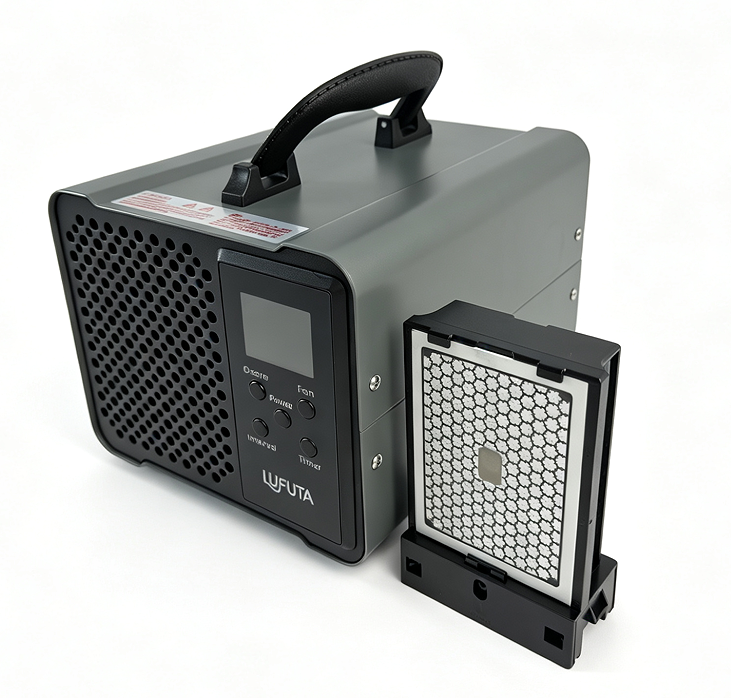
Most air fresheners simply dump a fragrance over the problem, which means the underlying odor molecules stay right where they were. Ozone works differently: it's an unstable oxygen molecule that actively hunts down and reacts with volatile compounds. When it collides with the sulfur-based molecules from spoiled food or the amines in pet accidents, the extra oxygen atom rips apart those structures, turning them into inert, odorless byproducts.
Because ozone is a gas, it drifts into places a spray's mist never reaches. It seeps under baseboards, behind drywall, into carpet padding, and through ventilation ducts. That's why it can neutralize smells trapped in a car's headliner or inside a closed closet, where liquid deodorizers can't get a foothold. The gas doesn't need a direct line of sight or physical contact with a surface—it fills the entire airspace.
The catch is that ozone must be used in unoccupied spaces and given time to dissipate before people or pets return. Once the reaction is finished, there's no perfumy residue or chemical film left behind, just air that doesn't carry the old odor. That's the real difference: sprays cover, ozone erases.
What to Check Before Buying a Car Ozone Generator
Start with the ozone output rating. A unit that produces too little ozone won't eliminate stubborn odors from upholstery or air vents, while an overpowered model can leave behind a harsh chemical smell that lingers for days. Look for a generator with adjustable output levels or a stated coverage area that matches your vehicle's cabin size. Most passenger cars do fine with 3,000–5,000 mg/h, but larger SUVs or vans may need closer to 10,000 mg/h. Also check whether the device runs in cycles or continuously—frequent short bursts are safer for interior materials than one long exposure.
Next, examine the build quality and safety features. Cheap plastic housings can crack from heat or vibration, especially if you plan to leave the unit in the car during summer. A built-in timer is non-negotiable: you want the generator to shut off automatically after 20–40 minutes so you don't accidentally over-treat the cabin. Some models include a motion sensor or a delayed start, which gives you time to step away before ozone production begins. Avoid any unit that lacks a sealed ozone chamber or uses exposed electrodes, as these can spark or emit excess nitrogen oxides.
Finally, consider how you'll power the device. Many car ozone generators plug into the 12V cigarette lighter socket, but some require an external AC adapter, which limits where you can use them. If you often park outdoors without access to an outlet, prioritize a model with a rechargeable battery or a direct car plug. Also check the cord length—short cords force you to hold the unit or balance it awkwardly on the center console. A long, flexible power cable lets you place the generator in the footwell or trunk, away from delicate electronics and leather seats.
How Long Should You Run an Ozone Generator in a Car
There isn't a single correct runtime for every car. The needed duration depends on the ozone generator's output (usually listed in mg/h), the size of the cabin, and how deeply the odor has settled. For a compact or midsize sedan with a generator rated around 3,000–5,000 mg/h, a 30- to 45-minute cycle often clears mild food or pet smells. If you're dealing with heavy tobacco residue, mildew, or a flooded interior, expect to run it closer to 60–90 minutes, sometimes split into two back-to-back sessions with a short ventilation break in between.
Running the machine longer doesn't automatically produce better results. Once ozone fills the space, extra time mostly increases the risk of surface oxidation. Rubber door seals, vinyl dashboards, and uncoated leather can become dry or faded after repeated overexposure. A more practical approach is to start with the shortest time recommended by the unit's manual—often 30 to 60 minutes for a car—and evaluate the smell after airing out. You can always repeat the process if needed.
After the cycle ends, let the car ventilate with all doors open until the sharp, chlorine-like ozone smell dissipates. This usually takes 30 to 60 minutes, though cool or damp weather may slow it down. Never sit inside or drive while the generator is running, and avoid breathing concentrated ozone. If a stubborn odor remains, allow the interior to fully air out for a few hours before running another short cycle rather than increasing the length of a single treatment.
Where to Place the Unit for the Best Results
Start by giving the unit some breathing room. Most devices work best when air can move freely around them, so keep it at least a foot away from walls, curtains, or bulky furniture. Corners tend to trap stale air, while open floor space lets the unit draw in and push out air without working harder than it should.
Height matters more than people expect. If the unit handles cooler air, set it low where that air settles; if it warms or dehumidifies, a slightly elevated spot often improves circulation. Avoid placing it behind sofas or under shelves, even if that hides the cord—blocked airflow cuts performance quickly.
Think about how you actually use the room. Position the unit between the main source of discomfort and where you spend the most time, but not pointed directly at seating or sleeping areas. A few feet of offset makes the output feel less drafty while still covering the space evenly.
When to Avoid Using Ozone in Your Vehicle
Ozone treatments are often praised for eliminating stubborn odors, but there are clear moments when running an ozone generator inside a car does more harm than good. If your vehicle has rubber seals, gaskets, or older leather upholstery that's already showing signs of wear, skip the ozone. High concentrations accelerate oxidation, causing these materials to crack, fade, or become brittle far sooner than they would naturally. That “new car smell” you’re trying to restore might end up replaced by a faint chemical tang from degrading plastics and rubbers.
Never use ozone while people or pets are inside the vehicle—even for a few minutes. Ozone irritates the respiratory system, and in a confined cabin the gas can reach levels that trigger coughing, chest tightness, or worsened asthma symptoms. If you must treat the interior, do it in a well-ventilated area with the car empty, and allow at least a couple of hours for the ozone to dissipate before anyone gets back in. For households with kids or animals that frequently ride along, it’s often safer to try charcoal bags or enzyme cleaners first.
Owners of vehicles with extensive aftermarket electronics, touchscreen displays, or delicate audio systems should also think twice. Prolonged exposure to high ozone levels can degrade certain wire insulation and surface coatings, leading to intermittent glitches or premature failure. If the odor problem is mild—say, a damp gym bag left overnight—ventilation and regular cleaning usually do the trick. Reserve ozone for severe, persistent smells after other methods have failed, and when in doubt, consult a detailer who can assess whether your interior materials can handle it.
FAQ
Ozone attacks odor molecules at the source rather than masking them. The generator converts oxygen into ozone, which oxidizes smells like smoke, mildew, and food residue. It seeps into fabric, vents, and padding where sprays can't reach, breaking down the compounds until they lose their odor.
Generally yes, but only for short, controlled sessions. Ozone can dry out leather and rubber if you overdo it, so limit continuous use to 20-30 minutes and condition leather afterward. Modern electronics are usually fine because the concentration doesn't stay high enough to corrode contacts, but avoid aiming the output directly at screens or wiring.
Air fresheners just add a scent on top of the old one, which often turns into a weird mix. A good ozone generator removes the actual source of the smell, so the car smells neutral instead of perfumed. It's the difference between covering up a stain and actually cleaning it.
For a standard interior, 15 to 30 minutes is usually enough for moderate odors. Heavy smoke or pet smells might need a second cycle after airing out. Always follow with open doors for at least 30 minutes so residual ozone dissipates before you get back in.
No, you should never be inside the car during treatment. Ozone irritates the lungs even at low levels. Set the device on a timer, close the doors, and stay outside. Once the cycle finishes, open all doors and let the cabin air out completely before driving.
Look for adjustable ozone output, a built-in timer, and a compact design that fits in a cup holder. A ceramic ozone plate tends to last longer than cheaper alternatives. Also consider units with a low-voltage auto shutoff for safety. Avoid anything that claims to run continuously while driving—that's a red flag.
They're particularly effective on smoke and pet odors because those smells penetrate deep into upholstery and headliners. Ozone reaches those hidden fibers and neutralizes the proteins and tar residues. Mild food smells often clear up after a single short cycle, while heavy smoke might need two or three treatments.
Only when you notice an odor returning, not on a fixed schedule. Most people find a single treatment every few months is plenty. Overusing ozone can fade fabrics and dry out seals, so treat it as a reset tool rather than a daily maintenance habit.
Conclusion
A deep clean might leave the dashboard shining and the carpets vacuumed, yet a stubborn smell can still hang around. That is because odor molecules often settle inside headliners, seat foam, and the ventilation system where sprays and wipes never reach. Ozone works differently: it travels as a gas into those hidden spaces, reacting with the odor-causing particles and neutralizing them at the source instead of just masking them. Before picking a unit, look at the ozone output, built-in timer, and whether the materials inside your car can handle repeated exposure. A generator with a low to moderate output is often enough for most sedans and crossovers, while high-output machines are better suited for larger vehicles or severe odors.
Most cars respond well to a 20 to 40 minute treatment with the windows shut and the climate system set to recirculate, though heavily contaminated interiors may need closer to an hour. Place the generator on the center console or another stable spot where the gas can spread evenly, and always keep people and pets out of the vehicle during the cycle. Avoid using ozone if the interior has delicate rubber seals, certain leather finishes, or if you cannot ventilate the car afterward. Once the timer ends, open all doors for at least 15 to 20 minutes before driving, and you will likely notice the difference: not just a fresher scent, but an interior that genuinely feels cleaner.
Contact Us
Contact Person: Paul Luo
Email: [email protected]
Tel/WhatsApp: 0086-19966314501
Website: https://www.lufutatech.com