

All-Steel Ceramic Antistatic Floor Vendor: How to Evaluate Quality and Reliability
2026-10-19
When a single static discharge can corrupt sensitive electronics or compromise a cleanroom environment, selecting an all-steel ceramic antistatic floor vendor becomes a risk-management decision, not just a procurement step. Too many buyers still rely on glossy datasheets and miss the real indicators of quality and long-term reliability. In this post, we’ll break down what to look for beneath the surface—from material integrity to load performance and after-sales support—and why suppliers like Lipin Floor are often used as a benchmark by facility managers who cannot afford downtime.
Steel Gauge and Coating Details That Reveal Panel Longevity
Ask any installer who has pulled up a 10-year-old panel and the first thing they’ll point to is gauge. 26-gauge isn’t just a number—it changes how the panel behaves under wind, snow, and repeated heating cycles. Thinner 29-gauge steel can save money up front, but it telegraphs every fastener and tends to oil-can early, which puts stress on the paint film long before rust appears.
The coating stack is equally telling. A basic polyester finish might look fine at installation, yet it fades and chalks within a few years in full sun. Panels with a Galvalume substrate and a PVDF-based topcoat hold their gloss and resist chalking far longer, especially when the backer coat matches the front. That underside protection is easy to skip, but condensation and trapped moisture attack from below just as aggressively as rain does from above.
Longevity is rarely about a single feature. A panel with a thicker core and a high-end coating can shrug off scratches that would break the barrier on a lighter gauge. The specs worth checking are the coating thickness in mils, the resin system, and whether the substrate is AZ50 or AZ55 Galvalume rather than a generic galvanized steel. Those details show up in how the panel looks and performs at year fifteen, not just on day one.
Ceramic Layer Hardness, Glaze Quality, and Edge Bonding Checks
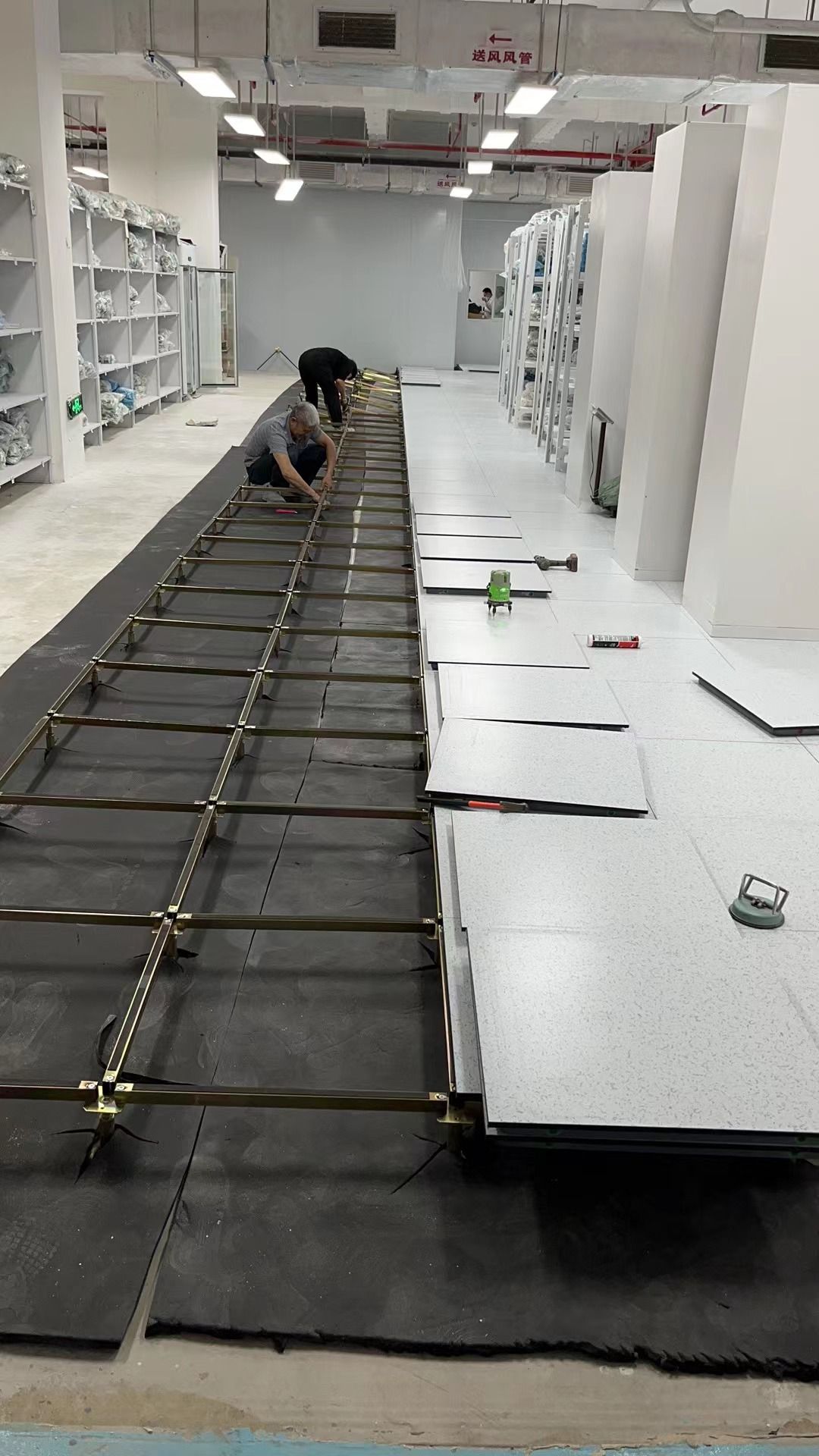
Ceramic layer hardness isn't only about a single number on a scale. Practical checks combine a Mohs scratch comparison with a Vickers micro-indentation reading to catch localized soft spots that can emerge from uneven firing. A quick file test across the surface often reveals more than lab data—areas near edges or thickness transitions tend to hide softer material that would fail later under point loads.
Glaze quality demands looking beyond the shine. A uniform, defect-free glaze should show no pinholes, crawling, or crazing under a 10x loupe, and the thickness profile needs to stay within a narrow band, especially around corners where drips or thinning occur. Tapping the surface lightly with a metal rod can expose hidden delamination—a dull thud instead of a clear ring points to poor adhesion between glaze and body.
Edge bonding checks focus on the most vulnerable interface: where the ceramic layer meets a substrate or adjacent tile. We run a dye penetrant test to trace micro-cracks along the bond line, followed by a controlled thermal shock cycle to see if differential expansion causes separation. A properly bonded edge shows no dye bleed and no visible lift after three cycles, while any failure here usually means the entire layer's integrity is compromised, not just the edge.
Load and Impact Ratings Worth Testing Before You Commit
The load rating printed on a box is usually a best-case number, not a promise for your specific use. Before you commit to a piece of hardware—whether it's shelving, a roof rack, or a hitch mount—grab the actual objects you plan to carry or store. Pile them on, shift the weight to one side, and watch how the structure reacts. A cheap steel bracket might hold a static stack of boxes all day but twist noticeably when you lean a heavy toolbox against one edge. That kind of real-world loading tells you more than any lab number.
Impact forces are where most under-tested gear falls apart. A strap or anchor rated for 500 pounds of steady pull may snap at half that when the load jerks or drops. Before you commit, simulate the kind of sudden movement you expect in the field: drop a sandbag from waist height onto the rack, yank the tie-down strap hard, or bounce the loaded platform once. If the hardware groans, stretches, or leaves marks on the mounting surface, the rating isn't backing up its claim.
Finally, don't confuse a high peak rating with durability over repeated cycles. Some products survive one big impact in a controlled test but develop small cracks or loose joints after a few days of normal use. It's worth loading, unloading, and re-tightening everything two or three times before you trust it with anything valuable—or anyone. The time you spend testing now is far cheaper than discovering a failure at the worst possible moment.
Surface Resistance Values and Simple On-Site Verification Methods
Surface resistance values don't have to be a mystery locked in a lab report. In practice, you can get a reliable read using nothing more than a simple megohmmeter and a pair of conductive rubber electrodes. The key is consistency: press the electrodes flat against the material, wait for the reading to stabilize, and record the value at a controlled humidity level. Dry air can inflate resistance by orders of magnitude, so always note the ambient conditions when comparing field results to spec sheets.
A quick on-site check that field technicians swear by is the two-point probe method with a fixed spacing between contacts. If the reading drifts, it's often due to surface contamination or moisture trapped in seams, not the substrate itself. Wipe the area with a lint-free cloth dampened with isopropyl alcohol, let it dry, and retest. For conductive flooring or ESD mats, the requirement is typically 1 x 10^6 to 1 x 10^9 ohms; anything above that suggests the ground path is compromised.
For a more rugged verification without special tools, you can build a simple verification jig from two weighted brass bars spaced ten centimeters apart. Place it on the surface, connect a handheld ohmmeter, and wait ten seconds. If the value jumps around, check for hidden paint layers or wax residues. A stable reading within the expected range, tested at three random spots, is usually enough to sign off on basic electrostatic safety compliance.
Vendor Red Flags to Spot Through Samples, Reports, and Factory Visits
When you open a sample from a potential vendor, don't just look at the surface finish. Turn the product over, check the weld seams or stitching, flex the material, and weigh it in your hand. A sample that feels lighter than expected, has uneven edges, or uses a different texture than the spec sheet suggests is often the first clue that production runs won't match what you approved. Pay attention to small details like the type of screws, the color consistency under natural light, and even the packaging insert. These are rarely accidental.
The paperwork can tell you just as much as the product. Look closely at inspection reports and material certifications. If a vendor provides a report that lacks specific test dates, batch numbers, or fails to name the testing laboratory, that's a reason to pause. Some suppliers will send a generic “passed” certificate that doesn't align with your requested standards. Cross-check the report against the sample you received; mismatched lot codes or vague descriptions of the testing methods mean someone may be cutting corners or reusing old documentation.
A factory visit often reveals what polished emails hide. Watch the flow of materials, how workers handle quality checks on the line, and whether the equipment matches the capabilities the vendor claimed. Red flags include a factory that is suspiciously quiet during your visit, staff who can't answer basic questions about tolerances, or a quality control area that looks more like a storage shelf than an active testing station. Ask to see rejected parts and what happens to them. If the vendor can't show a clear process for handling defects, you'll probably end up dealing with those defects yourself.
Warranty Coverage, Replacement Stock, and Response Times That Signal Reliability
A warranty is only as good as the speed behind it. If a supplier backs their equipment with a multi-year coverage window and keeps replacement units physically on the shelf, that tells you more about their confidence than any brochure ever could. It means they've calculated failure rates, listened to field reports, and decided to absorb risk instead of passing it to the customer.
Replacement stock matters because downtime has a cost. A vendor who maintains regional inventory can ship a spare unit within a day or two, while one without stock will ask you to wait for the next production run. That difference shows up in your operating budget, not in the spec sheet.
Response times are the third signal. When a claim takes weeks to approve or a technical question sits unanswered, the warranty becomes a paperwork exercise. Reliable partners tend to answer fast, dispatch fast, and follow up without being reminded. Those habits are harder to copy than a logo.
FAQ
Look closely at the steel shell thickness, the quality of the welding seams, and how the ceramic top layer is bonded. A solid vendor will openly state the gauge of the bottom and top steel plates, confirm that the core is fully filled with lightweight cement, and show clean, uniform welds without gaps or burn-through. If the sample panel feels flimsy or the edges are uneven, that is usually a sign of rushed production and poor tolerance control.
It should be non-negotiable. Independent reports from labs like SGS, TÜV, or Intertek that confirm surface resistance, system resistance, and point-to-point resistance against IEC 61340-5-1 or ANSI/ESD S20.20 give you hard evidence instead of marketing claims. Ask for the actual test report number, the date, and the sample description. If a vendor refuses to share the full report or only offers an in-house certificate, treat that as a serious gap.
Pay attention to concentrated load, ultimate load, and rolling load values, not just the uniform load printed on a brochure. For rooms with heavy cabinets or frequent equipment moves, request stress tests that match your real traffic pattern. A reliable vendor will know the difference between a 1,000 lb concentrated load test and a 10,000 lb ultimate load test, and they will provide the testing standard used, such as CISCA or EN 12825.
Ask for abrasion resistance, impact resistance, and stain resistance data, and then request a physical sample. Real ceramic-faced panels should not show deep scratches from a key or coin test, and spilled coffee or marker ink should wipe off without leaving a stain after 24 hours. Also check the surface hardness rating—ideally Mohs 7 or higher—and confirm the edges are factory-sealed to prevent moisture absorption.
Ask them to explain how the system achieves electrical continuity from the ceramic surface to the steel shell and finally to the grounding grid. A knowledgeable supplier will describe the conductive copper foil, the grounding terminals, and the resistance range in different humidity conditions. If they cannot walk you through that path or simply say 'it is antistatic,' they likely lack the technical depth to support a critical installation.
Very important, especially for large-scale or mission-critical facilities. Ask for at least three projects that are similar in size and use case, and contact the facility manager directly if possible. Questions about floor flatness after two years, noise under foot traffic, edge chipping, and how the vendor handled warranty claims will reveal more than any glossy brochure.
Look for a written warranty that covers both materials and workmanship for at least five to ten years, with clear definitions of what counts as a defect. Beware of warranties that only cover the steel shell and exclude the ceramic surface, or that require the buyer to pay for return shipping. Also ask about response time for replacement panels and whether the vendor keeps matching stock for future orders. A supplier that offers installation training and an on-site inspection after the first section is installed is usually more reliable than one that disappears after delivery.
Vague terms like 'high quality steel' or 'anti-static according to international standards' without naming the standard are a warning. The quotation should list the panel size, steel thickness, core material, surface coating, grounding accessories, and the specific test standard for each performance claim. If the price is far below other bids, ask where the cost was cut—often it is thinner steel, lower-grade ceramic, or no third-party testing. Missing details at the quotation stage usually hint at missing support later.
Conclusion
When you are sourcing all-steel ceramic antistatic flooring, the real difference between a floor that lasts ten years and one that fails in two often comes down to details suppliers rarely volunteer. Start by asking for cut sheets that specify the steel gauge and the coating system, not just a vague “galvanized” label. A thicker base sheet with a properly applied epoxy or powder coat resists moisture and corrosion far better than a thinner, poorly finished panel. Then turn your attention to the ceramic surface itself. Scratch the glaze with a utility knife; a good tile will show only a faint mark or none at all, while a soft glaze will leave a visible groove. Check the edge bonding between the ceramic tile and steel pan, because this is where water and cleaning chemicals eventually creep in. A reliable vendor will send you a sectioned sample so you can see the adhesive layer instead of hiding it.
Load and impact testing is not something you do after installation. Ask the vendor for third-party test reports that match the panel size you are buying, and then do your own drop test with a dead blow hammer on a sample. If the ceramic cracks or the steel deforms at a lower force than the datasheet claims, walk away. Surface resistance values should be verified on site with a proper megohmmeter, not just taken from a brochure. Place the probes at multiple points and check readings under both low and high humidity if possible. Finally, evaluate the vendor itself. Red flags include refusing to share factory audit reports, hesitating to reveal coating thickness measurements, or offering a warranty that excludes edging and glaze wear. Reliable suppliers typically keep replacement stock for at least five years and can confirm response times in writing. If they cannot show you the data or a real production line, assume the quality claims are marketing.
Contact Us
Contact Person: yuki
Email: [email protected]
Tel/WhatsApp: +86 18664390732
Website: https://www.lipinfloor.com/