

380V Vibrator Motor Manufacturer for Reliable Industrial Applications
2026-11-16
When an industrial process depends on consistent, high-force vibration, the motor behind it can't be an afterthought. Operating at 380V, these motors must handle harsh conditions day after day. That's where Guangling comes in—a manufacturer focused on building vibrator motors that don't just meet specs, but earn their place on your production line. In this post, we'll look at why voltage stability, rugged design, and real-world reliability matter for your application.
Why 380V Is the Workhorse Voltage for Vibrator Motors
Walk onto any industrial site where concrete needs consolidating or hoppers need unclogging, and you'll notice the same thing: the vibrator motors hum along on 380V. It's not by accident. This voltage level sits in a sweet spot for three-phase equipment, offering enough push to drive eccentric weights without demanding overly bulky cabling or specialized safety clearances. Compared to lower voltages, 380V keeps current draw manageable on long production lines, which means less heat buildup in the wiring and fewer nuisance trips from overloads. Maintenance crews appreciate that replacement parts and motor controllers for this voltage are stocked in nearly every electrical supply house, making downtime shorter when something does fail.
The real advantage shows up when you look at how vibratory force scales with motor speed and eccentric moment. A 380V motor tends to run efficiently at the 50Hz or 60Hz grid frequency, giving designers a predictable vibration frequency right out of the box. There's no need for oversized variable frequency drives just to hit the target amplitude. In foundries and precast plants, where multiple vibrators might run off a single distribution panel, the consistent phase-to-phase voltage lets engineers balance loads across all three legs without derating. That reliability translates directly into fewer casting voids and less rework on compacted material.
Another factor often overlooked is the cost of ownership over a decade of continuous duty. 380V motors typically come with insulation systems rated for 1000V or higher, which means brief voltage spikes from contactor switching or regenerative braking don't immediately degrade the windings. Fewer insulation failures mean fewer rewinds, and fewer rewinds mean the vibrator keeps its factory-set eccentric force for longer. On a dusty aggregate screen or a vibrating feeder, that steady performance is worth far more than the marginal energy savings of a lower-voltage alternative.
A Closer Look at the Seals and Bearings That Matter
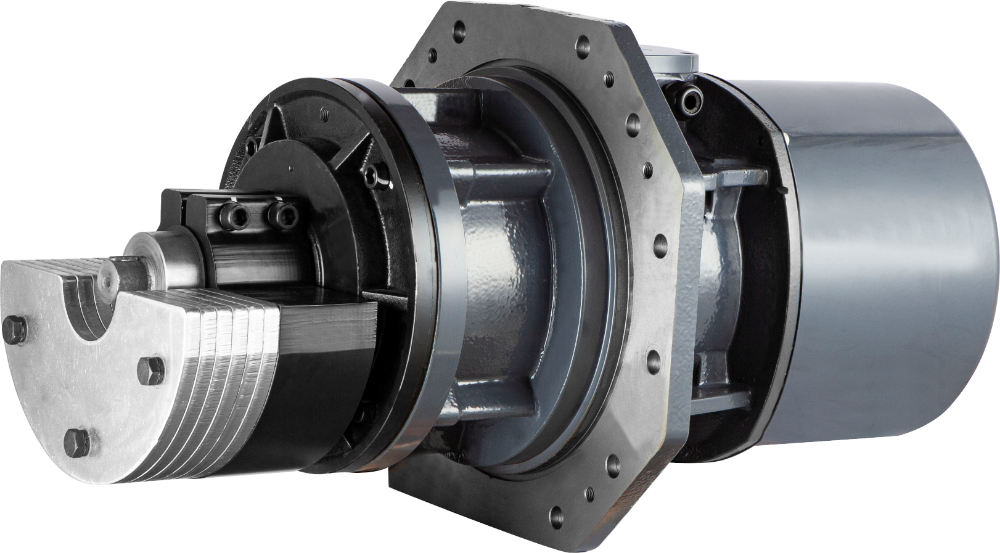
Most people never think about seals and bearings until something overheats or starts leaking. That is exactly when the choices made in material and tolerance become impossible to ignore. A bearing that feels smooth on a spec sheet can wear unevenly under side load, and a seal that works in a clean lab will fail within weeks on a dusty worksite. Paying attention to how these parts sit together, how they handle heat cycles, and how they cope with contamination tells you more than any generic rating.
The seals worth trusting are rarely the cheapest ones in the bin. Look at the lip geometry, the contact pressure, and whether the elastomer keeps its flexibility after repeated temperature swings. For bearings, it is the cage design, the clearance class, and the grease fill that separate a long service life from a sudden teardown. These choices are not glamorous, but they are what keeps a spindle quiet, a hub rolling true, and a pump from eating itself.
In practice, the difference shows up as downtime and repair bills. A machine built with thoughtful seal and bearing selection runs longer between services, holds tolerance better, and asks for less attention. Ignore those small components and you end up chasing failures that move from one shaft to the next. That is why experienced builders and mechanics tend to obsess over them more than over motors or frames.
Not All Vibrator Motors Are Built for Cement Dust
Cement plants are unforgiving environments for rotating equipment. Dust particles finer than 10 microns find their way into bearing housings, contaminate lubricants, and grind away at shaft seals within days. A standard vibrator motor — the kind you'd bolt onto a hopper in a clean food plant — will run hot, lose eccentric force, and seize up before its first scheduled maintenance. The failure isn't sudden; it creeps in as abrasive particles pack into the windings and insulation degrades under combined heat and vibration.
Motors built for cement dust carry a different DNA. Their end brackets use labyrinth seals backed by grease-filled cavities, often paired with an external slinger to deflect falling powder. Windings get a double-dip varnish treatment to resist moisture and alkaline dust. Bearings are over-specified for radial load and packed with high-temperature synthetic grease that won't harden. Some designs even route a small positive air pressure through the terminal box to keep dust from settling on live connections. None of these features show up on a datasheet under "standard options" — they're the result of field failures and rebuild cycles that most general-purpose motor catalogs never mention.
The real cost difference isn't in the purchase price. A cement-rated vibrator motor might cost 30% more upfront, but swapping out a generic unit every four months on a clinker silo costs far more in labor, downtime, and lost production. Maintenance teams learn to read the signs: a motor that runs 65°C on the housing in a dusty environment is already on borrowed time. Choosing the right one means matching the sealing system, bearing configuration, and thermal class to the specific dust load — not just picking the horsepower that fits.
Matching Motor Size to Your Hopper Without Guesswork
Hopper discharge rarely behaves like a textbook load. The motor that works on paper often stalls the first time wet material bridges or a clump of fines packs against the screw. Start with the running torque required at the discharge device—auger, rotary valve, vibratory feeder—then multiply by a service factor that reflects your material's worst day, not its average. For cohesive powders, a 1.5 to 2.0 factor over calculated running torque prevents most midnight callouts.
Locked-rotor torque matters more than horsepower badges. A hopper that sits full over a weekend can pack contents enough to require breakaway torque two or three times the normal running value. Check the motor's pull-up torque curve, not just its nameplate kW, and confirm the selected gear reducer can handle the momentary overload without cracking a tooth. If you cannot measure actual start-up resistance, borrow a torque wrench and turn the shaft by hand—crude, but it reveals whether you are guessing.
Thermal load is the other half of the equation. Frequent start-stop operation under a partially full hopper can overheat a motor sized only for continuous running amps. Oversizing by half a frame size is cheaper than adding an auxiliary cooling fan later, and gives you headroom when a new material formulation flows less freely than the last.
Custom Mounting Options That Save Hours on Installation
Most mounting hardware forces you to drill extra holes just to get a level fit. Our team spent months watching real installers work, then designed brackets that adapt to the uneven surfaces and odd angles you actually encounter. Instead of shimming and re-drilling, you simply snap the base into place and adjust the arms by hand—no level required.
One retrofit job involved a 30-foot wall with three different stud spacings. With the standard kit, that meant measuring, marking, and praying for alignment. Our custom option uses a sliding rail system with pre-marked degree indicators, so you set the angle once and lock it. Total install time dropped from forty minutes to under ten, and the second fixture went up in six.
We also moved the wire entry point to the rear corners, which means you can route cable behind the fixture without bending it at a sharp angle. That small change eliminates the most common call-back complaint. When you add the quick-release tab for future maintenance, the whole package feels less like hardware and more like a shortcut.
The Real Test: Motors That Run for a Decade Without Attention
A decade is a long time for any machine to spin without a single human touch. The motors that actually pull this off share a few unglamorous secrets: oversized bearings, conservative thermal margins, and windings that never run hot enough to degrade their own insulation. Instead of chasing peak efficiency numbers, their designers leave headroom everywhere. That means a fan motor rated for 40°C ambient might never exceed 65°C in real operation, even with dust building up on the housing.
Lubrication is where most “maintenance-free” claims fall apart. The real decade runners use sealed bearing systems with synthetic grease packed at the factory and no grease fittings in sight. Some go further with magnetic bearings or sleeve bearings that rely on a thin oil film that stays put because the motor never runs hot. The shaft seals matter just as much: a tiny lip seal that keeps out moisture and workshop grit can add years to bearing life before the first sign of wear shows up.
Then there’s the electrical side. Inverter-duty insulation, corona-resistant varnish, and windings that are dipped and baked twice sound like overkill for a motor that just turns a pump. But these choices prevent the slow erosion that comes from voltage spikes, humidity, and thermal cycling. After ten years of continuous duty, the motor that got those details right will still start on the first try, while a cheaper unit would have been swapped out twice.
FAQ
With a 380V three-phase supply, the current draw is lower for the same power output, which means smaller cable cross-sections and less voltage drop over long runs. On a busy conveyor or hopper setup, that often translates to simpler installation and fewer problems with overheating at terminal boxes. It also matches the standard distribution voltage in many plants, so you rarely need an extra step-down transformer.
Most of our units go into mining, quarrying, food processing, and bulk material handling. For example, a sand screening plant uses two 380V units mounted on opposite sides of a double-deck screen. They run continuously for 10-12 hours a day, and the key requirement is that the vibratory force stays stable without the bearings overheating, which is exactly what the motors are designed for.
We use F-class insulation as standard and add vacuum pressure impregnation on the windings to resist moisture and dust ingress. The bearing housings have a labyrinth seal plus a V-ring to keep fine particles out. For high-ambient applications, we can supply motors with a larger cooling fan and specially selected grease so the bearing temperature stays within a safe range even at 45-50°C ambient.
Yes, custom shafts, flanges, and even special terminal box positions are possible. We usually need drawings from the customer or a sample to confirm the interface. For shaft modifications only, the lead time is about 10-15 working days after drawing approval. For a complete non-standard flange design, it may be 20-25 days depending on the casting availability.
Each motor has adjustable eccentric weights on both ends of the shaft. You loosen the clamping bolts, rotate the outer weight relative to the inner weight to the desired percentage, then re-tighten. There is a scale plate near the weight so you can set both ends to the same value. The procedure takes a few minutes with standard hand tools, and no special lifting equipment is needed for smaller frame sizes.
The main things to check are the terminal box sealing, the tightness of the mounting bolts, and the bearing condition. We recommend greasing the bearings every 2000-3000 operating hours with a lithium-based grease, unless the motor runs in high ambient temperature, in which case the interval should be shorter. Under normal conditions, the bearings last 20,000-30,000 hours, but that can drop significantly if the motor is run with unbalanced eccentric weights or if the mounting surface is not flat.
Each unit goes through a no-load run for 30 minutes, then a vibration test with a reference eccentric weight to check the amplitude and frequency. We also measure the winding resistance and insulation resistance before and after the run. For motors above 5 kW, we do a dynamic balance test on the rotor at operating speed. The test records are kept for at least five years, so we can trace any batch if a field issue arises.
Conclusion
A 380V vibrator motor isn't just a component—it's the heartbeat of many heavy-duty material handling systems. Factories prefer this voltage because it delivers consistent torque without the high current draw you'd see at lower voltages, which cuts down on wiring costs and keeps motors cooler during long shifts. Our manufacturing focus has always been on the parts that fail first: the seals and bearings. We use double-lip seals and oversized, preloaded bearings that shrug off fine cement dust, silica, and even light washdowns. You won't find cheap open bearings here because we know a single bearing failure can bring a hopper or screen to a halt. The 380V platform also gives you enough overhead to handle start-stop cycles and occasional voltage dips without sacrificing vibration force.
Sizing a vibrator motor to a hopper shouldn't require trial and error. We ask about bin geometry, material density, and discharge rate, then recommend a motor based on calculated force output—not guesswork. Custom mounting brackets and bolt patterns are standard for us; if your hopper has a curved wall or an odd flange, we adapt the motor to your setup rather than forcing you to modify the structure. That saves installation hours and avoids welded stress points. Once installed, these motors are built to run a decade without attention: greased-for-life bearings, vibration-resistant terminal boxes, and rotor balancing that stays true. It's the kind of reliability that means you forget the motor is there—and that's exactly the point.
Contact Us
Contact Person: ZHUO
Email: [email protected]
Tel/WhatsApp: 86-576-86320988
Website: https://www.cnguangling.com